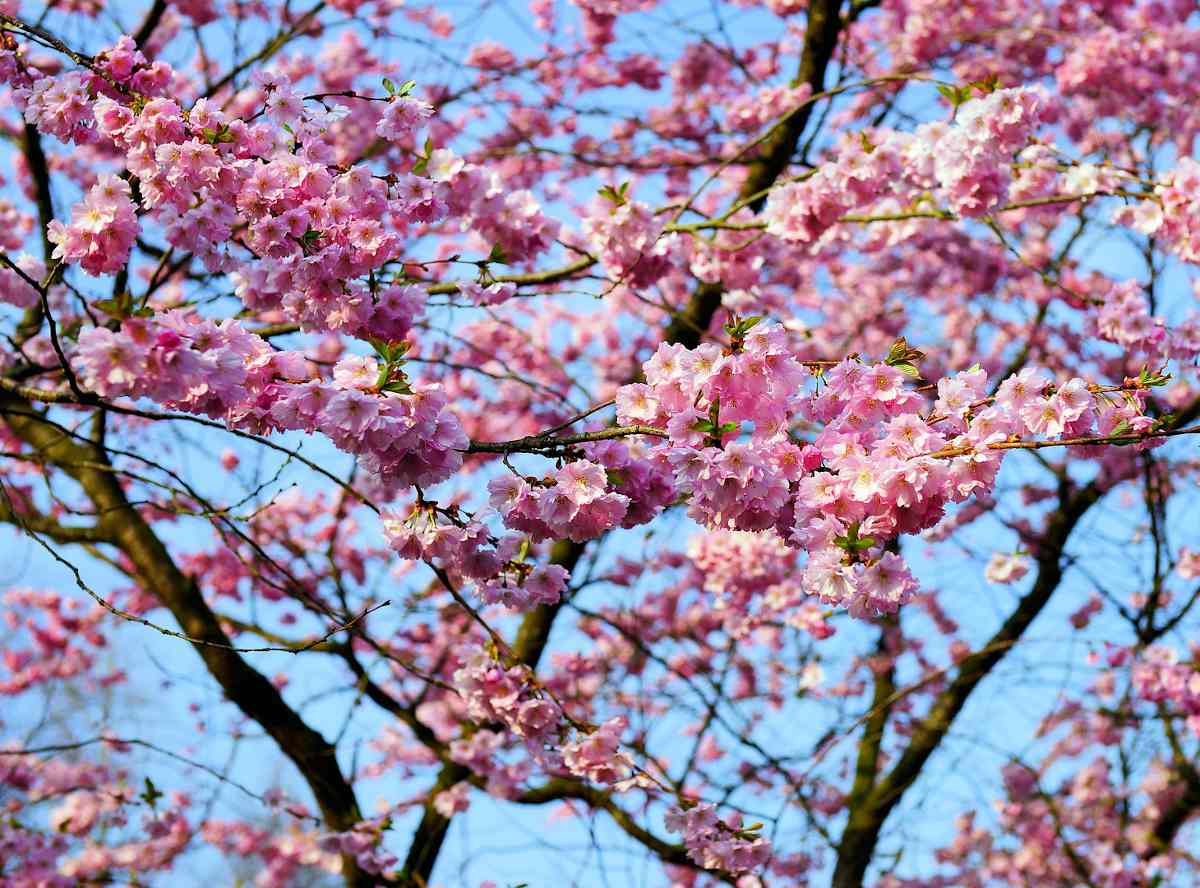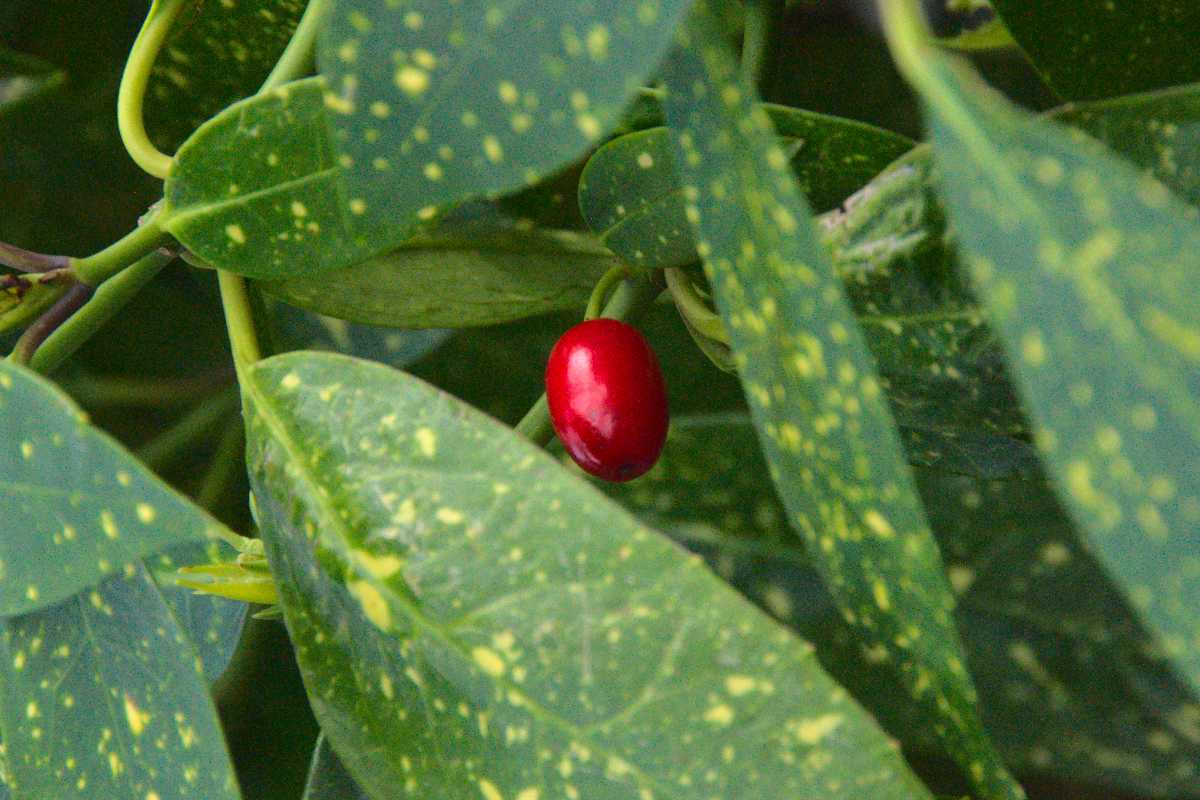
Dark green, opaque leaves hold all winter, white flowers open in mid-spring and small berries follow in autumn: cherry laurel (Prunus laurocerasus) is the fast shrub for hedges of any shape. Give it ordinary soil, anywhere from full sun to shade, and it will fill out into a dense evergreen screen.
| Name | Prunus laurocerasus |
|---|---|
| Family | Rosaceae |
| Type | shrub, bay |
| Height | 3 to 13 feet (1 to 4 m) |
| Exposure | full sun to shade |
| Soil | ordinary |
| Flowering | mid-spring |
| Foliage | evergreen |
It bears nice blooms in spring and cute berries in fall.
Cherry laurel can be planted from mid-autumn to early spring with a preference for fall to allow for root development before winter.
If you’re planting in spring, you’ll need to remember to water more often at the beginning.
Cherry laurel hedge
Cherry laurel is a shrub particularly well-suited to setting up an evergreen hedge.
In the hedge, place the base of each stem at least 32 inches (80 cm) to 3 feet (1 meter) apart.
Easy to care for, resilient and vigorous, cherry laurel requires very little care, especially when it is already well settled in.
Cherry laurel is a shrub that is easy to prune, especially if part of a hedge.
Cherry laurel comes in forms ranging from tall screening plants to ground-hugging dwarfs, so the variety you pick decides how much clipping you face later. Match the mature height and habit to the job before you buy.
| Variety | Habit | Best use |
|---|---|---|
| ‘Otto Luyken’ | Low, spreading, narrow leaves | Low hedge, large pots |
| ‘Mount Vernon’ | Dwarf, carpeting | Containers, shady edging |
| ‘Herbergii’ | Dense, conical, narrow leaves | Formal clipped hedge |
| ‘Zabeliana’ | Wide, near-horizontal branches | Ground cover, banks |
Even though it is considered to be one of the most sturdy and disease-resistant shrubs, cherry laurel might occasionally have weaknesses, especially as regards parasites.
From time to time aphids and more rarely scale insects try to settle in but it is quite rare and damages are often contained.
Cherry laurel is more vulnerable to shot-hole powdery mildew and verticillium wilt (Verticillium albo-atrum).
As for verticillium wilt, cherry laurel leaves turn brown, dry up and fall off.
Cherry laurel is one of the sturdiest shrubs there is, but a handful of pests and two fungal diseases turn up now and then. Here is how to tell them apart and how the article says to react.
| Problem | How common | Signs and damage | Action |
|---|---|---|---|
| Aphids | From time to time | Damage is often contained | Watch, rarely serious |
| Scale insects | More rarely than aphids | Damage is often contained | Watch, rarely serious |
| Shot-hole powdery mildew | Cherry laurel is more vulnerable to it | Fungal attack on the foliage | Preventive treatment with Bordeaux mixture |
| Verticillium wilt (Verticillium albo-atrum) | Cherry laurel is more vulnerable to it | Leaves turn brown, dry up and fall off | Remove and destroy infected parts, then treat with fungicide |
| Verticillium wilt in a hedge | Spreads from shrub to shrub | One shrub declines among the others | Destroy the affected shrub to protect the rest of the hedge |
Apart from these, cherry laurel asks for very little once it is well settled in.
Cherry laurel, also called “prunus” or “common laurel” numbers over 200 subspecies.
It is hardy and adapts perfectly to hedges of any shape thanks to its dark green and opaque foliage and distinctive white flowers.
It is one of those shrubs that grow very fast and can reach over 16 feet (5 m) tall when mature. If you fear it might grow too large, choose dwarf varieties, there are also a great number of those.
To grow cherry laurel in pots, you must select one of these dwarf varieties, for instance ‘Otto Luycken’, ‘Mount Vernon’ or ‘Piri’.
Cherry laurel is often called common laurel, surely because it grows almost everywhere.
Toxicity of cherry laurel
Poisoning emergency centers know that cherry laurel presents toxic compounds, especially for animals that might ingest leaves, berries or branches.
Indeed, cherry laurel releases cyanide, which can lead to fatal food poisoning for herbivores. Animals such as sheep, cows, goats and horses must be prohibited from eating cherry laurel.
If ever an animal has ingested massive amounts, get in touch with your veterinarian immediately, even before clinical symptoms appear.
Better to prune well at the end of the season, so as to keep the spring blooming intact.
Read also: