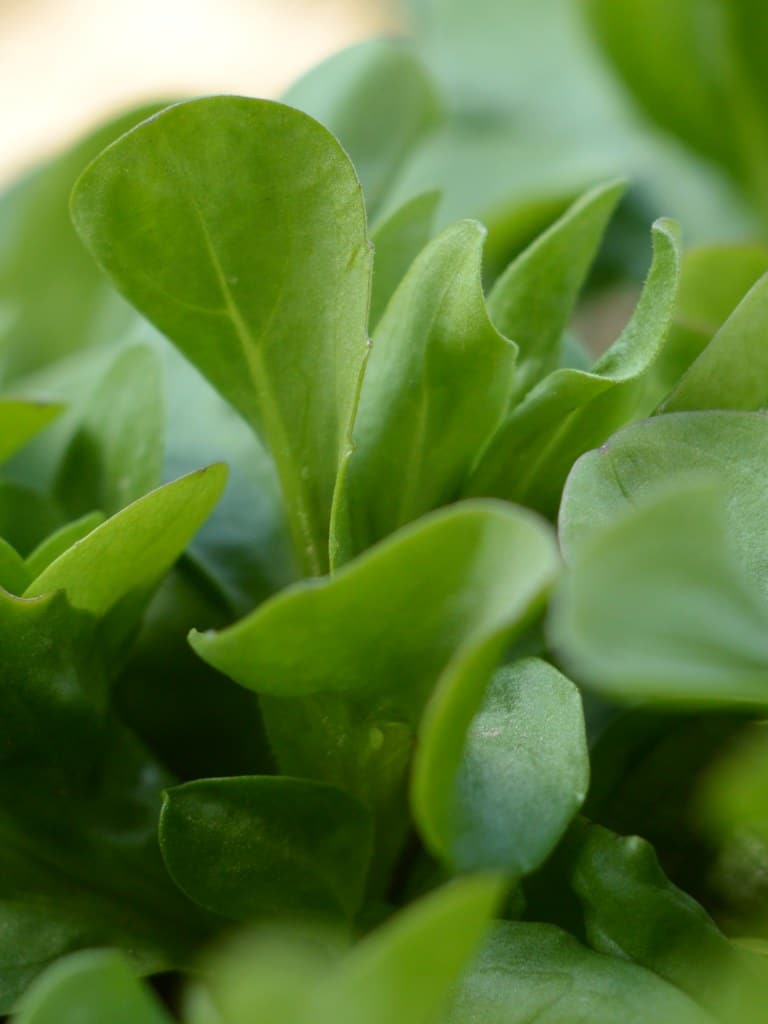
Flat rosettes of stark green, slightly velvety leaves, corn salad (Valerianella olitoria) is the queen of the winter greens: sown from late summer to mid-autumn, it crops in fall, winter and spring, even in a box on a balcony. Keep it on the dry side, as excess moisture attracts parasites and disease, and it rewards you with months of picking.
| Name | Valerianella olitoria |
|---|---|
| Family | Valerianaceae |
| Type | biennial |
| Height | 8 to 12 inches (20 to 30 cm) |
| Exposure | part sun |
| Soil | ordinary |
| Planting | Late summer to mid-autumn |
| Harvest | fall, winter, spring |
Sowing, planting, caring for it and harvesting it will help you get great corn salad. Here is how to grow the queen of the winter greens!
Corn salad is sown in rows from late summer to mid-autumn depending on the needs of the harvest.
When sowing Late summer, you’ll harvest corn salad in fall whereas the last seeds sown in Mid-autumn will give you corn salad in the following spring.
1 – Hollow out small trenches (furrows) about ½ inch (one centimeter) deep.
2 – Space these furrows 8 to 10 inches (20 to 25 cm).
3 – Sow inside these furrows, and cover with a little soil mix or garden soil.
4 – Water regularly but not too much.
5 – As soon as the first leaves appear, thin to 3 to 4 inches (8 to 10 cm).
Also take note that it is very easy to grow corn salad in pots, containers or garden boxes so you can also produce some on your balcony or terrace.
Alternatively, simply broadcast corn salad seeds, taking great care to rake the area after sowing to bury the seeds.
After that, same as described earlier: water regularly and thin down to 3 to 4 inches (8 to 10 cm).
If you wish to avoid the seedling stage, it is often possible to purchase your corn salad in nursery pots with small leaves.
You can plant them in the ground, either in your vegetable patch or in a garden box on a terrace or balcony.
Set each plug so the crown of the rosette sits level with the soil surface, since burying the heart invites rot in damp winter weather.
Corn salad is sown from late summer to mid-autumn, and the date you choose decides when the rosettes reach your plate. Use this table to plan sowings across autumn, winter and spring.
| Sowing time | Harvest | What to expect |
|---|---|---|
| Late summer | Fall | The earliest crop, ready roughly three months after sowing |
| Early autumn to mid-autumn | Winter | Needs cold resistant varieties and protection with a small greenhouse or tunnel |
| Mid-autumn (last sowings) | Following spring | The latest seeds overwinter and crop in spring |
| Staged sowings, late summer to mid-autumn | Fall, winter and spring | Alternate dates and varieties for a continuous supply |
Whichever date you pick, cut the leaves before the plants go to seed.
Corn salad is harvested when the leaf rosettes are well formed, around 3 months after sowing.
Corn salad varieties fall broadly into two camps: small, dark, very hardy French types for midwinter picking, and larger-leaved Dutch and Italian types that bulk up fast in mild autumn weather. The table below compares the ones most often found in British and North American seed catalogues.
| Variety | Leaf type | Hardiness | Best for |
|---|---|---|---|
| Dutch Broad Leaved | Large, pale, broad | Moderate | Bulk autumn harvests, quick to fill a bed |
| Verte à Coeur Plein | Dense, full-hearted | Hardy | Compact rosettes in pots and boxes |
| Vit | Long, glossy, mid-green | Good | Autumn and early winter cutting, mild flavour |
| Verte de Cambrai | Small, dark, tight rosettes | Very hardy | Unprotected midwinter picking |
| Verte de Louviers | Broad, spoon-shaped | Hardy | Winter cutting with bigger leaves |
| Coquille de Louviers | Shell-shaped, cupped | Hardy | Traditional winter salads |
| Grote Noordhollandse | Large, light green | Moderate | Heavy autumn cropping |
| D’Olanda a Seme Grosso | Large-seeded, broad leaf | Moderate | Easy sowing, generous rosettes |
It is possible to harvest corn salad all winter long.
For that, select cold resistant corn salad varieties like ‘Ronde Maraîchère’, ‘Verte de Cambrai’, ‘Coquille de Louviers’, ‘Trophy’ or ‘Topaze’.
As soon as the cold hits, protect your seedlings and plants with a small greenhouse, a tunnel, or any other device that will help your corn salad grow even though temperatures are below freezing, providing as much light as possible.
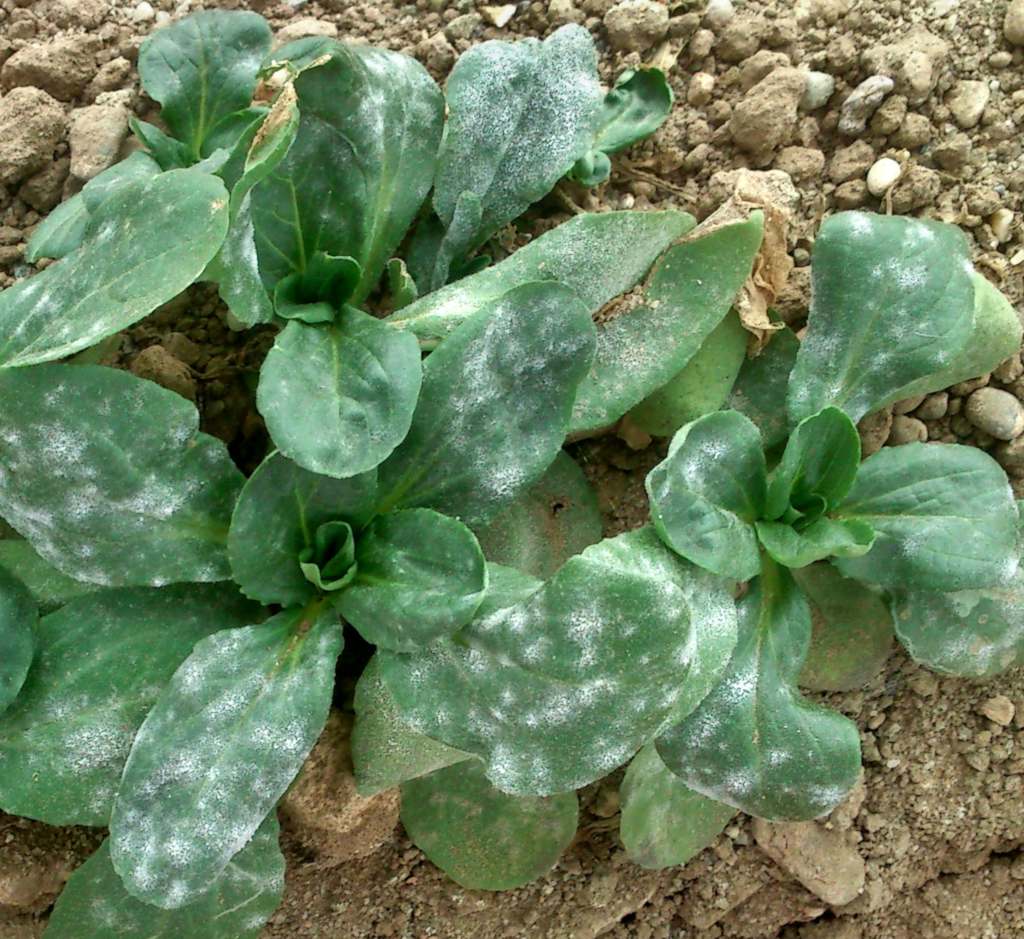
Excess moisture is detrimental to growing corn salad. It will attract parasites and increase occurrence of certain diseases.
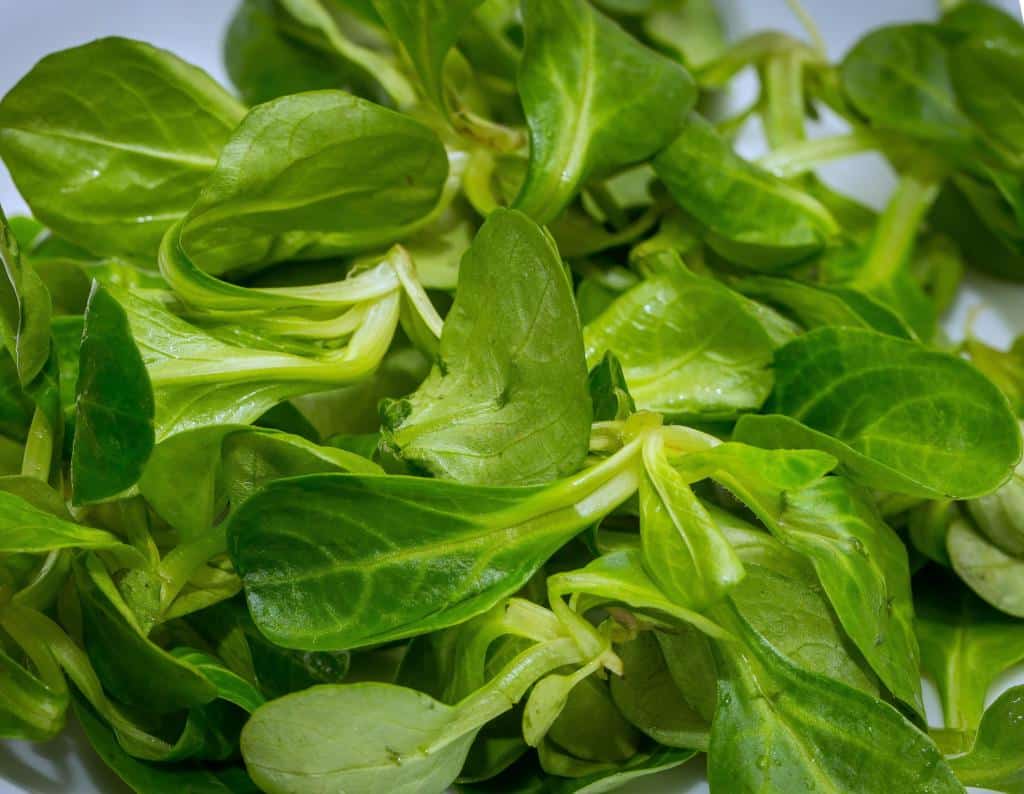
Rather easy to grow, doesn’t require much care during its entire growth phase, except for light regular watering.
Corn salad doesn’t deliver much energy, but contains high amounts of water and an excellent omega 3 ratio.
There are also many trace elements, fibers, minerals and vitamins that our bodies require.
In a nutshell, remember that corn salad is easy to grow and boasts high nutritional content: great assets for any gardener!
Even though it doesn’t keep very well, it still is possible to extend the shelf-life of corn salad a bit longer if you wrap it loosely in a cloth or plastic wrap and store it in the vegetable compartment of your refrigerator.
Stage sowing dates and varieties to produce corn salad for many long months.