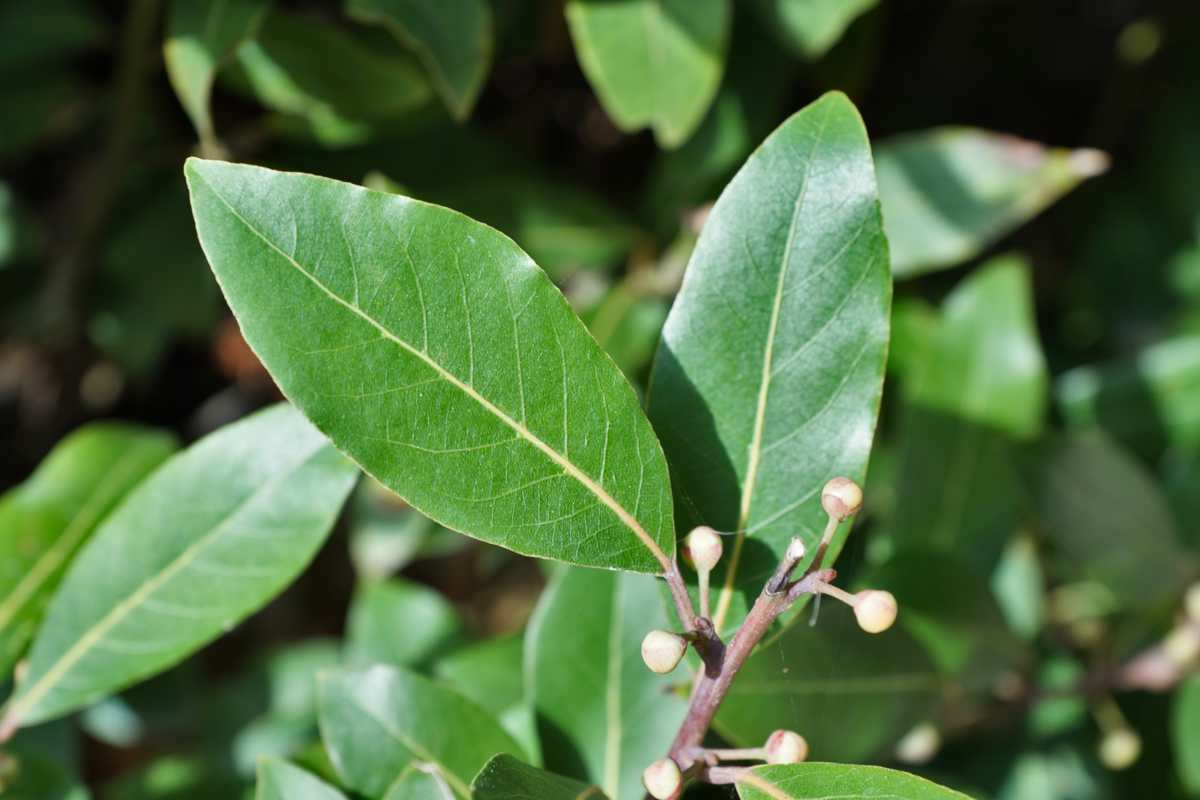
Thick, shiny, fragrant leaves on one; small bouquets of white flowers followed by blue-black berries on the other: bay laurel (Laurus nobilis) and laurestine (Viburnum tinus) both hold their foliage all year. Both settle happily into pots on a balcony, in sun and well-drained soil, and repay that with greenery — and winter flowers — when everything else is bare.
Bay laurel and laurestine: these two laurel species aren’t of the same family but still share common gifts.
Read also:
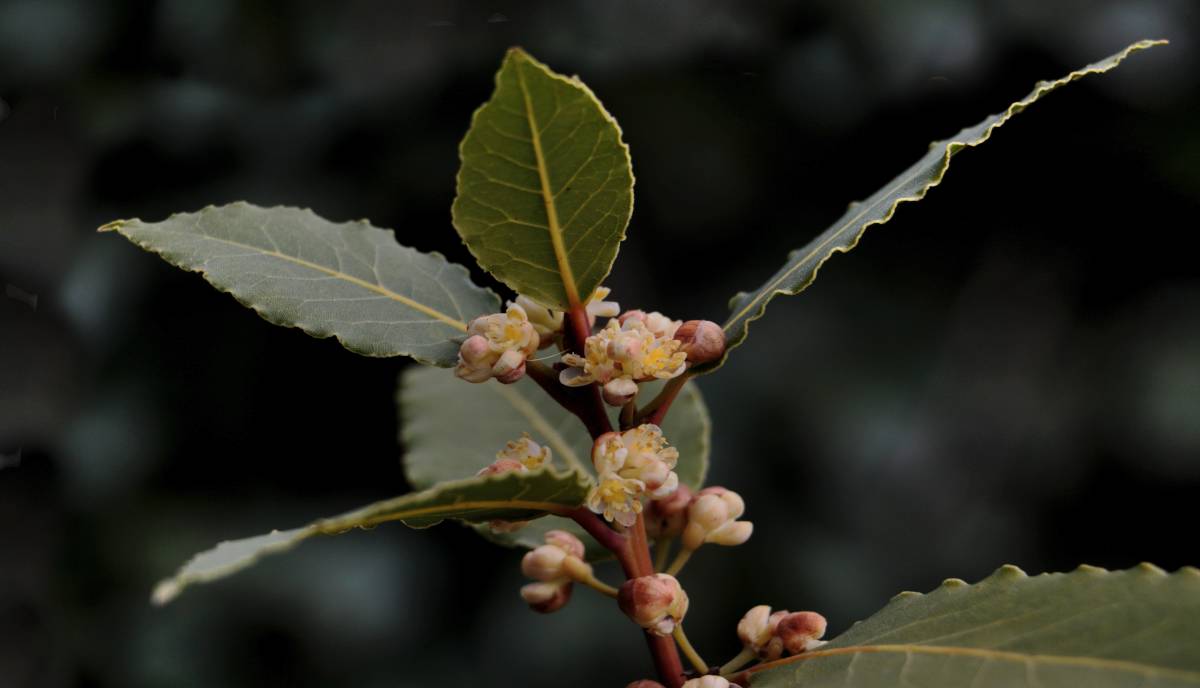
A staple herb for bouquet garni, with its thick shiny and fragrant leaves, bay laurel (Laurus nobilis) is a shrub that stays green all year round. Grown since Greek and Roman times, it used to crown the winners of Greek Olympics and Roman heroes. Hardy, this tree native to the South adapts to practically any climate (except mountainous) when protected from cold winds.
In a garden, it can cope with any soil, on the condition that drainage is good. In pots or in large garden boxes, it is suited to growing on balconies, especially shaped as topiary with round, cone or spiral forms. Prune with hand pruners in June and September.
Place your bay in the sun. Potted, water once a week. Drench the leaves regularly in summer to avoid spreading of parasites. In winter, if temperatures drop below freezing, wrap its foliage in horticultural fleece and the pot in plastic bubble wrap to protect from the cold.
Both of these evergreens are sold as named forms, and the choice usually comes down to how big the plant will get and whether you want fragrant foliage or winter flowers. The selections below are the ones most often found in garden centres.
| Variety | Height | Main interest | Best use |
|---|---|---|---|
| ‘French White’ | 3 m or more | Large pure white flower heads from late winter to mid-spring | Screening and boundary hedges |
| ‘Eve Price’ | 2-3 m | Carmine-pink buds opening white, late autumn to mid-spring, then blue-black berries | Pots, garden boxes and low hedges |
| ‘Aurea’ | 4-8 m, easily kept smaller | Golden-yellow aromatic leaves, still usable in cooking | Topiary balls, cones and spirals in pots |
| ‘Gwenllian’ | 2-2.5 m | Small dark leaves, pink-flushed flowers and heavy crops of blue-black fruit | Clipped evergreen hedge |
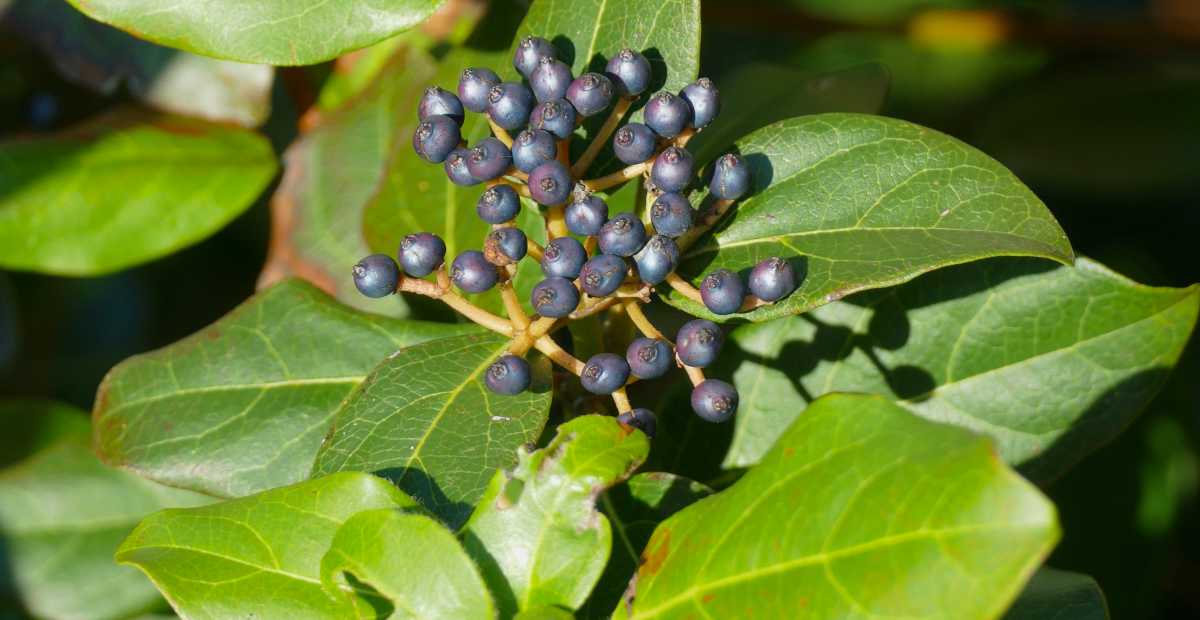
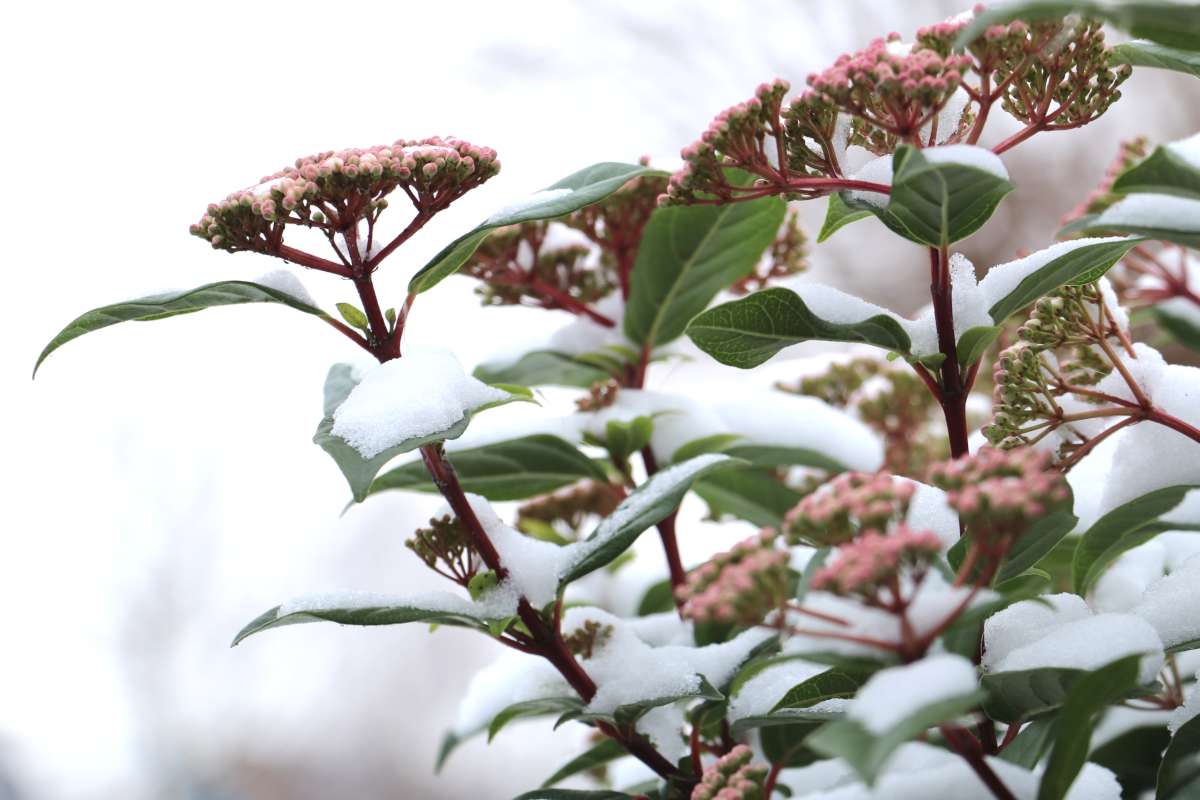
Part of the Adoxaceae family, like honeysuckle and elder, Laurestine (Viburnum tinus) is a round shaped shrub with evergreen leafage. Native to South of France and North Africa, it blooms all winter long with small bouquets of white flowers (from November to April) followed with blue-black berries. In flower beds or in garden boxes, it prospers in regions with mild winters and isn’t afraid of urban pollution or seaside spray.
Plant it in the sun or part sun, in well drained soil. Mulch its base in winter to guard it from freezing. After the blooming, cut back to half their length sprigs that have born flowers to boost its growth and the following year’s blooming.
Laure Hamann