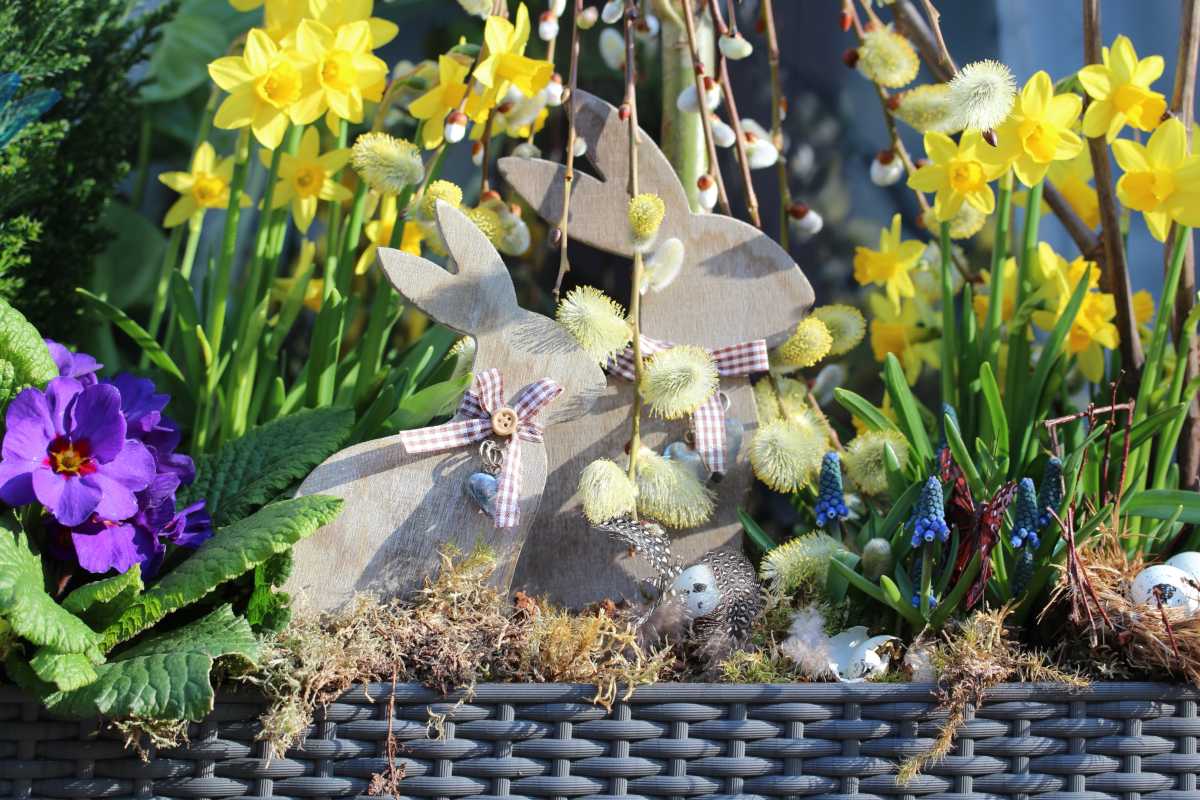
A primrose opening creamy-yellow flowers with a golden centre, and dwarf conifer buds turning pink as new growth begins: a spring garden box can carry perennials, bulb flowers, annuals and herbs together. Everything depends on the light the spot really gets — in full sun, choose species that cope with dry compost.
Discover our selection of plants that bloom from March to June, for a dazzling spring planter in the garden and on the terrace or balcony!
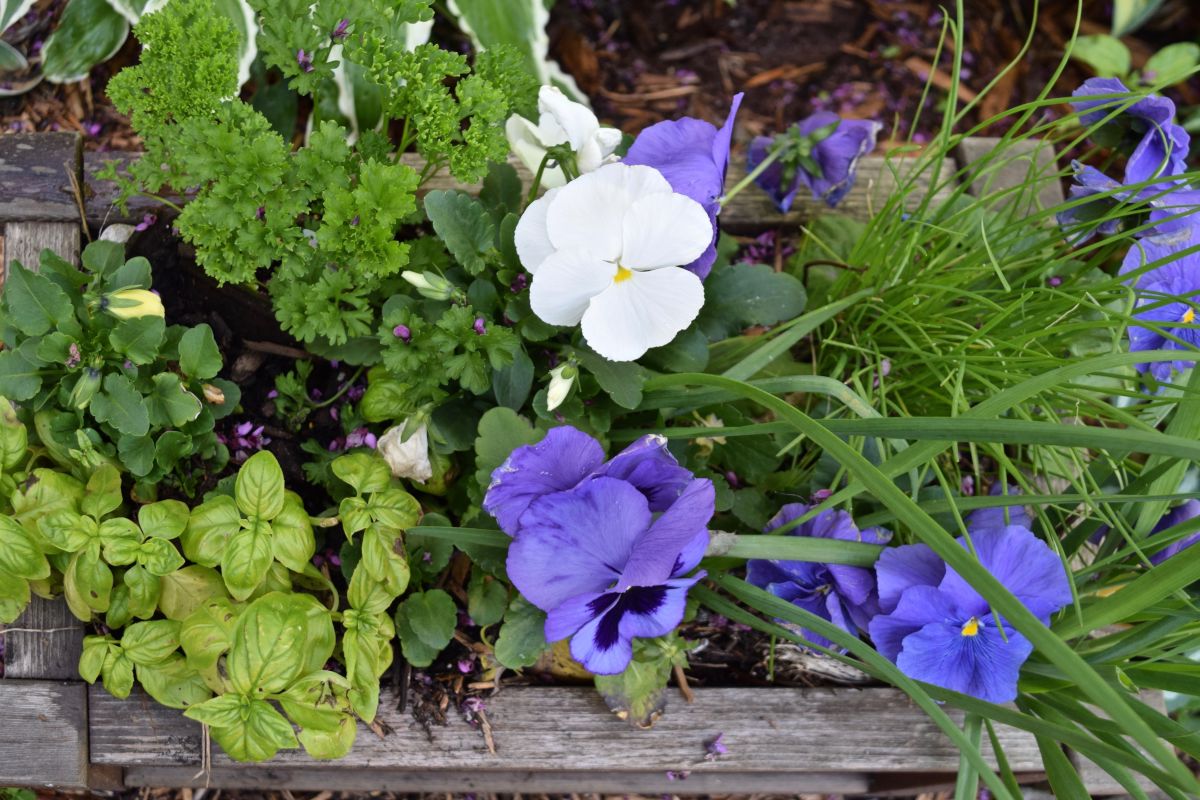
Why not pair perennials with herbs and spices? This makes your garden box both beautiful and useful, and lush, feathery herbs will make color-rich blooms look magnificent.
To welcome the coming of spring, nothing beats a primrose! As early as March, it opens simple creamy-yellow flowers with a golden center. Line it next to a foliage herb with intense colors, such as purple basil. It is similar in every respect to common green basil, except that the color of its leaves is a deep purple-red hue. As for the taste, get your taste buds ready for a yummy mix of cinnamon, aniseed and minty aromas!
In full sun, herbs such as thyme and rosemary are much better suited: they actually love it when the soil turns dry at times, even better when it’s a very poor, gravel-packed substrate. A flower that grows well together with these two is Aubrieta. Its cute little flowers bloom from April to June in shades of blue, pink, violet or white.
The first plants suggested for a spring box each play a different part: some bring the earliest flowers, others foliage and flavour. Here is how they compare before you start filling the container.
| Plant | Flowering period | What it brings | Growing note |
|---|---|---|---|
| Primrose | From early spring | Simple creamy-yellow flowers with a golden centre | The plant that welcomes the coming of spring |
| Purple basil | Grown for foliage | Deep purple-red leaves, with cinnamon, aniseed and minty aromas | Sets off colour-rich blooms beside it |
| Thyme | Grown for foliage | A useful herb in a sunny arrangement | Much better suited to full sun |
| Rosemary | Grown for foliage | A useful herb in a sunny arrangement | Happy in very poor, gravel-packed substrate that dries out |
| Aubrieta | Mid-spring to early summer | Cute little flowers in blue, pink, violet or white | Grows well together with thyme and rosemary |
Once you know how much sun the spot gets and how often you are prepared to water, the choice largely makes itself.
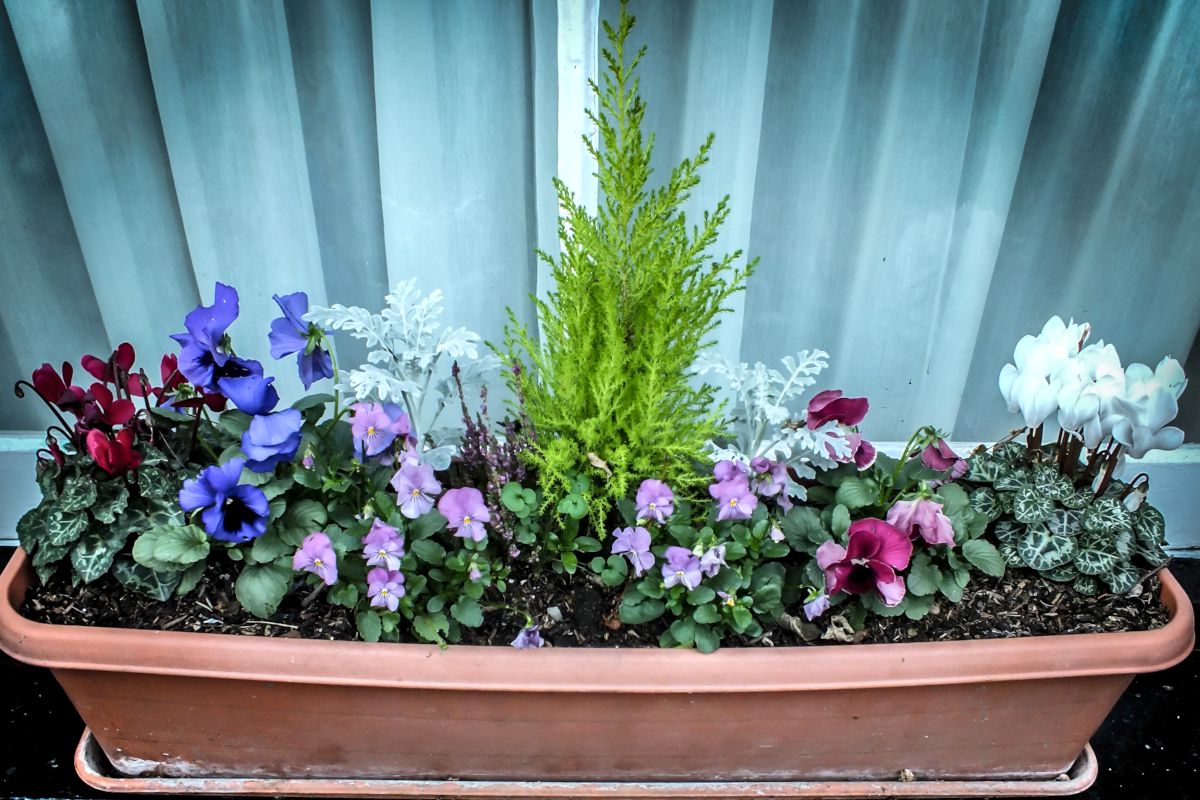
Take a step on the wild side with an original garden box laden with both conventional annuals and a selection of small conifers. Indeed, though the word “conifer” often brings images of tall gigantic trees in the mind’s eye, small dwarf varieties exist that actually fit very well in a simple pot.
Take, for instance, the tiny dwarf Korean pine! Topping out at a foot in height (about 30 cm), it grows to form a tight-bound ball of dark green needles that have a lighter shade of green on their underside. In spring, the pink buds that will become new growth are very ornamental. Annuals, which are typically wispy and light, will contrast very nicely with this intense eye-catching foliage.
Forget-me-not, which bloom as early as April, will flower in shades from blue to pink, and of course the in-between that is violet. For a more wildflower-like look, go for hawk’s beard (Crepis) and its daisy-like white or yellow flowers.
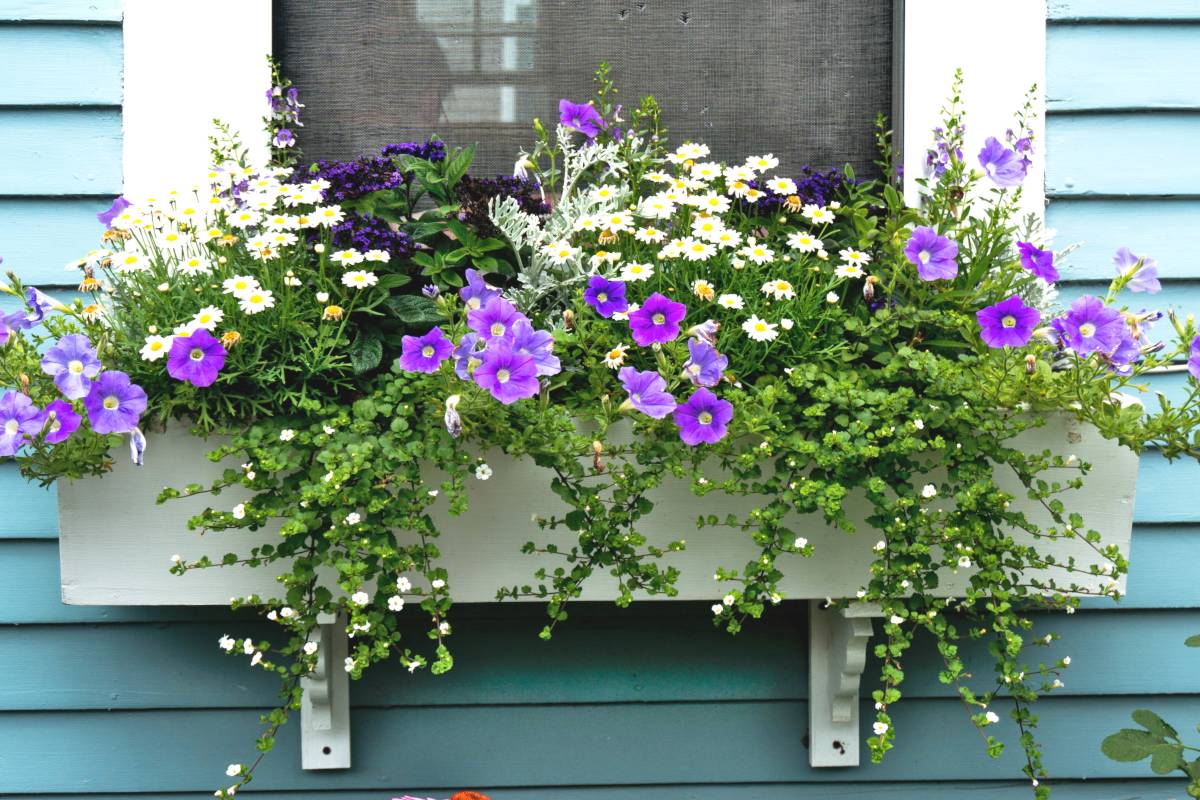
What would you set up in a garden box that never sees any sun? Ah, but shade need not be without flowers! Caucasian Myosotis is ideal for this situation, since even in full shade will it bear cute tiny flowers from April to May, and host elegant light green veined leaves shaped like hearts. It thrives in the shade, and needs cool and rather rich soil. A great companion for it will be all sorts of perennials with ornamental foliage such as ferns, hosta and heuchera.
Garden box growing usually implies a fast-drying substrate! Since the species mentioned above love cool, somewhat moist soil, turn watering into part of a daily or bi-weekly routine, all the while making sure that no water stands by in the saucer underneath.
Another touch of color to the garden box can come from a pink coum cyclamen that will bloom from January to April. The bright pink of its small upturned flowers will blend in well with darker violet shades of Heuchera.
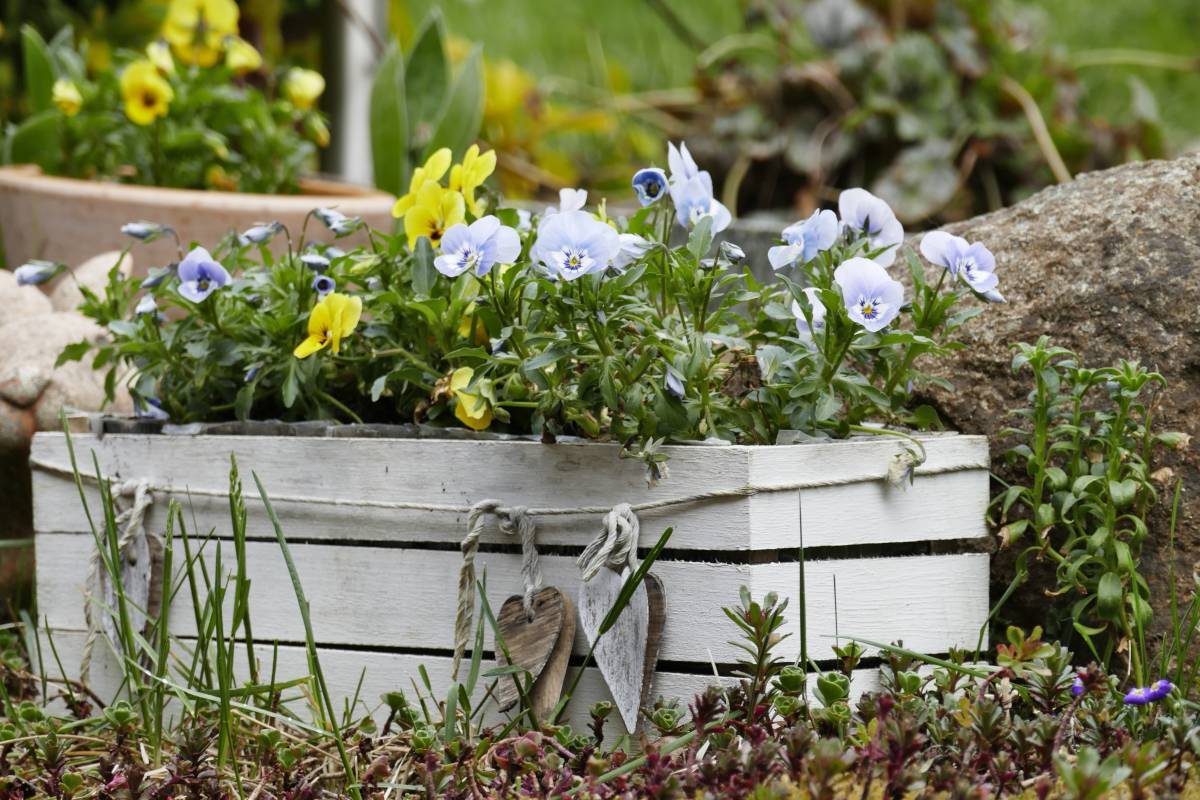
When in full sun, the key to success is to select species that cope well with dry substrates so that you don’t need to water every other day. This is exactly what auricula evolved for. With the common name of bear’s ear or cowslip, this species of primrose forms thick, fleshy, green-gray leaves bundled around the flowers stem, almost like a succulent. Come spring, flowers with rounded petals hover at the tips of floral stems. Colors depend on the variety. Some of them are even bi-colored!
Remember to plant bulbs in fall. These will sprout in the following Spring season: hyacinth, tulip, narcissus or the cute little muscari. Among the annuals, some species bloom very early, such as daisies and pansy.
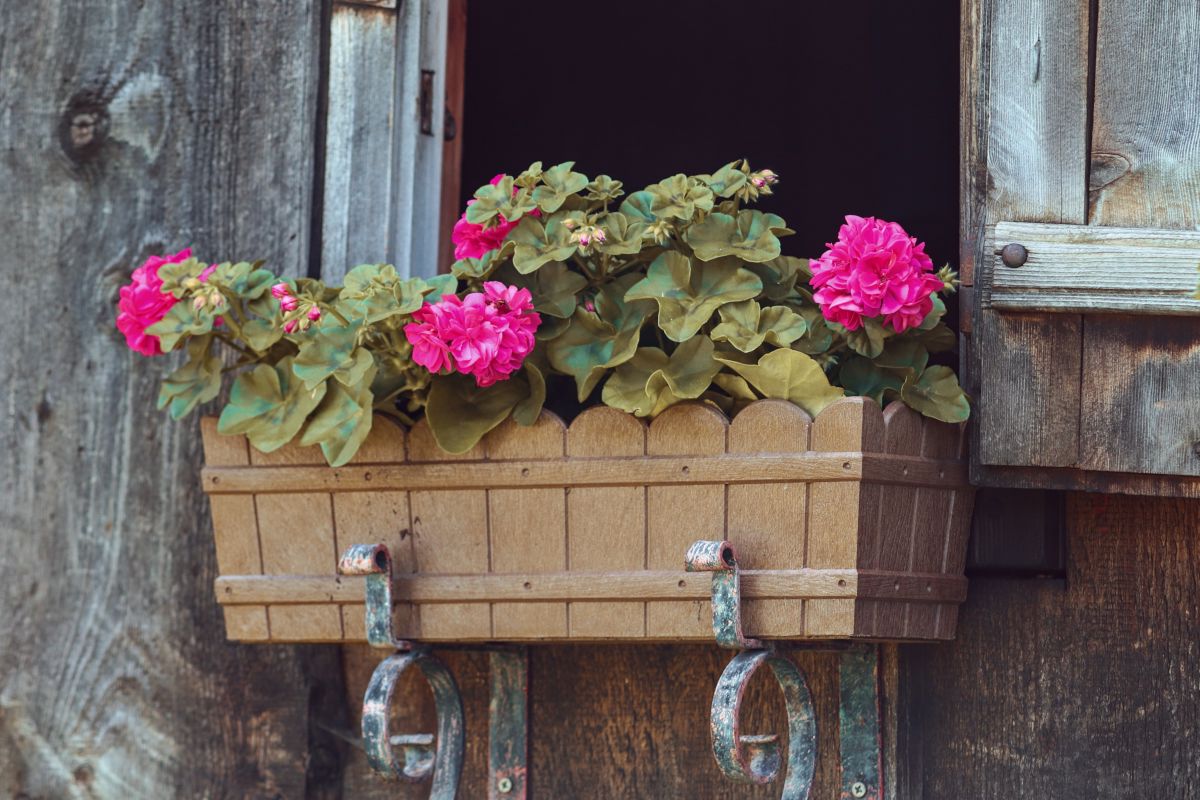
To illuminate the end of spring, a great choice is to consider hanging arrangements, topped with the always fashionable red or pink geraniums.
Add a bit of novelty with white-flowered geraniums like the ‘Blanche Roche’ ivy geranium with its double-flowered pink and pearly-white colors!