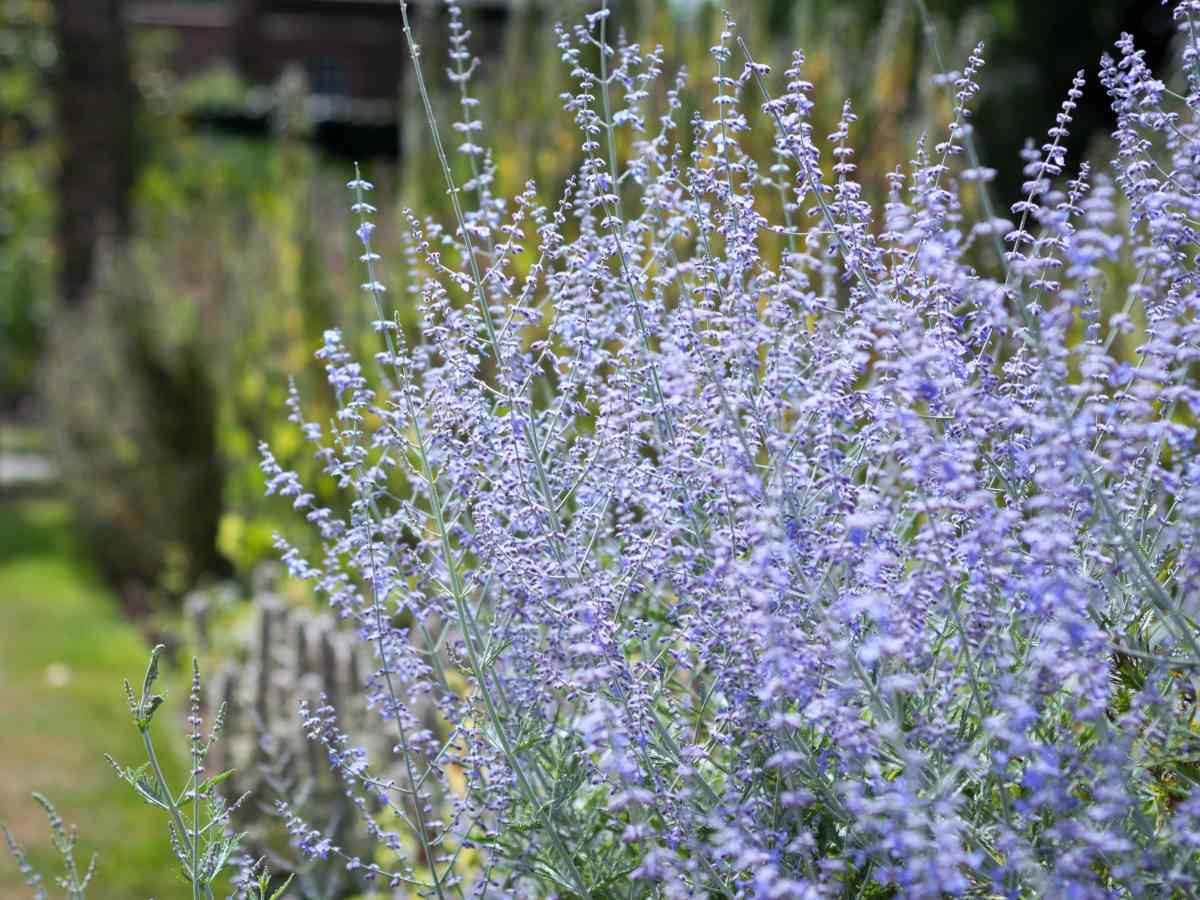
French lavender is an aromatic Mediterranean shrub recognized by its distinctive flower heads topped with colorful bracts that resemble tiny butterfly wings. It brings long-lasting color, fragrance and pollinator activity to sunny borders, gravel gardens and containers. Less cold-hardy than English lavender, it thrives where summers are hot and dry and winters remain relatively mild.
Did you know?
The name French lavender does not refer to the same plant everywhere. In the United Kingdom it usually means Lavandula stoechas, while in the United States, Australia and New Zealand it often refers to Lavandula dentata.
Lavandula stoechas is also called Spanish lavender or butterfly lavender because of the prominent bracts above each flower head.
French lavender is generally damaged more by wet winter soil than by short periods of drought.
Key French lavender facts at a glance
Name in the United Kingdom
Lavandula stoechas
Name often used in the United States
Lavandula dentata
Family
Lamiaceae
Type
aromatic evergreen subshrub
Height
24 to 40 inches (60–100 cm)
Exposure
full sun
Hardiness
approximately H3/H4 in the UK, USDA zone 8b or 9a depending on the species
Soil
light, alkaline to neutral and very well-drained
Foliage
evergreen
Flowering
spring to summer, often with repeat flowering
is a shared common name for two closely related plants. Their cultivation requirements are similar, although their foliage and flower shape differ.
United Kingdom:Lavandula stoechas, also called Spanish or butterfly lavender.
United States, Australia and New Zealand:Lavandula dentata, recognizable by its toothed foliage.
The same common name covers two different plants depending on where you garden, and neither of them is the English lavender most people picture. This table sets out what to look for before you buy.
Which lavender is “French lavender”?
Plant
Also called
Where “French lavender” means this
How to recognise it
Lavandula stoechas
Spanish lavender, butterfly lavender
United Kingdom
Short, broad flower heads topped with prominent coloured bracts
Lavandula dentata
toothed lavender
United States, Australia and New Zealand
Toothed foliage
Lavandula angustifolia
common or English lavender
Never — this is the hardier English lavender
Longer, narrower flower heads and no showy bracts; tolerates more cold
Whichever of the two you grow, the cultivation requirements are much the same: full sun and sharp drainage.
Planting French lavender
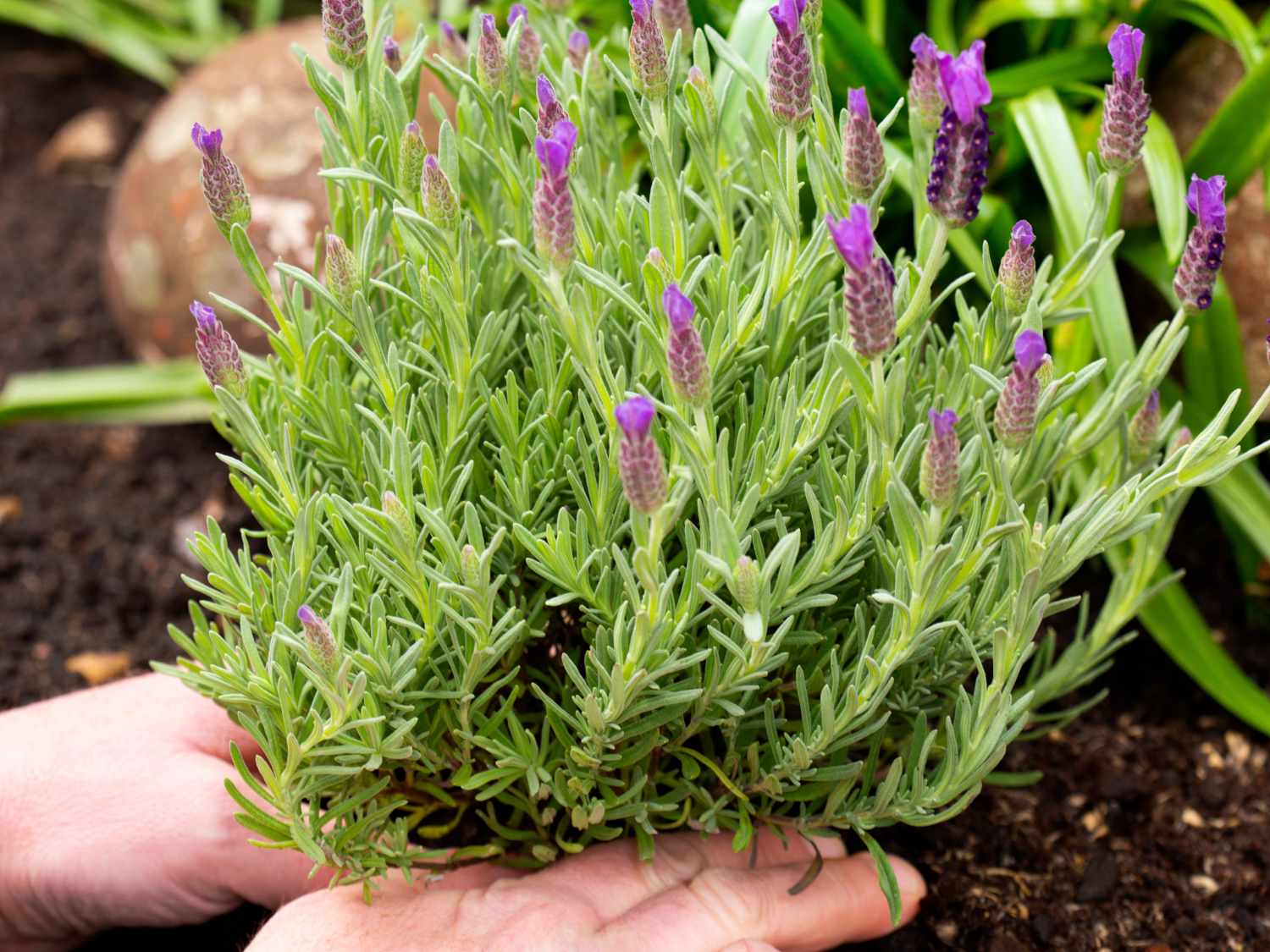
French lavender prefers light, dry and free-draining soil. It performs particularly well in Mediterranean-style gardens, rock gardens, raised beds and gravel borders. Heavy, compacted soil should be improved before planting because excess moisture around the roots quickly causes decline.
Improve heavy ground before planting to avoid decline
Plant French lavender in full sun and sharply drained soil
Plant in spring in regions with cold or wet winters.
Fall planting is suitable in mild, dry climates.
Water thoroughly immediately after planting, then allow the soil to dry before watering again.
Avoid rich manure or high-nitrogen fertilizer, which produces soft foliage and fewer flowers.
French lavender tolerates chalky and alkaline soils but dislikes strongly acidic ground.
Choose a warm, open location with at least six hours of direct sunlight each day. If the soil is clay-rich, mix in gravel, grit or coarse sand and consider planting slightly above ground level.
For a low lavender hedge, space plants 12 to 16 inches apart (30–40 cm).
Growing French lavender in pots
French lavender is particularly well suited to container growing, especially in regions where it must be moved under cover for winter. The most important rule is to prevent moisture from remaining around the roots.
Pots make moving the plant under cover easy
Choose a terracotta pot with generous drainage holes
Use a container with one or more large drainage holes.
Add a drainage layer of small gravel or clay pebbles.
Use a gritty mixture of two parts potting soil and one part sand, grit or perlite.
Choose a pot only 2 inches (5 cm) wider than the existing root ball when repotting.
Do not leave the pot standing in water after rainfall or watering.
Once the plant reaches its final container size, refresh the upper layer of growing mix each spring. If growth becomes weak, use a very light feed such as diluted fermented weed tea.
Watering French lavender
Excess water is more dangerous than temporary dryness
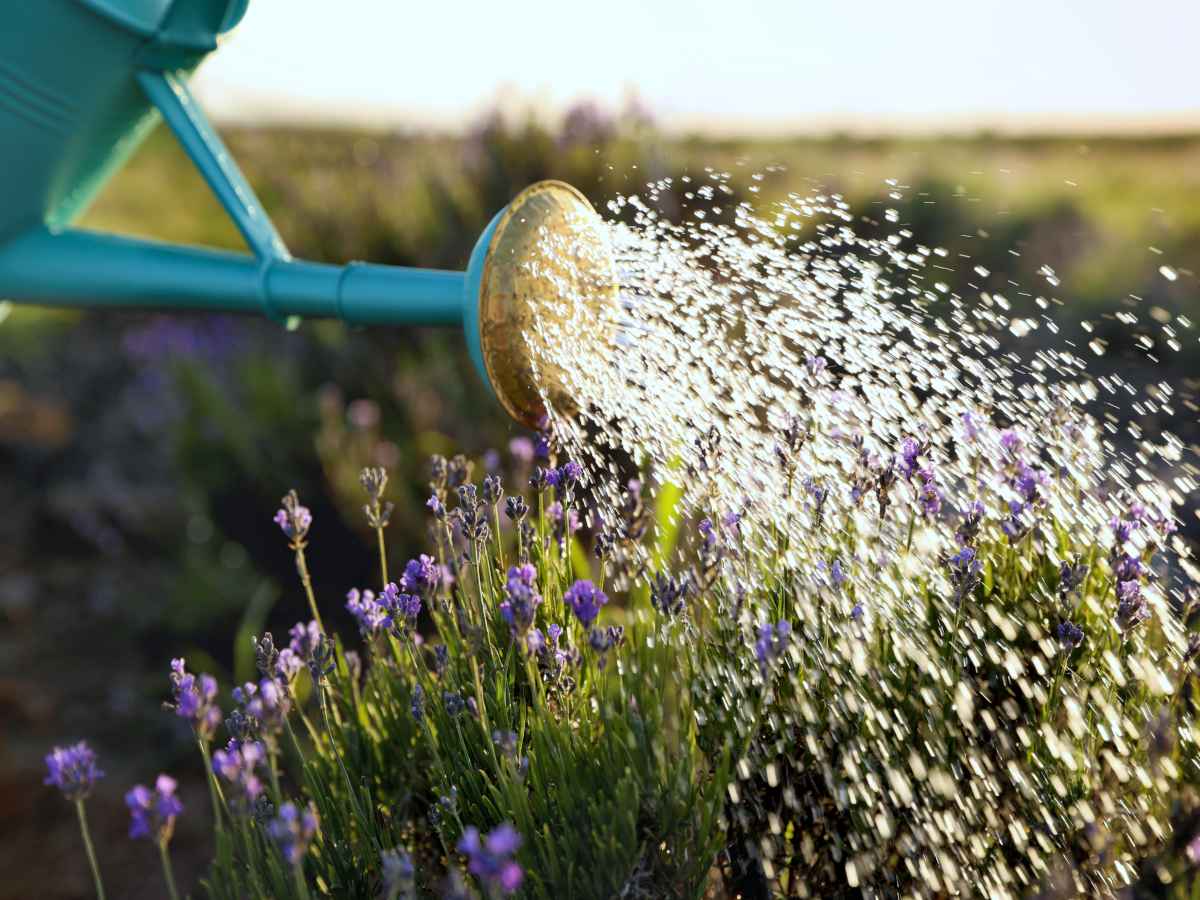
Water deeply but only when the soil has dried
French lavender tolerates drought extremely well once established. Too much water is far more dangerous than temporary dryness.
Water only:
at planting, with one thorough watering;
during prolonged heat waves above 95°F (35°C);
if the plant grows beneath a roof overhang where it receives no rainfall;
in containers, once the growing mix has dried several inches down.
A drier growing season often results in more strongly scented foliage and flowers. During winter, reduce watering to a strict minimum.
French lavender pruning and care
Regular pruning helps French lavender remain compact and prevents the center from becoming bare. However, pruning must always be carried out on stems that still carry green leaves.
Cut only where green leaves remain on the stem
Shape French lavender without cutting into bare old wood
At the end of winter, lightly reshape the shrub while following its natural rounded form.
Do not cut deeply into old, leafless stems because they rarely produce new shoots.
Remove faded flower heads after each flush to encourage repeat flowering.
In mild climates, a second light trim can be carried out in fall.
If an old plant has developed bare patches, rejuvenate it gradually rather than cutting everything back at once.
Layer the lavender to create new plants before removing the aging shrub. Lavandula dentata also responds well to air layering.
French lavender is less hardy than Lavandula angustifolia. Temperatures below 19°F (-7°C), particularly when combined with wet soil, may damage or kill the plant.
Move container plants into a bright, frost-free greenhouse, porch or conservatory.
In the ground, protect the root area with mineral mulch.
Avoid thick organic mulch against the crown because it retains moisture.
Ensure excellent drainage before winter begins.
Drying French lavender flowers
Pick heads fully coloured but not yet fading
Harvest flower stems before the blooms begin to fade
French lavender flowers can retain their fragrance for months when they are dried correctly and stored away from sunlight.
Cut stems on a dry morning after the dew has evaporated.
Choose flower heads that are fully colored but not yet fading.
Gather small bunches and hang them upside down in a dark, ventilated room.
Use the dried flowers in bouquets, potpourri, scented sachets and crafts.
French lavender generally experiences few pest problems. Its strongly aromatic foliage is unattractive to many leaf-eating insects, and the flowers are valued mainly by nectar-feeding pollinators.
Aromatic foliage deters most leaf-eating insects
Healthy French lavender has few pest or disease problems
Root rot: the main risk, caused by excessive watering or poorly drained soil. Leaves turn gray or yellow and stems begin to die back.
Leaf spot: weakened plants may occasionally develop Septoria leaf spot during prolonged wet weather.
Aphids: uncommon on established plants. French lavender is sometimes planted near rose trees because its fragrance may help discourage aphids.
Poor flowering: usually caused by insufficient sunlight, overly fertile soil or pruning at the wrong time.
All there is to know about French lavender
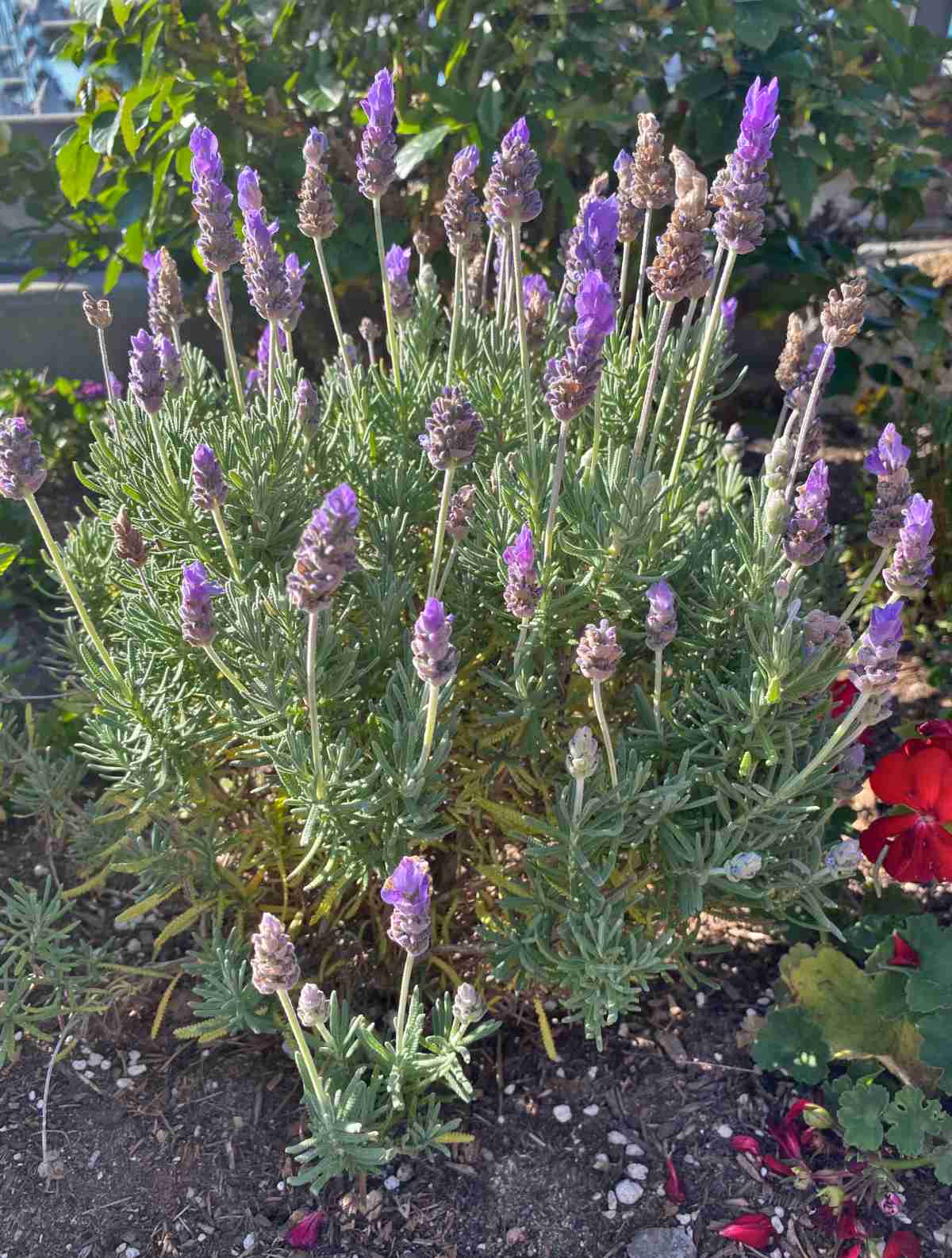
The colorful upper bracts give French lavender its butterfly-like appearance
French lavender has long been associated with Mediterranean gardens and perfume production. Its flower heads are shorter and broader than those of common lavender, and the decorative bracts above them resemble wings.
Lavender has traditionally been used in bathing preparations, linen cupboards, perfumes and herbal remedies. Learn more about its traditional medicinal benefits and how to make lavender oil.
Together with the olive tree, lavender is one of the most recognizable symbols of Provence and the Mediterranean landscape. In garden design, it works particularly well in sunny borders, raised beds, rock gardens and containers.
Important: Lavandula stoechas is considered invasive in certain regions, including parts of Australia and Spain. Check local recommendations before planting.
French lavender is a valuable nectar source for bees and beneficial insects. Plant it close to a terrace or pathway where its fragrance and unusual flowers can be appreciated up close.
Images: 123RF: Christian Bridgwater; Adobe Stock: Kotcha K; CC BY 2.0: M’s Photography, Katja Schulz; CC BY-SA 2.0: Tracie Hall; Dreamstime: Chernetskaya; Pixabay: Courtney, Daniel Wanke
Written by Gaspard Lorthiois | Loves helping out, especially when it comes to growing things. Worked in herbal medicine, runs a farm, and dabbles in tech. Master's degree and engineer.