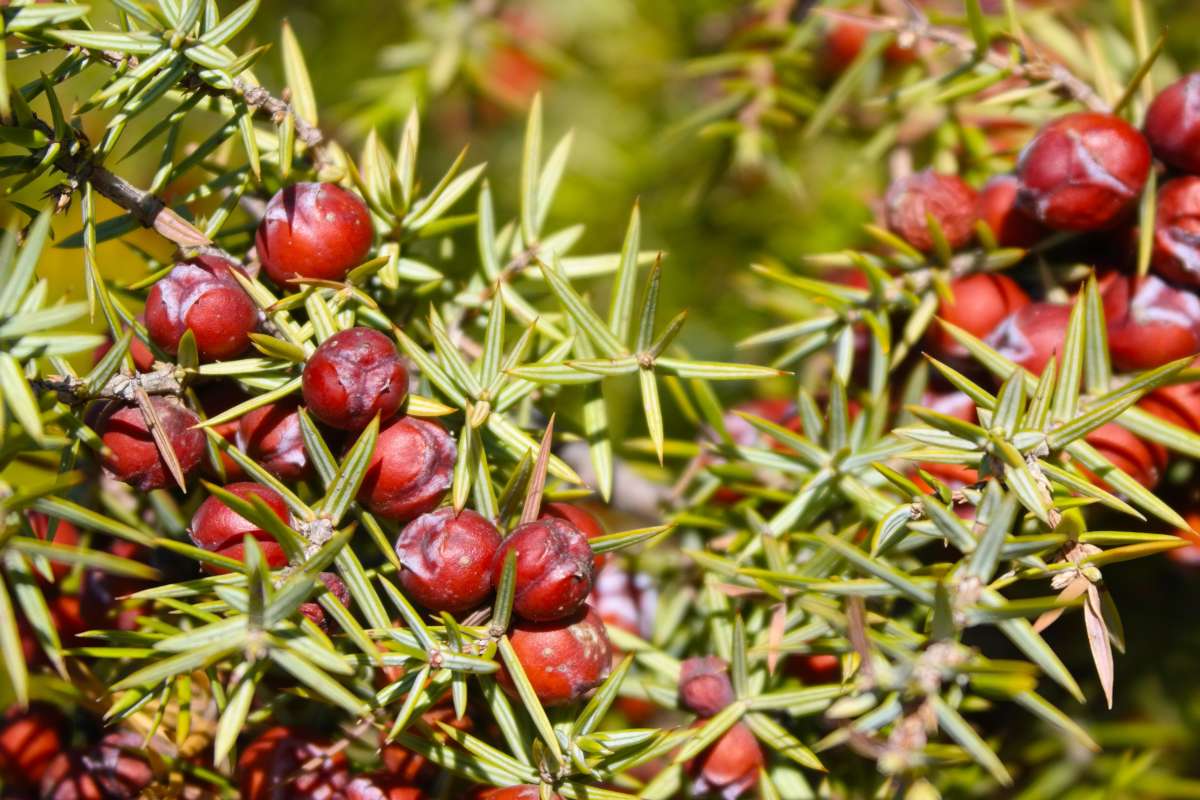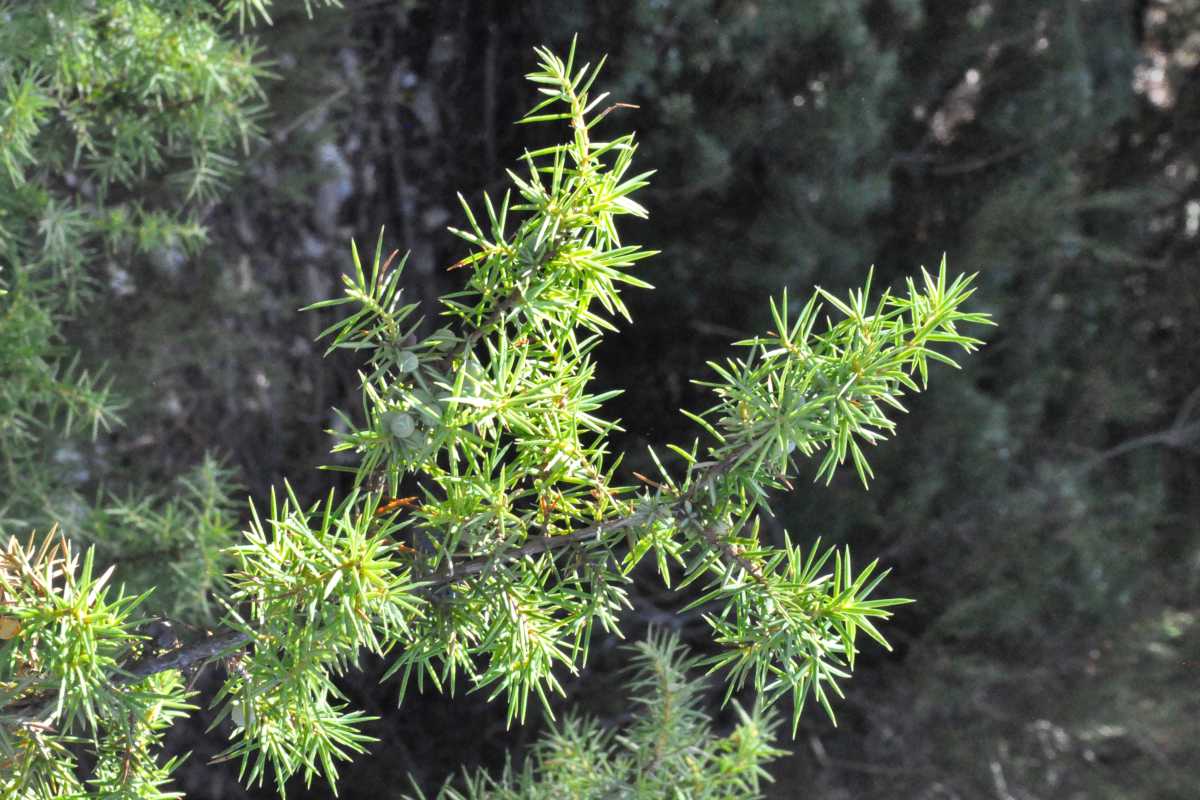
Dense evergreen foliage and handsome bark clothe a habit that sometimes spikes up into a column, sometimes spreads flat along the ground: this is juniper (Juniperus communis), prized for edging, rockeries, ground cover or a terrace box. It tolerates almost any soil and pollution, but insists on sharp drainage — give it that and it asks for nothing else.
| Name | Juniperus |
|---|---|
| Family | Cupressaceae |
| Type | conifer |
| Exposure | full sun or part sun |
| Soil | well drained, ordinary |
| Foliage | evergreen |
| Flowering | spring |
Caring for it, from planting to pruning is easy and the ornamental impact is guaranteed.
Juniperus is ideally planted in fall to ensure root growth and thus proper settling in in spring.
However, you can also plant in spring and water a bit more at the beginning.
Note that juniperus tolerates virtually all types of soil, and behaves exactly the same whether conditions are moist or during a full-blown drought. But it does require soil that is well drained where water won’t stagnate.
Give juniperus full sun or at most part sun when planting, since in shade the foliage thins out and blue or golden cultivars lose the intensity of colour that makes them worth growing.
On heavy clay, plant junipers on a slightly raised mound and work coarse grit into the planting area, since they need sharp drainage and resent roots sitting in waterlogged soil, though they face other problems such as rust and blight.
Space each juniper according to its cultivar’s eventual spread, since growth rates vary widely and junipers resent hard corrective pruning, rarely resprouting from the bare old wood that crowded, overgrown plants must be cut back to.
For a terrace box, always choose a container with drainage holes, and match the compost to the plants: gritty free-draining mixes suit alpines, succulents and Mediterranean herbs, while moisture-lovers need a richer, water-retentive compost.
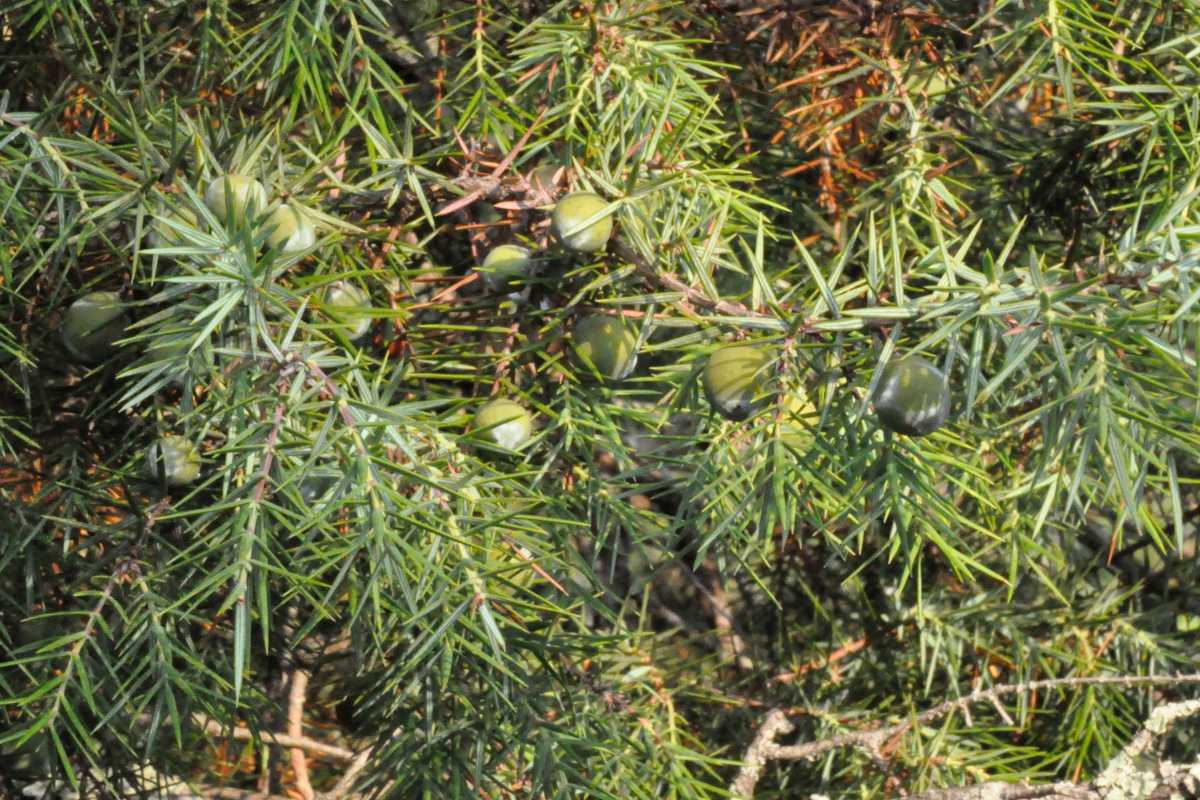
Caring for juniperus is very easy because it requires practically no care.
Pruning isn’t really recommended, especially since much of the appeal of a juniperus bush is its distinctive bearing, sometimes spiking up in a column, sometimes spreading along the ground.
If you must prune it , do so at the beginning of summer and avoid cutting too near the trunk, and prefer light pruning instead of cutting back severely.
Never cut a juniper back into the bare brown wood at the centre of the bush, as it carries no dormant buds there and the stub will stay permanently empty instead of resprouting.
Wear gloves and long sleeves when trimming or handling juniper, because the prickly foliage and its resinous sap commonly cause skin irritation in sensitive gardeners.
On narrow columnar junipers such as Skyrocket or Hibernica, shake off heavy snow or tie the stems loosely together beforehand, since splayed branches rarely spring back into position.
If shoot tips turn brown and die back, cut the affected branches out well below the discoloured wood, remove them from the garden and disinfect the blades between cuts to limit juniper blight.
The article gives only a handful of dates for juniperus, and each one comes with its own precaution. Here they are side by side so you can see at a glance what to do and when.
| Task | When | What it involves |
|---|---|---|
| Planting (recommended) | Fall | Roots settle in over winter so the shrub is properly established come spring |
| Planting (alternative) | Spring | Perfectly possible, but water a little more generously at the start |
| Pruning (only if needed) | Beginning of summer | Light pruning only, keeping well away from the trunk; severe cutting back is to be avoided |
In practice, planting in fall and leaving the shears in the shed is all that juniperus asks for.
Junipers range from flat carpets barely ankle-high to narrow pillars several metres tall, so the cultivar matters far more than the care. The table below sets out the most widely sold forms side by side, with the habit, size, foliage colour and the situation each one suits best.
| Variety | Habit | Height × spread | Foliage colour | Best use |
|---|---|---|---|---|
| ‘Blue Star’ | Low rounded mound | 0.4 m × 1 m | Silvery steel blue | Rockery, container, low edging |
| ‘Blue Carpet’ | Flat spreading mat | 0.3 m × 2 m | Grey blue | Ground cover, bank, wall top |
| ‘Blue Chip’ | Prostrate carpet | 0.25 m × 2 m | Blue, purple-tinged in cold | Ground cover on dry slopes |
| ‘Gold Coast’ | Compact spreader | 0.8 m × 1.5 m | Bright gold | Small garden, large container |
| ‘Old Gold’ | Wide, tiered and spreading | 1 m × 2 m | Golden yellow | Border filler, front of shrubbery |
| ‘Nana’ | Dense low mat | 0.2 m × 1.5 m | Fresh green | Rockery, trough, bonsai training |
| ‘Skyrocket’ | Very narrow column | 5 m × 0.6 m | Blue grey | Vertical accent, formal avenue |
| ‘Hibernica’ | Dense upright pillar | 4 m × 0.8 m | Grey green | Exclamation point, gravel garden |
This is a conifer that adapts equally well to growing in the ground as it does to growing in a garden box on a terrace or balcony.
Sought after for its dense foliage and beautiful bark, juniperus appeals to many in that it has an extremely high tolerance to all types of soil and pollution.
With a great many cultivars and species, there is a wide range of different shapes and leaves for all to choose from to decorate along edges, on rocky ground, to cover the ground or to garner a garden box on a terrace if possible.
Juniperus has very slow growth, don’t count on this if you wish to quickly cut off neighborly prying eyes.
You might consider that this is truly a purely ornamental conifer.