
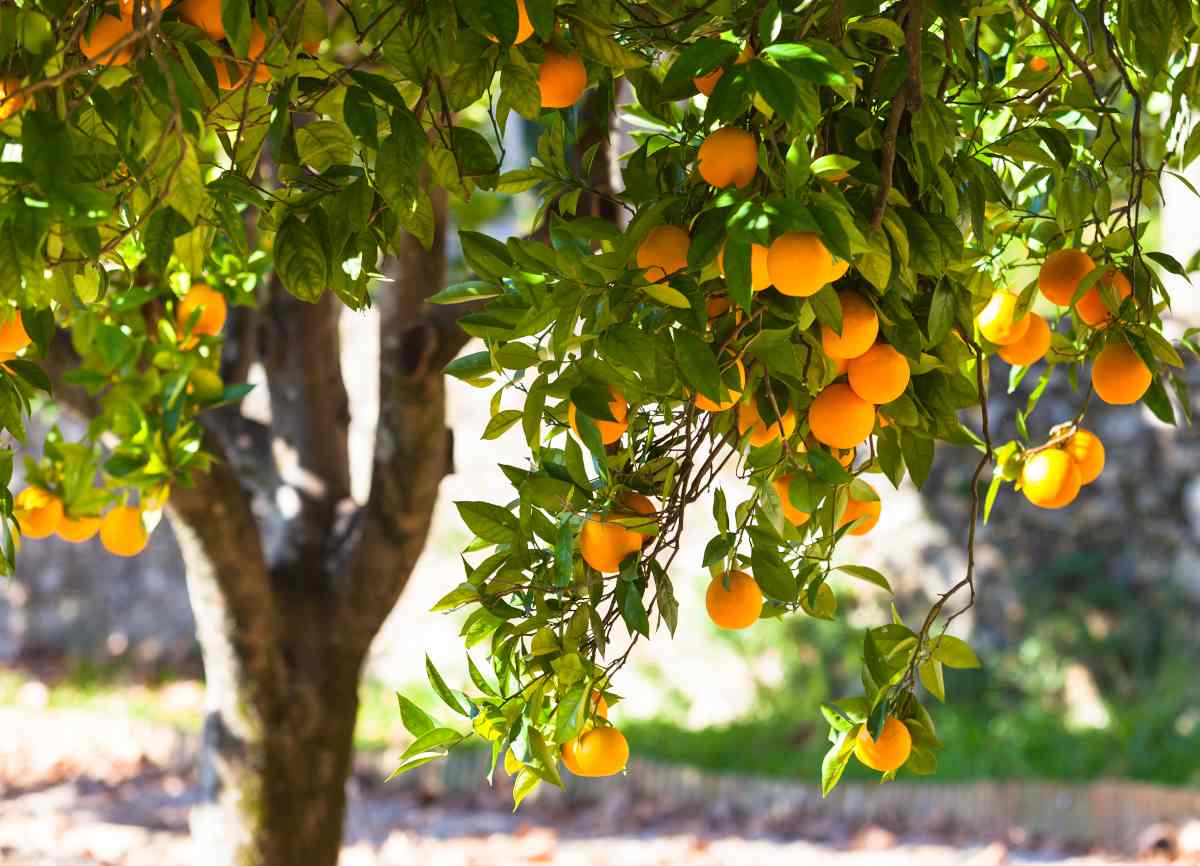
Deep green evergreen foliage and small white flowers full of fragrance make the orange tree (Citrus sinensis) ornamental long before it fruits, and its sweet, juicy oranges are famously healthy. It asks only for full sun, rich well-drained soil and shelter from frost and wind — meet that, and the harvest is generous.
| Name | Citrus sinensis |
|---|---|
| Family | Rutaceae (Rue family) |
| Type | Fruit tree |
| Height | About 16 feet (5 meters) |
| Soil | Well drained, sandy and rich |
| Exposure | Full sun |
| Foliage | Evergreen |
| Flowering | Mid-spring to midsummer |
| Harvest | Winter |
Planting, care and pruning your orange tree are important tasks. Do them well, and you’ll grow a healthy tree with lots of luscious oranges.
>> Questions about indoor potted orange? Click here <<
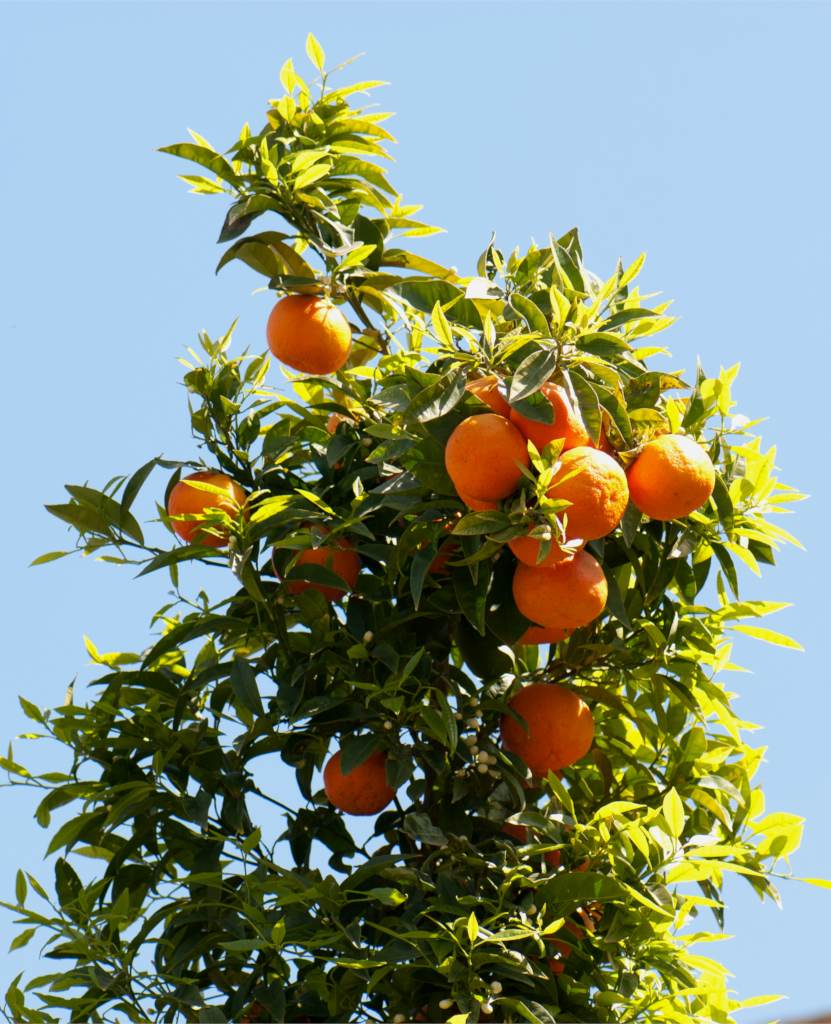
In mild climates, you can grow the orange tree directly in the ground if the weather permits: it shouldn’t freeze in winter. If it does freeze, you’ll have to grow your orange tree in a pot so that you can bring it indoors when the temperature drops.
Interestingly, you should know that the orange tree also doesn’t like it when it gets too hot. Over 95°F (35°C), it again goes dormant. Last tip: avoid windy areas because branches are brittle and will break easily, especially when heavy with fruit.
First thing to remember: the orange tree can only be planted directly in the ground in regions where it doesn’t freeze in winter.
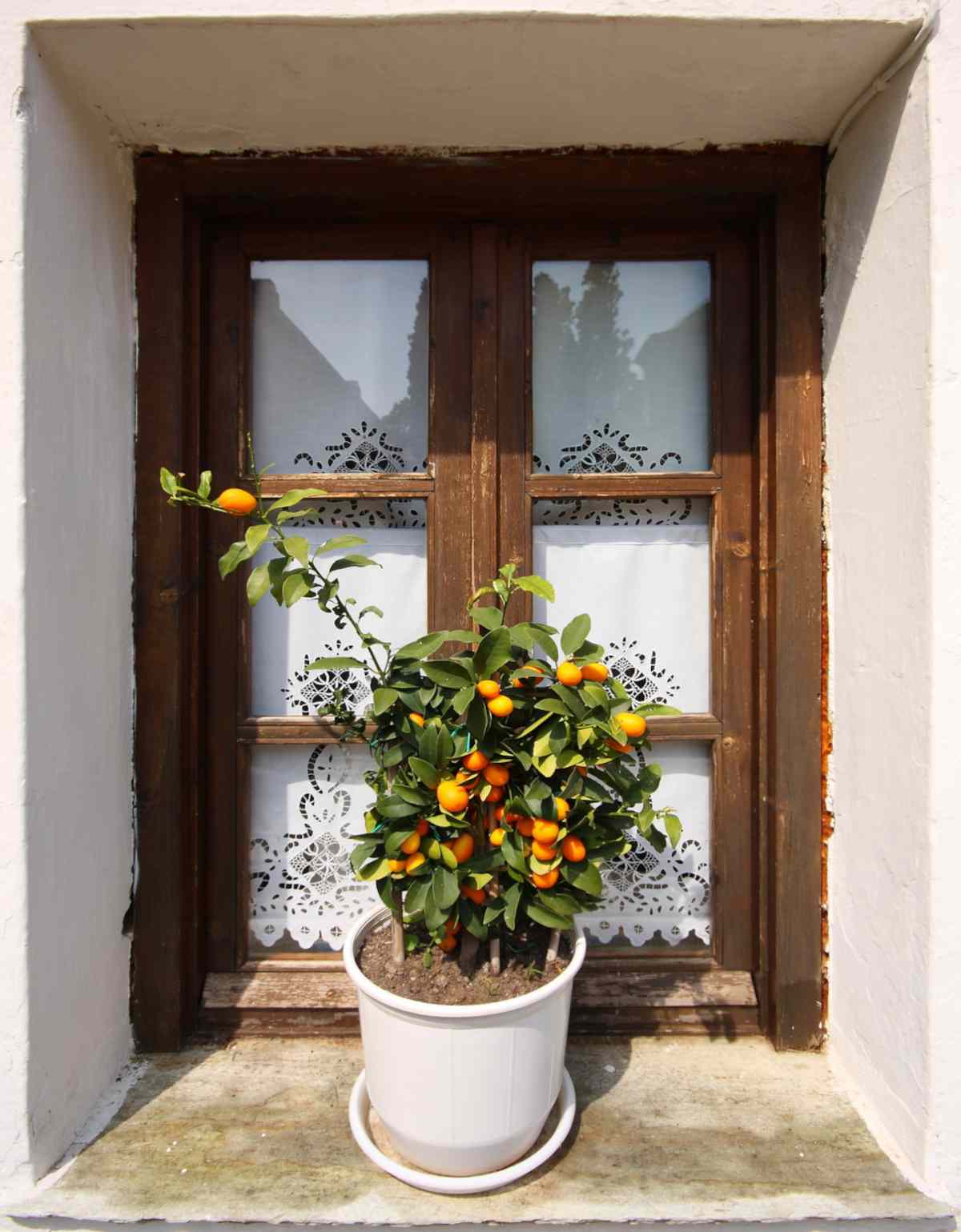
In areas where winters are on the cold side, you must plant your orange tree in a large garden box.
In winter, try to place it in a very bright room, where the temperature should not drop below 41 to 43°F (5 to 6° C) during this time.
Early spring, you can bring it out for it to spend the rest of the year outdoors.
When planting or repotting, favor a blend of soil mix and plant-based soil without any limestone, one part each.
Repot preferably in spring, after the fruit harvest or at the end of summer before flowering.
Before choosing between open ground and a container, it helps to know exactly what temperatures an orange tree can take. These are the thresholds that decide where your tree spends the winter.
| Temperature | What happens to the tree | What it means for you |
|---|---|---|
| Down to 15°F (-9°C) | The trunk can pull through a cold spell | Only mild, frost-free gardens can risk open ground |
| Under 26°F (-3°C) | Leaves die off | Where winters freeze, grow in a pot and bring it in |
| 32 to 50°F (0 to 10°C) | The tree goes dormant | Overwinter in a bright room, never below 41 to 43°F (5 to 6°C) |
| Over 95°F (35°C) | Dormant again — growth simply stops | Extreme heat is no better than cold; shelter matters both ways |
Whichever option you choose, keep the tree out of the wind: brittle branches snap easily when loaded with fruit.
Watering, for an orange tree, is very important. This is even more true if in a pot, since soil tends to dry off much faster.
Use rainwater whenever you can, since the orange tree dislikes the lime found in most tap water.
Empty the saucer under a potted orange tree after each watering.
Wait until the surface of the soil feels dry before watering again, rather than following a fixed rhythm.
Fruits only grow on new growth, so you must prune at the end of winter, during the months of February or March.
Producing nice oranges: to produce nice oranges, add citrus-specific fertilizer during the growth phase.
Harvest any mature oranges before you start pruning, since citrus doesn’t sweeten further once picked and any fruit still hanging on a branch you cut off is simply lost.
Remove suckers sprouting below the graft union as soon as they appear.
Once the centre is opened up, paint newly exposed limbs with white latex or lime wash to stop the thin citrus bark scalding in full sun.
Some orange tree varieties don’t self-pollinate easily. It’s best if you can ensure proper cross-pollination between compatible varieties.

Professionals propagate orange trees through cuttings. This ensures new trees match the mother plant’s taste and characteristics. Regularly, new hybrids are developed to try and enhance productivity, resistance (to freezing, for instance), and taste.
Typical varieties for growing in the garden include “navel” varieties. They’re healthy, sweet and juicy.
For potted growing, dwarf varieties are better. For instance, the “dwarf Valencia” is both productive and suited for container growing.
As is the case for most citrus trees, the orange tree may fall victim to fungus and/or parasites. It’s important to treat them fast.
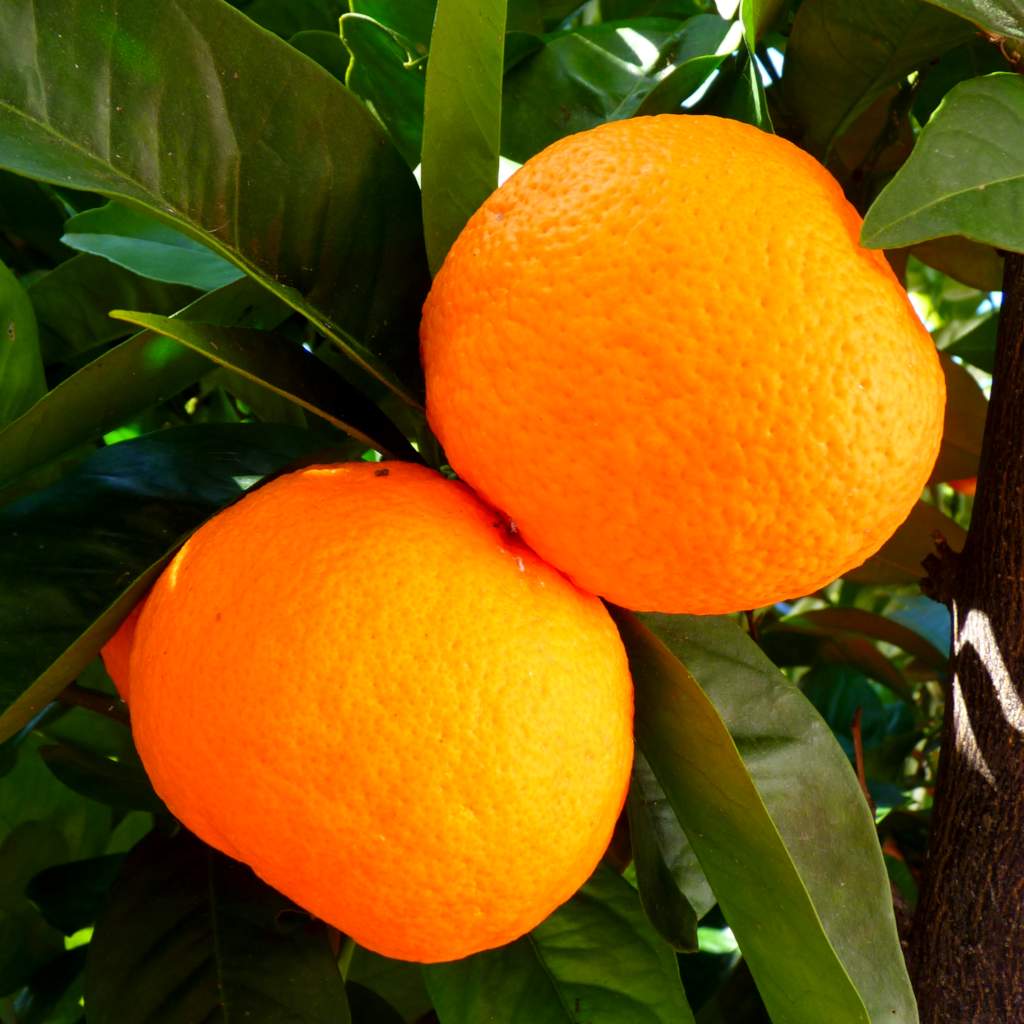
Very loved by the kings of France, orange trees are the reason many buildings called orangeries were built in castle gardens.
These wide-windowed buildings were the greenhouses of old, with much light and a mild temperatures during winter: perfect to winterize these little trees!
Citrus trees are remarkable for the deep green of their foliage and their white, fragrant flowers. As can be seen, this all makes the tree pretty ornamental!
It healthy fruits add to this exotic appearance, you’ll be thrilled!
Protect them well in winter, and shelter them from wind in summer to best support fruit bearing!
Read also on the topic of citrus trees:
hello i am Musa keita from the Gambia, am planing on doing an orang tree plantation, but last year on my uncles farm i saw his oranges bear fruit but no juice in them. whta do you think was the posble problem of that?
Hi, I ahev a question if someone can help me.
So for my garden I would like to plant orange trees.
The criteria of the trees that I am looking for are:
1. More than 3m tall
2. The color of the fruit when ripe is orange
3. And if possible it can be consumed (preferably for juice).
When I was traveling to Spain, I saw plenty bitter orange tree in the city, and it is close enough to my criteria, although after asking around unfortunately the fruit cannot be consume.
Thanks
Well, ronarudo, that’s a good question. To answer it I’d need to know where you live: not all orange trees have the same hardiness.
Most of the orange tree varieties you can find fit your request, so to be more specific, can you share where you intend to plant it?
Hi Gaspard, thanks for your reply.
First of all sorry for my english.
I am living in Indonesia, there are 2 gardens that I want to have orange trees at. 1 around 50-100m above sea level in west Java, and the other 1 is around 300-500m above sea level in Bali.
I have never been to orange plantation before, but many orange trees in Indonesia I know have green to yellowish fruit, thus its not that appealing for me and moreover its not that tall.
I already went to the plant market / nursery in Jakarta, mostly offered me small orange tree around 1-2m tall with lots of ripe orange fruit already, where I appreciate the fruit however I am looking for quite tall tree so people can take shelter from the sun underneath. and it would be even greater if I can harvest the fruit uner 2-3 years
Thanks again
The leaves and the oranges are dropping off, have I over-watered it?
I’m supposing you’re growing an orange tree in a pot. Leaf drop is most common in that case. It you aren’t, please correct me!
Leaves and fruits dropping are a sign of stress, so finding the cause is important. You mention overwatering, it is for sure a possibility but not the only one.
A way to check if you’ve overwatered is to get a look at the roots and soil. Slide a stick or ruler down the inside of the pot. Pull it out. If it it’s wet and smells of mushrooms, it’s definitely overwatering. If so, check drainage and reduce watering. Only water when the soil is dry two inches deep.
If the ruler is dry, and the pot feels light, then perhaps your orange tree is suffering of the opposite, lack of water. Simply water more often.
Lastly, leaf and fruit drop is a typical reaction to shock. Has the plant been moved in the past month? Aircon or heating switched on abruptly? Those are cases that might trigger leaf drop.
Do I need two or more orange trees to get pollination and fruit?
Hello Dave, the simple answer is “normally NO”, but it’s still a good idea to do it anyway…
It depends on the variety. Almost all orange tree varieties bear fruit even if they’re not pollinated by other trees. This is called “fruit set” and for citrus trees, most fruits may develop even if they’re not fertilized.
Some orange tree varieties are self-pollinating, while others require cross-pollination. Fruits that are fertilized (either self or cross-pollinized) will grow larger, resist fruit drop, and be more abundant.
So if you’ve got the space, it’s really best to grow two different varieties right next to each other!