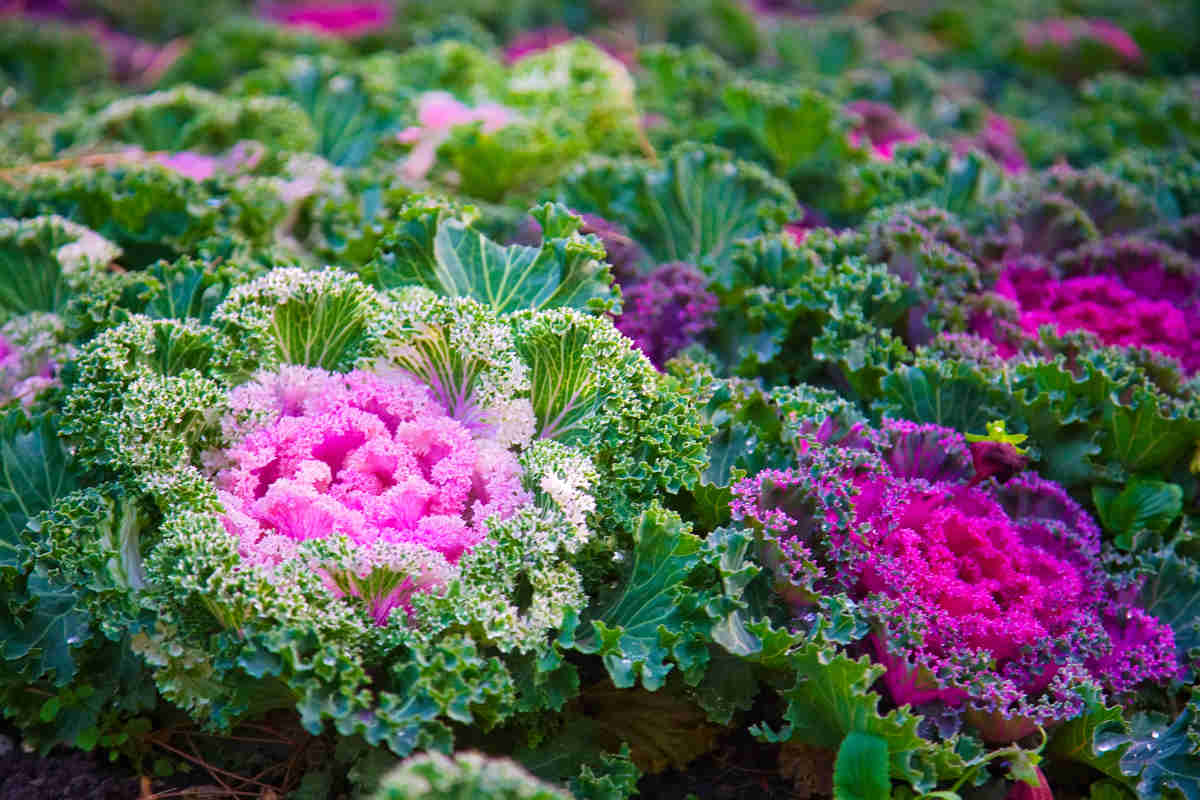
Leaves stand straight or spread wide, smooth or ruffled, in reds, yellows and greens that winter beds rarely offer. Ornamental cabbage (Brassica oleracea) shrugs off freezing weather, brightening pots, edges and even bouquets; give it plenty of sun in cool, moist soil that never waterlogs, and the colours stay vivid.
| Name | Brassica oleracea |
|---|---|
| Family | Brassicaceae |
| Type | annual |
| Height | 12 to 16 inches (30 to 40 cm) |
| Exposure | full sun |
| Soil | cool, moist |
| Foliage | evergreen |
| Flowering | fall, spring |
It is very easy to care for from planting or sowing all the way to blooming.
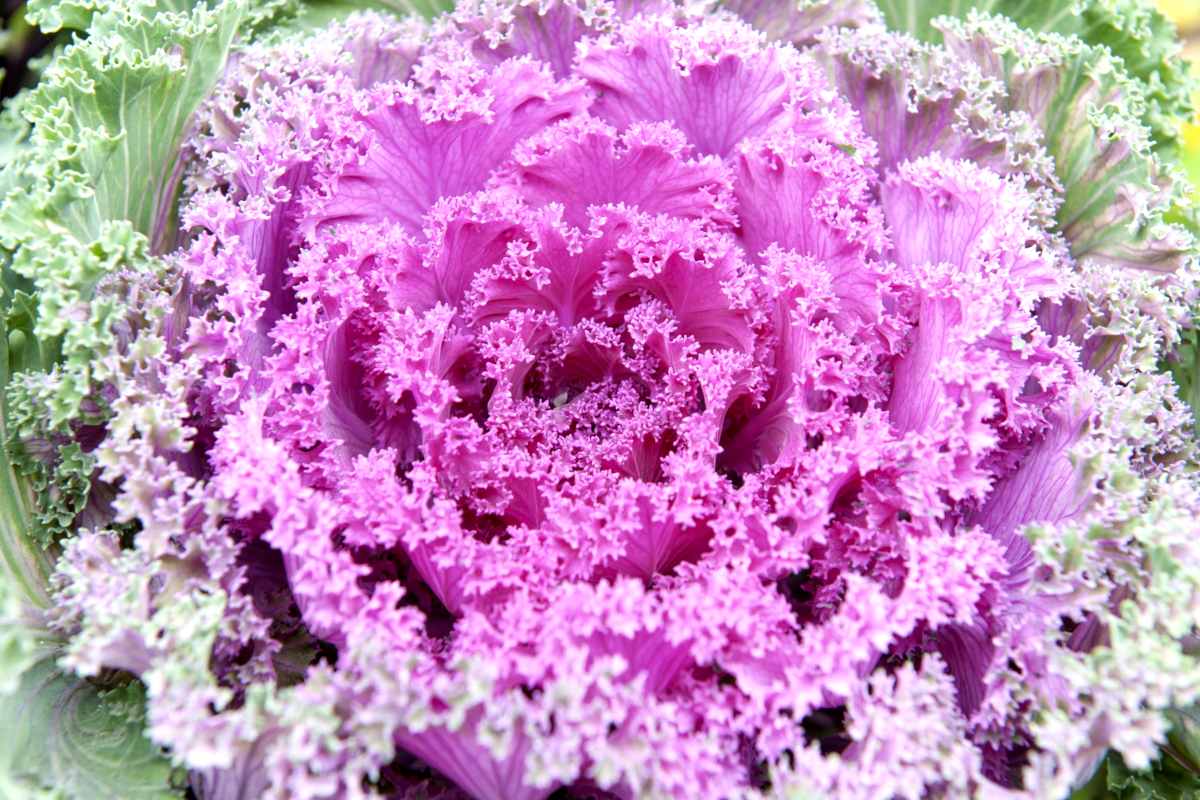
Ornamental cabbage can be planted in the ground directly if purchased in a nursery pot, but it can also be sown in spring.
Sow at the end of spring in a nursery and transplant directly to the plot about 1 month after sowing.
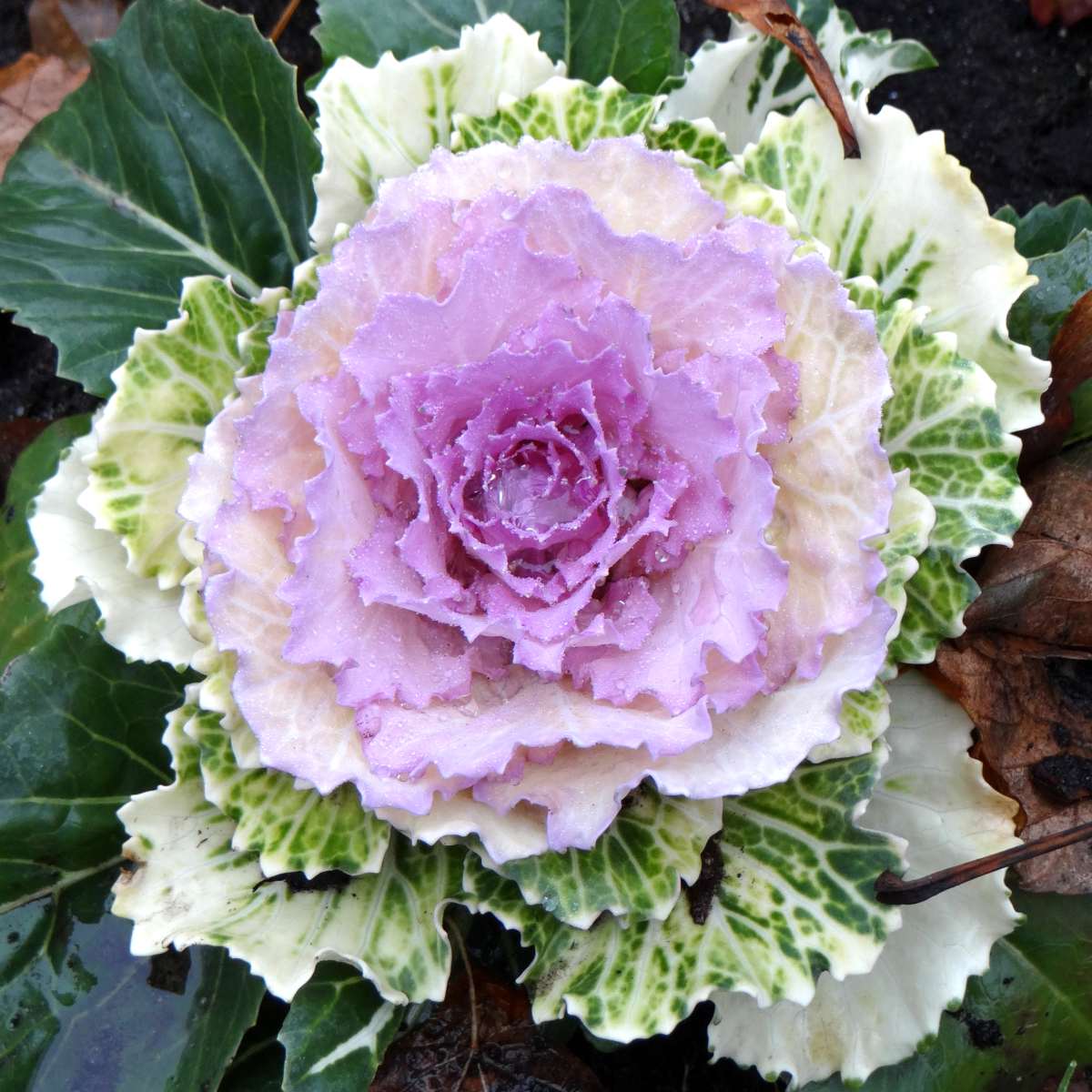
It is also possible to sow directly in the ground when the last frosts are past, towards late spring or early summer.
Potted ornamental cabbage is ideal for garden boxes, pots and other containers. It makes for a perfect addition to terraces and balconies in any region.
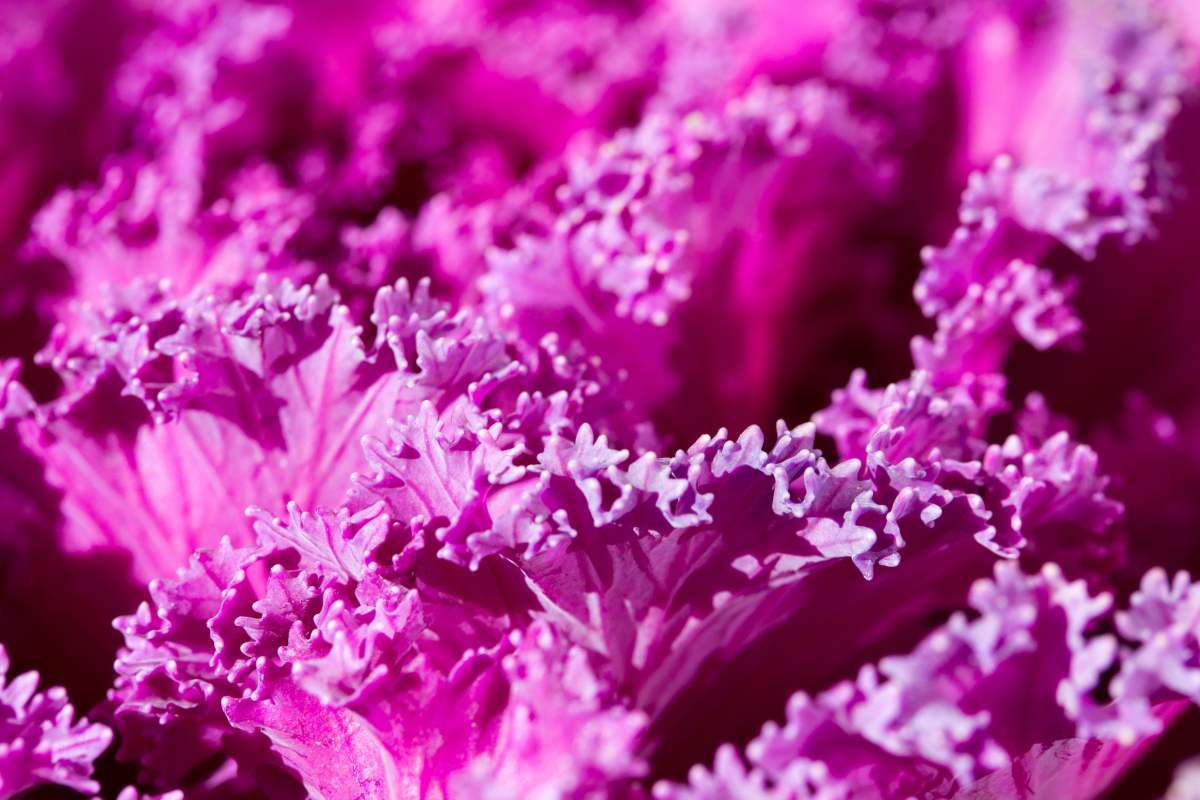
You might witness the occasional large white drop by to lay a few eggs.
Simply scrape them off the underside of leaves to prevent those pesky caterpillars from devouring your plant!
Ornamental cabbage can reach the garden as a nursery plant, as a seedling raised under cover, or from seed sown where it is to grow. The table below sums up when each option happens and what matters most at that moment.
| Approach | When | Key point |
|---|---|---|
| Planting a nursery-bought plant | Spring, once the last frost spells are over | Bury the root crown deep, as the head grows heavy |
| Sowing in a nursery | End of spring | Transplant to the plot about one month after sowing |
| Sowing directly in the ground | Towards late spring or early summer | Wait until the last frosts have passed |
Whichever route you take, allow at least 20 inches (50 cm) between plants.
Ornamental cabbages differ mainly in leaf shape, centre colour and height, which decides whether they suit a pot, a bed edge or a vase. The table below compares the varieties and series most often found on sale.
| Variety | Leaf type | Colours | Best use |
|---|---|---|---|
| ‘Redbor’ F1 | Tall, tightly curled | Deep purple-red throughout | Back of border, bouquets |
| ‘Nagoya’ | Tightly fringed, curled | Red, pink or white centre | Pots and bedding |
| ‘Osaka’ | Broad, lightly waved | Pink, red or white centre | Large heads in beds |
| ‘Tokyo’ | Smooth, rounded | Rose, red or white centre | Edging and window boxes |
| ‘Kamome’ | Finely fringed, dense | Red, pink or white centre | Small containers |
| ‘Peacock’ | Deeply cut, feathery | Red or white centre | Mixed pots, cut stems |
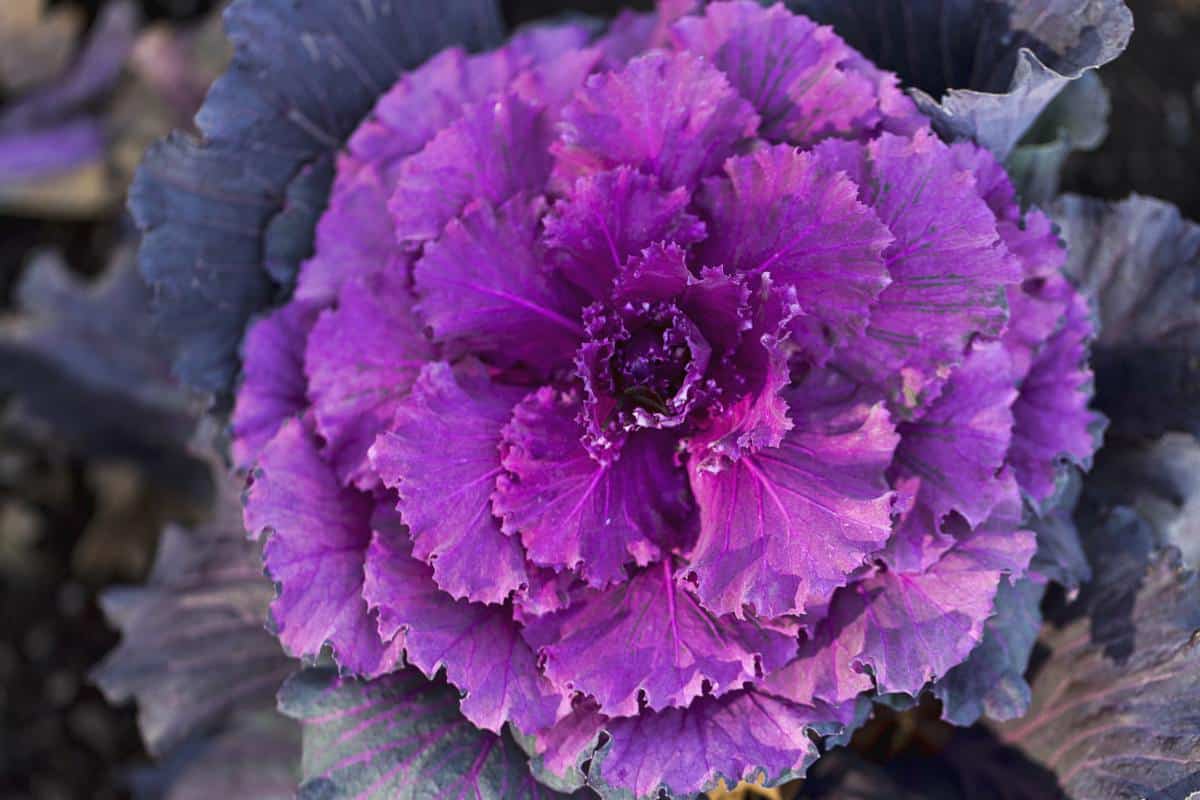
Ornamental cabbage is special in that many diverse colors are available, such as red, yellow, green, all colors that lack in the usual winter and fall scenery.
Surprising and colorful, it will decorate your pots, flower beds and edges. Bouquets can even be prepared from them, especially from long-stemmed varieties.
You’ll also notice that frost spells will have no impact on your plants: your ornamental cabbage will stay as beautiful as ever when the temperature drops below freezing!
Note: this type of cabbage is perfectly edible, but don’t expect wonders. Taste isn’t what it was bred for. Use them to extend soups or other cabbages.
Space them well upon planting, at least 20 to 24 inches (50 to 60 cm) apart, because ornamental cabbage grows very large leaves!