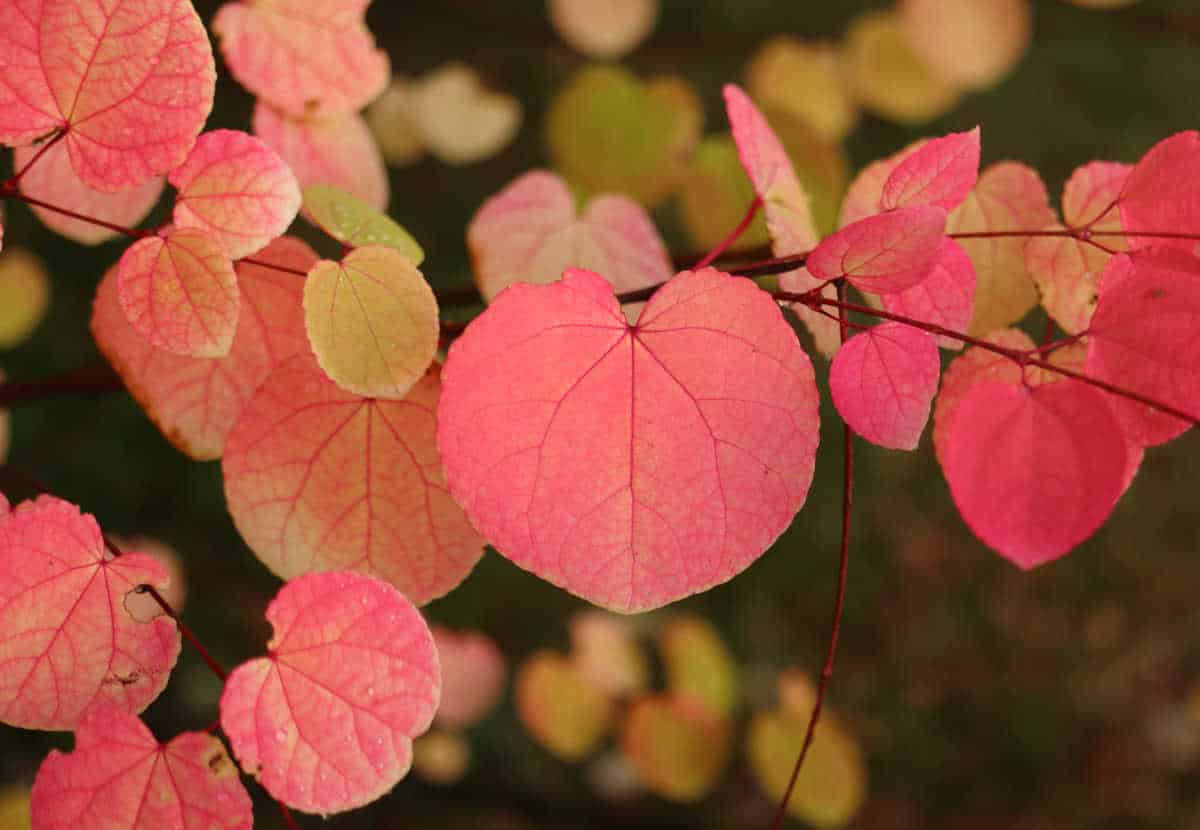
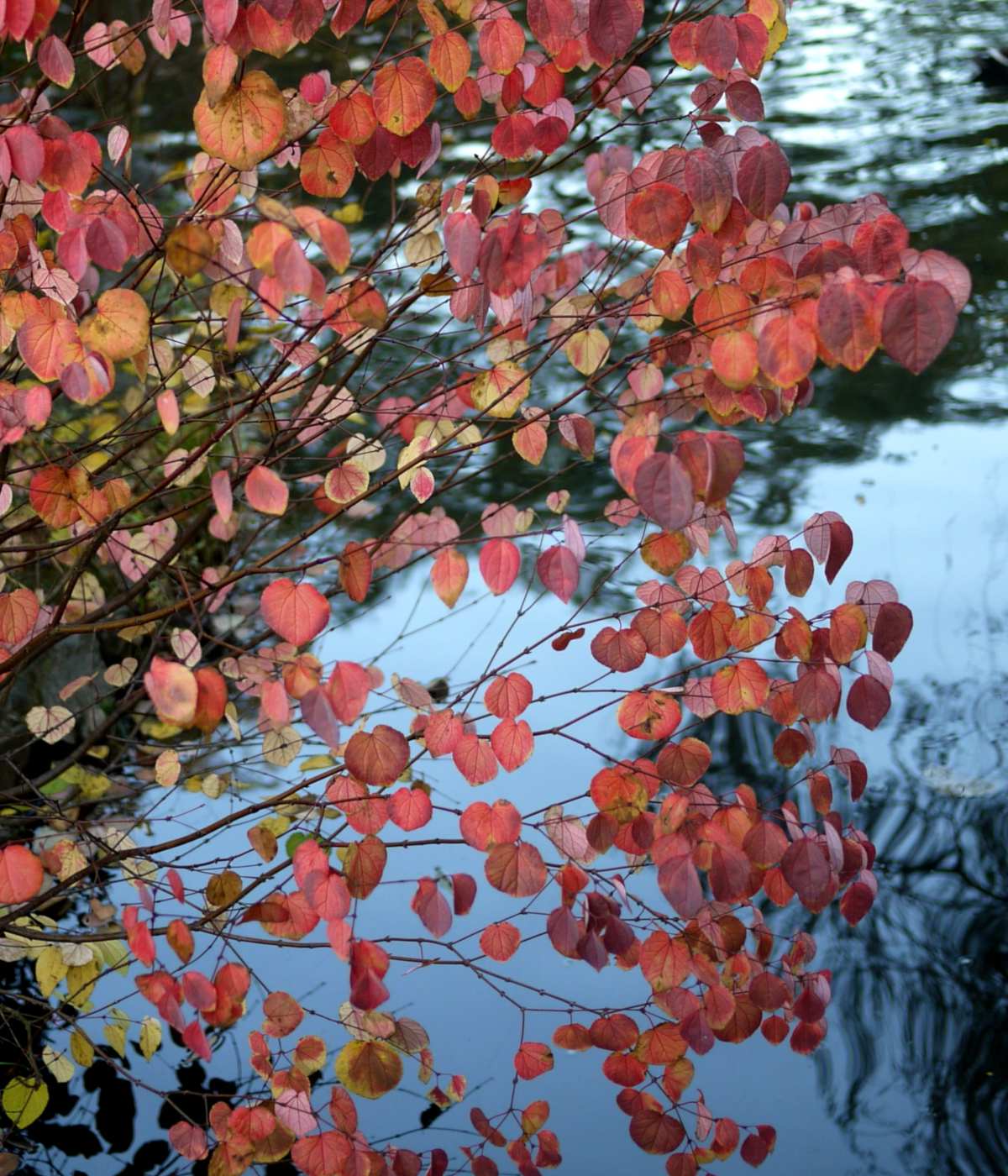
Autumn brings a scent of burnt sugar and caramel from the falling leaves of the katsura (Cercidiphyllum), a graceful shade tree that cools the ground beneath it and copes with clay, salt and wet soil alike. Give it rich, moist ground that never bakes dry, and it thrives with almost no fuss.
| Season | Autumn best, then spring |
|---|---|
| Soil needs | Rich & moist |
| Exposure | Full sun where cold, part sun elsewhere |
| Pre-treatment | Compost |
| Post-treatment | Plant mulch |
| Precautions | Some varieties grow large |
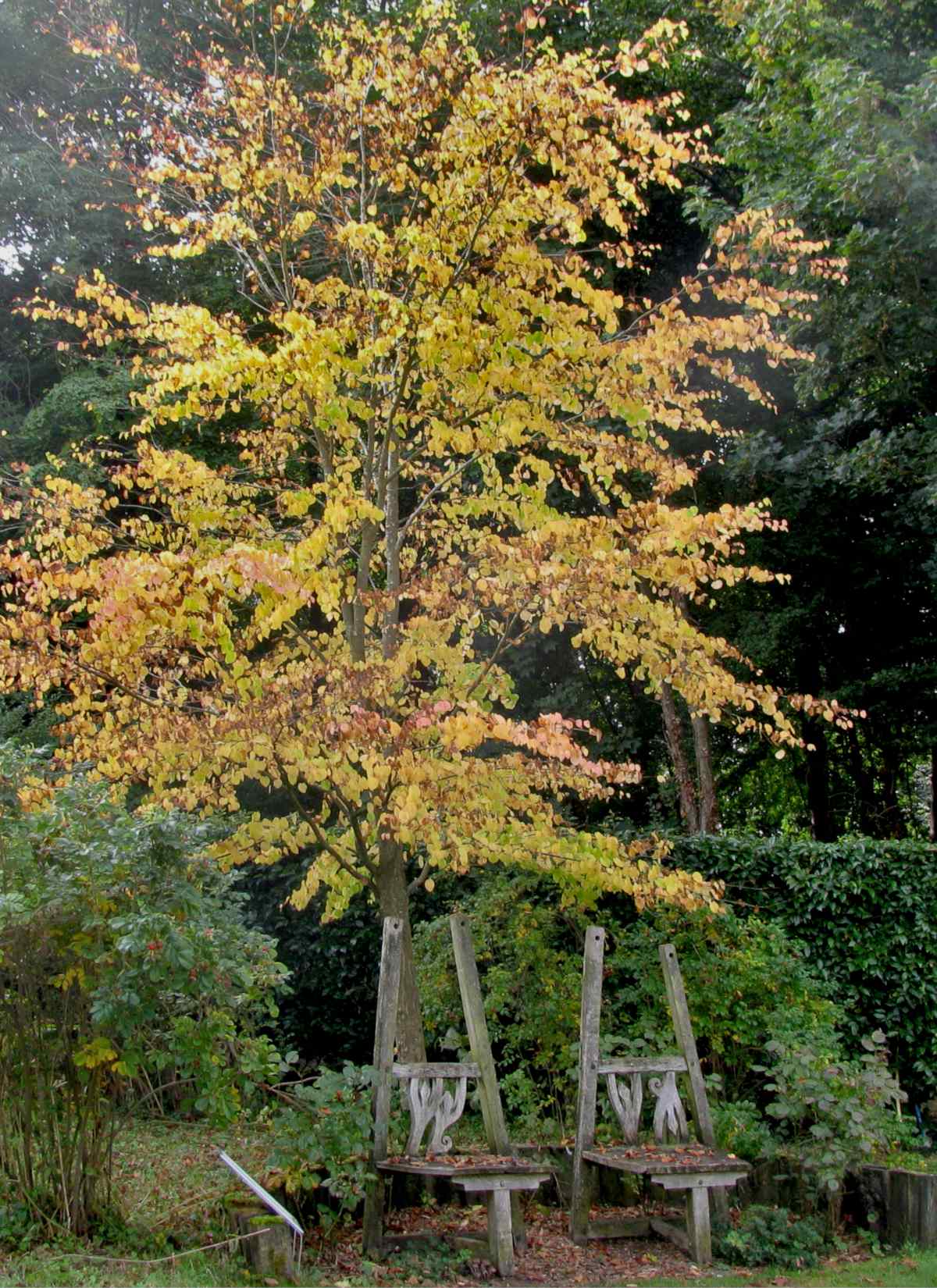
These few tips will help you make sure your Katsura tree is off to a great start! Shown right, a beautiful young Cercidiphyllum in the Geoff Hamilton Memorial garden.
Read also:
Kastura, like most trees and shrubs, is best planted in fall.
It’s almost impossible to find bare-root specimens. You’ll always be planting from a container with a root ball.
In regions with harsh winters, hold off until spring instead, since a freshly planted root system can be lifted by repeated freeze and thaw.
If you plant in spring, get the tree in the ground before the buds break, as katsura leafs out early.
Soak the root ball in a bucket until bubbles stop rising.
Tease out or cut through any roots spiralling round the base of the root ball, because they will never straighten on their own and can strangle the trunk later.
Never plant into waterlogged or frozen ground; wait until the soil has drained and thawed, since even a tree that likes consistently moist conditions needs well-drained soil rather than standing water.
Katsura can go in the ground at two moments of the year, and the right one depends mostly on how hard your winters are. This table sets out each option and what to watch for.
| Planting window | Season | Suits | Main risk |
|---|---|---|---|
| Autumn planting | Autumn, as growth slows | Most gardens; roots settle before spring growth | None, as near-dormancy reduces transplant shock |
| Spring planting | Late winter to early spring, before bud break | Regions with harsh winters | Katsura leafs out early, so late planting catches it in growth |
| Wait before planting | Once the soil has drained and thawed | Ground that is waterlogged or frozen | Standing water, even though the tree likes constant moisture |
| Container-grown stock | Autumn or spring | Everyone, as bare-root katsura is virtually unobtainable | Spiralling roots and damage when slipping off the pot |
Whatever the window, soak the root ball until bubbles stop rising before the tree goes in.
Follow these tree planting guidelines to plant your katsura tree successfully. Below are a few additional considerations.
Watering
To make sure the soil stays rich and moist, use plant based mulch around the tree in a thick layer.
Renew the layer of mulch regularly.
Cercidiphyllum has a shallow root system. Too much mulch isn’t good in very wet areas.
Katsura is one of the easiest trees to please!
It can cope with what usually are labeled “difficult soils”:
As long as the two requirements of being rich and rather moist are matched, any situation can do!
Katsura strongly dislikes soil that bakes dry in summer, and crisp brown leaf margins are usually the first visible sign that the tree is under drought stress and needs watering.
On thin sandy or gravelly ground, work plenty of leaf mould or well-rotted compost into a generous planting area so the soil holds moisture between waterings.
Compacted ground is one limit on its otherwise easy-going nature, since Katsura’s shallow, fibrous roots struggle to spread through trodden or driven-over soil, though they equally resent drought and prolonged dryness.
Except for a few dwarf varieties, your katsura may grow quite tall. The only conditions for tall growth is space and water.
If winds in your area are very strong, best find a sheltered spot for your katsura.
Site the katsura beside a path or a seating area so the burnt-sugar, caramel scent of its falling autumn leaves can actually be enjoyed.
Avoid frost pockets and dips where cold air settles, since katsura breaks bud early and late frosts blacken the young leaves.
Leave room for a crown nearly as wide as the tree is tall.
Keep it away from hot reflective spots such as south-facing walls and wide paving, where the thin leaves scorch at the edges and drop early in dry heat.
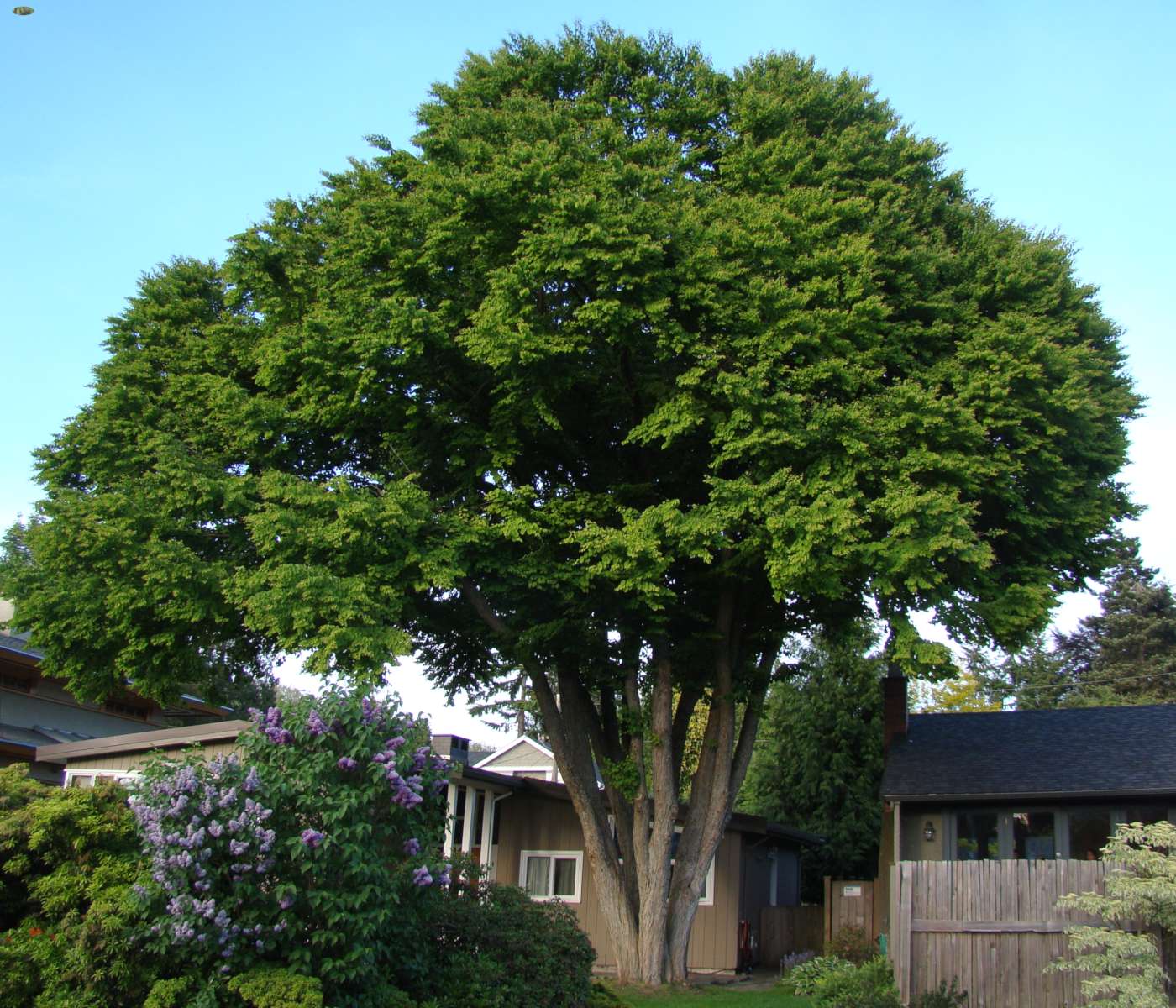
Katsura, being from Japan and the Far East, is of course perfectly suited to Japanese gardens.
But it has many other uses as well. Since it copes with many types of soil and is practically disease-free, cities and local homeowners associations use it often. In dry areas, irrigation is needed in summer. Here are some of its potential uses:
In gardens, it serves as stunning nice standalones, highlighted in the center of a garden bed. Surround it with tulips for spring blooming and Crocosmia for late summer flashes that will match the fall colors of the katsura perfectly.
Lastly, although it’s difficult work, katsura bonsais are simply astounding in fall.
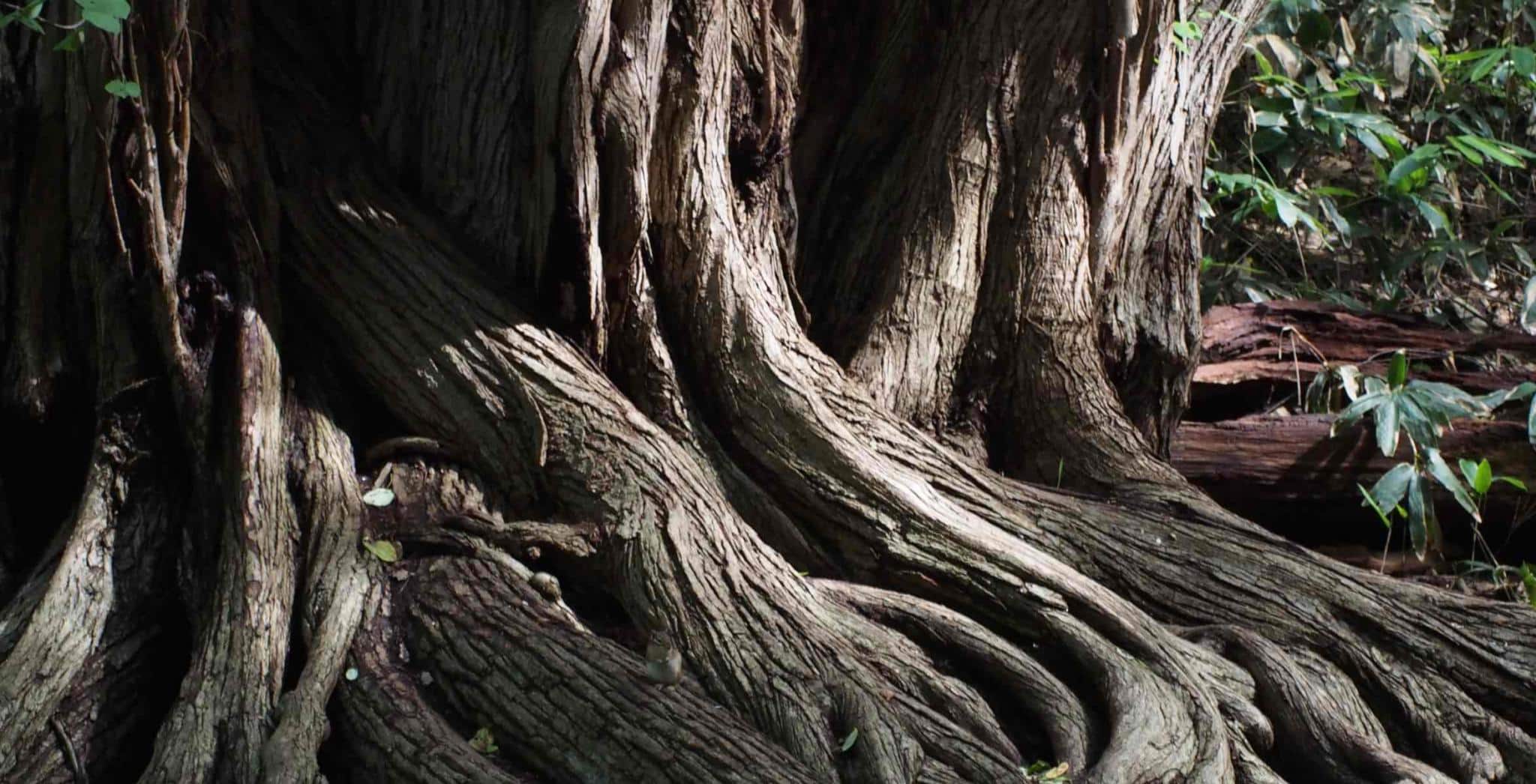
Katsura tends to send roots out to the sides, running very shallow near the surface.
Remember that roots extend to as far as the drip line does.
Want to set up a nice place under this excellent shade tree nonetheless? Simply go for a low terrace so that roots can run free beneath it!
Katsura roots run shallow but spread very wide, among others to anchor this wide tree to the ground. Transplanting usually results in cutting off too much of the root system. This makes the tree extremely vulnerable to transplant shock.
If you’re setting up an irrigation system in your garden, consider having a few drip points under your katsura tree. It will thank you for the attention during droughts!