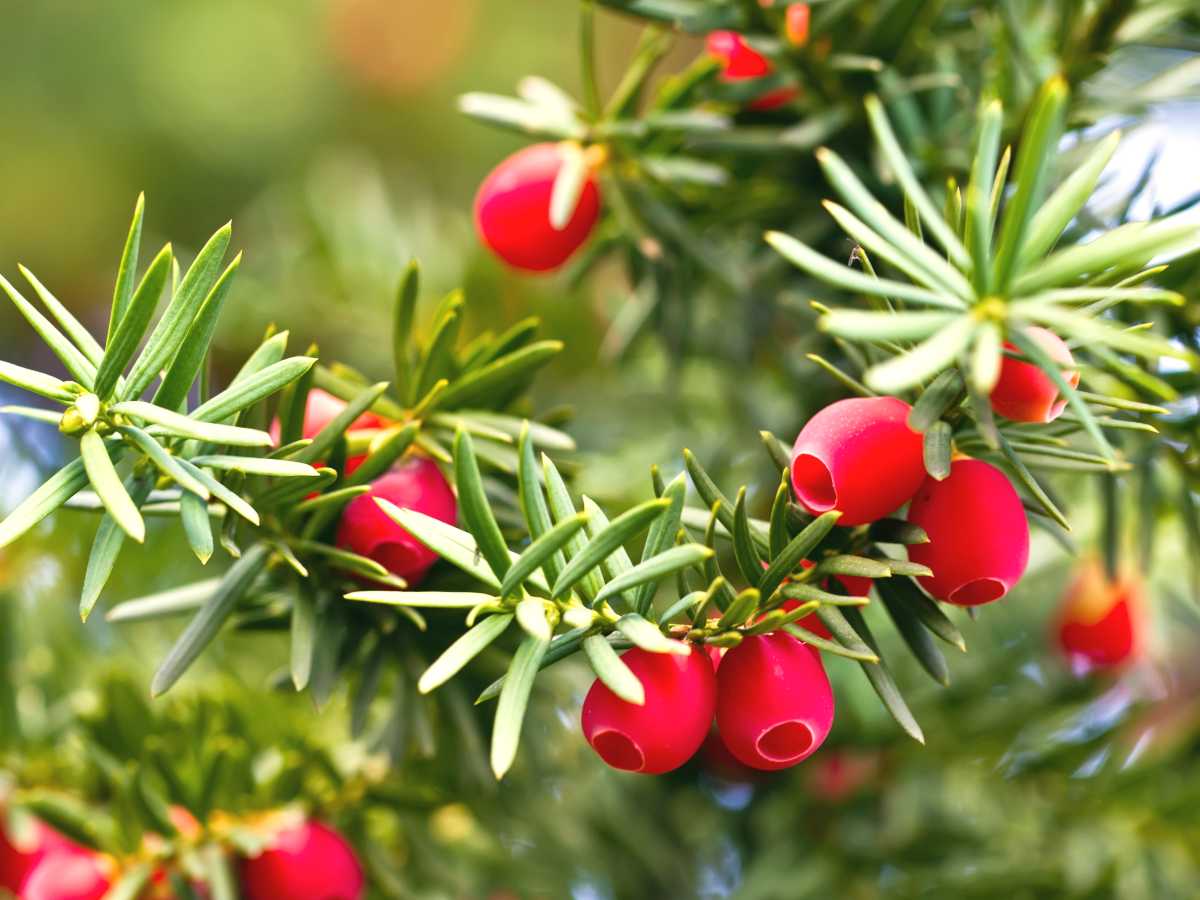
Dense, dark evergreen foliage with intricately shaped sprigs, and berries that are toxic like every other part of the tree: common yew is the classic hedge and topiary conifer, native to Europe and North Africa and clipped in gardens for centuries. Give it ordinary well-drained soil, in sun or light shade, and it will accept any shaping and live for hundreds of years.
| Name | Taxus |
|---|---|
| Family | Taxaceae |
| Type | conifer |
| Height | up to 50 feet (16 meters) |
| Exposure | full sun to shade |
| Soil | ordinary, well drained |
| Foliage | evergreen |
Its evergreen foliage is very appealing since it is very dense and sprigs are intricately shaped.
Common yew is a conifer usually planted as part of a hedge, and is often set up at the beginning of fall, but it can also be planted until early spring or mid-spring as long as it doesn’t freeze.
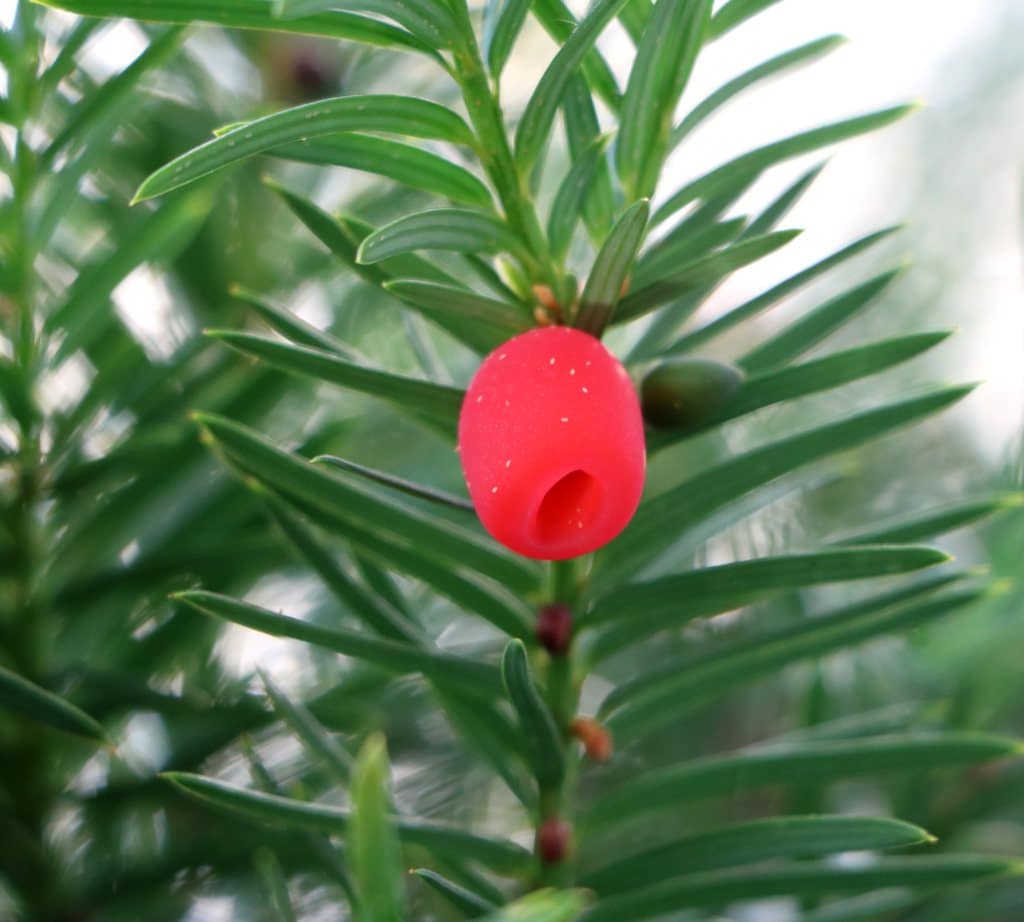
As a standalone, this tree can grow quite large, so check upon planting that it has enough space to spread out.
After having planted your yew, watering is needed on a regular basis for 2 years to facilitate root development and settling in.
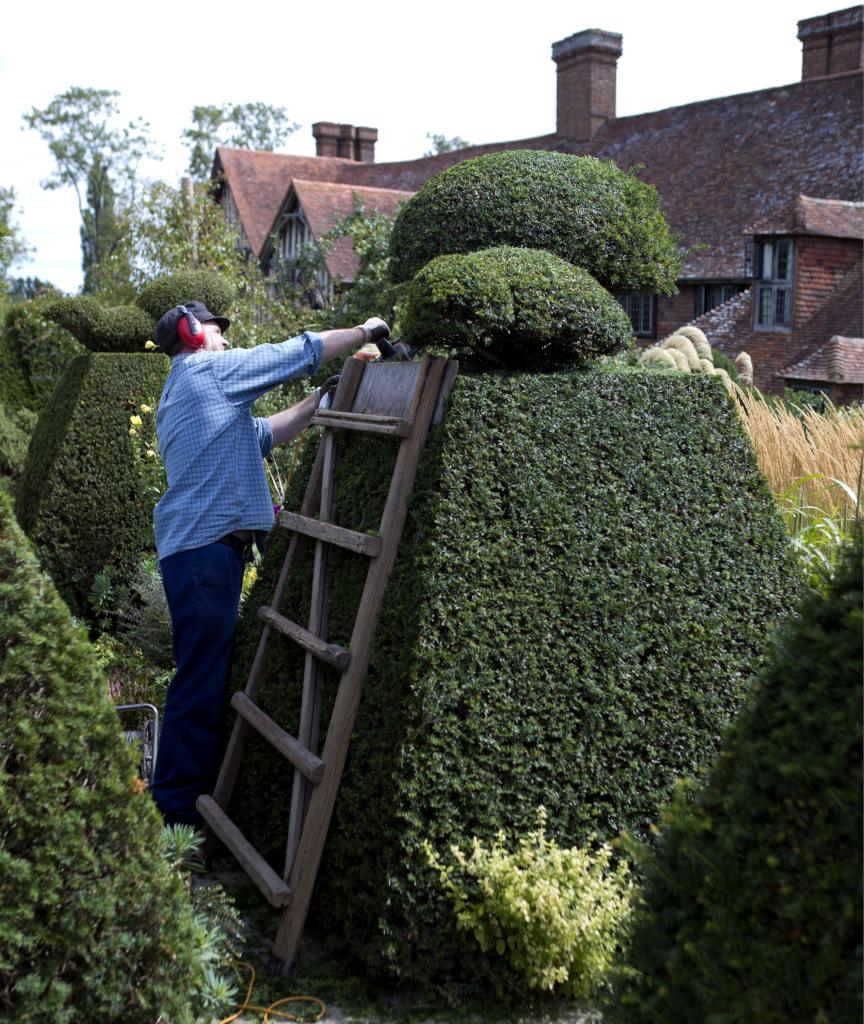
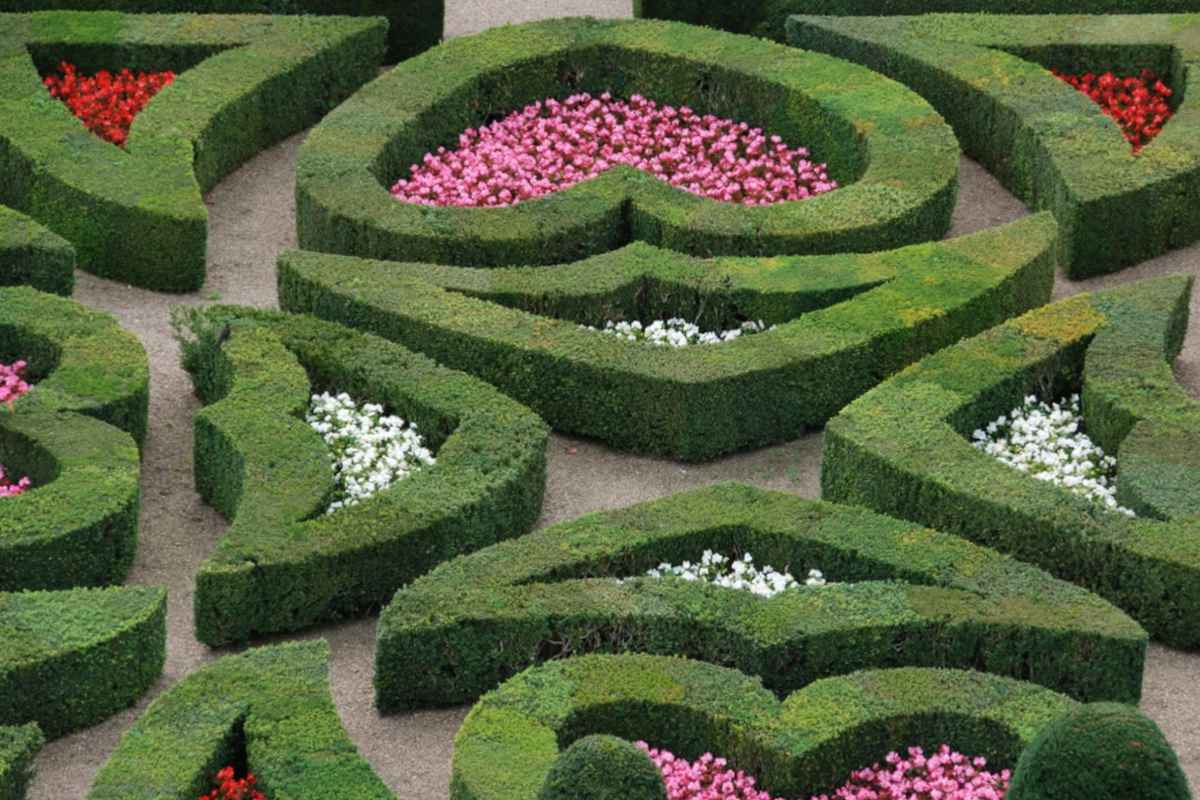
Yew is a tree that loves pruning and can even be shaped to whim as topiary.
If not pruned, your common yew can grow over 65 feet (20 meters) tall for the tallest species.
For yew hedges, select the pruning height you are comfortable with as well as the thickness.
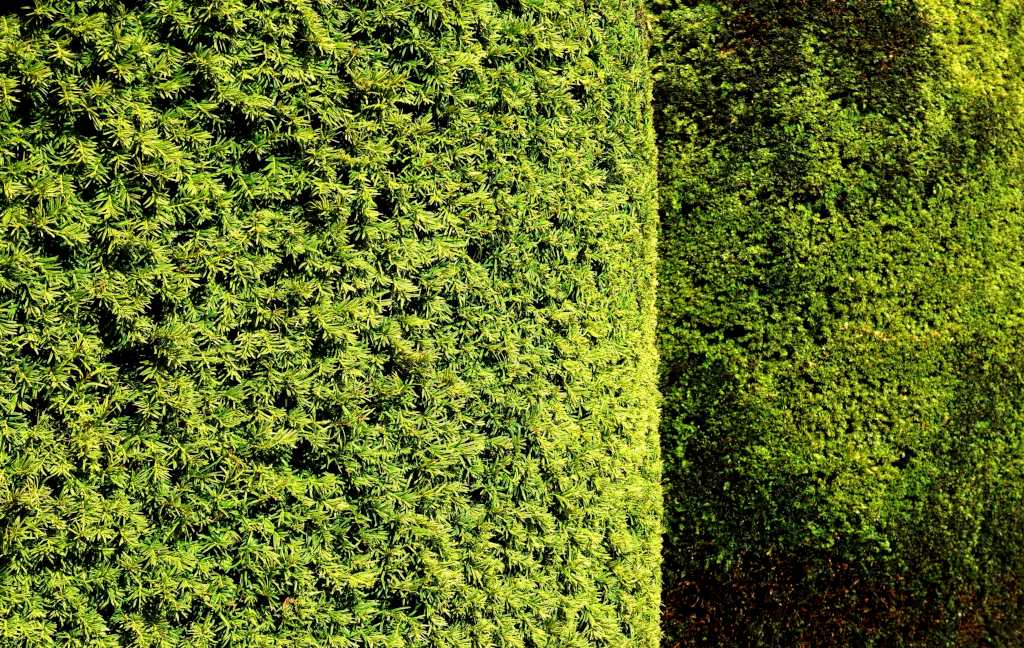
Spring pruning is usually associated to rising sap and tends to accelerate the yew’s growth. Since yew is a rather slow-growing tree, this solution is often best when starting the hedge off.
Yew is one of the few trees that supports hat-racking. This practice is more harmful than proper regular pruning, but for some species it can help shrink a hedge that has grown too large.
Yew reacts differently depending on when the shears come out, and the choice decides whether the plant thickens up or races away. Here are the approaches described above, side by side.
| Approach | When | Effect | Best for |
|---|---|---|---|
| Single heavy pruning | late summer | Keeps growth under control | Established hedges |
| Spring pruning | Beginning of spring | Speeds growth up as sap rises | Starting a hedge off |
| Hat-racking | Only when needed | More harmful than regular pruning | Shrinking a hedge grown too large |
| No pruning at all | Never | Reaches over 65 feet (20 m) | Standalone trees with space |
Whatever you choose, gloves are wise: every part of the tree is toxic to some degree.
Yew isn’t a very demanding tree in terms of watering, but does deserve some attention, especially at the beginning.
Yew is a tree that resists mots diseases and fungus quite well, and its lifespan can exceed several hundreds of years.
Beyond the plain green species, yew comes in columns, carpets and golden forms, each suited to a different job in the garden. The table below compares the cultivars most often found on sale.
| Variety | Habit | Foliage colour | Best use |
|---|---|---|---|
| ‘Standishii’ | Very slim, slow column | Golden yellow | Small gardens, large pots |
| ‘Fastigiata Aurea’ | Narrow column | Gold-edged green | Bright vertical accent |
| ‘Fastigiata’ (Irish yew) | Narrow column | Very dark green | Formal accents, avenues |
| ‘Repandens’ | Low and spreading | Dark green | Ground cover, shady banks |
| ‘Semperaurea’ | Bushy, spreading | Golden yellow | Sunny borders, low screens |
| ‘Hicksii’ | Upright, columnar | Dark green | Narrow hedges, cold gardens |
| ‘Densiformis’ | Dense low mound | Bright mid-green | Low hedges, house foundations |
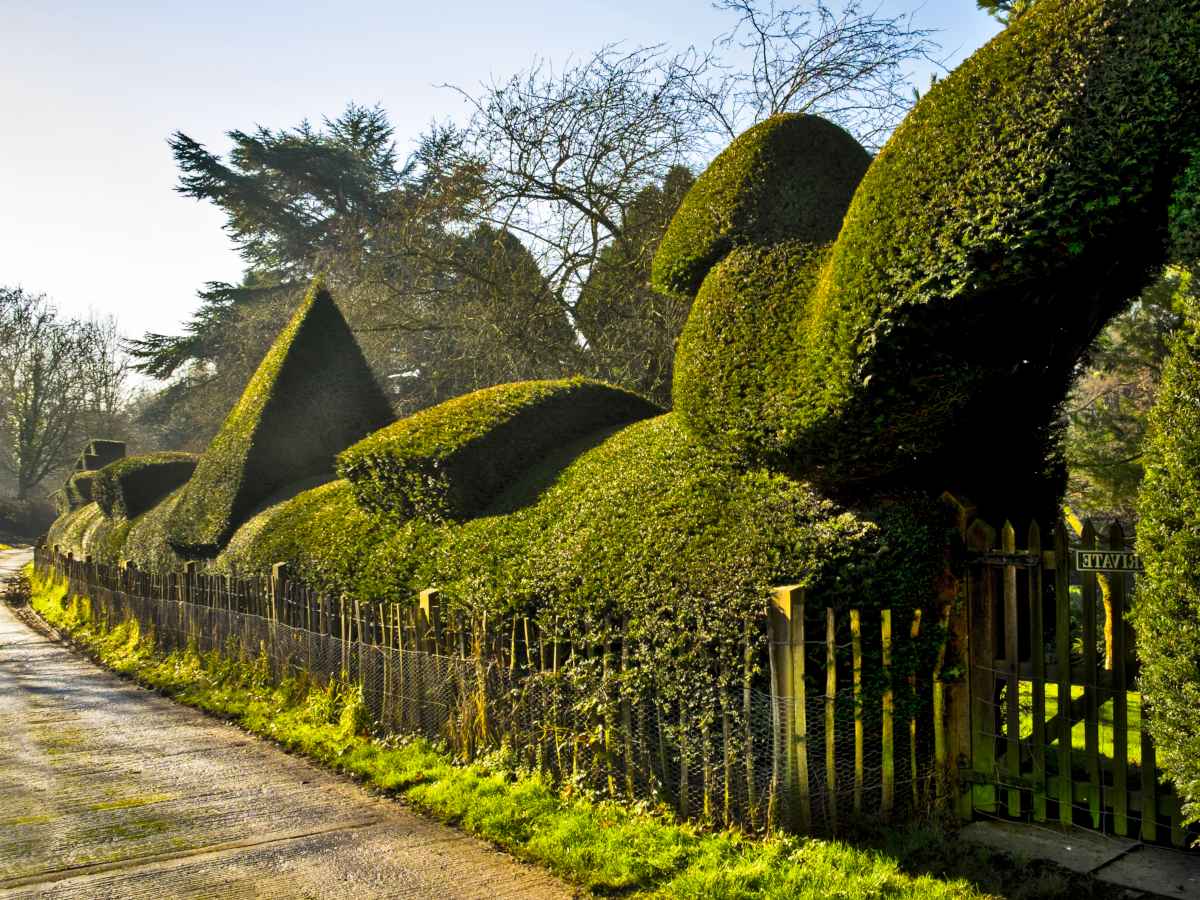
Native to Europe and North Africa, yew has been used for evergreen hedges for centuries, but it also is showcased as a standalone in the garden.
Ideal for persons who are passionate about topiary, it lends itself wonderfully to shaping. It’s perfect for cloud pruning.
Both its longevity and hardiness make it an interesting alternative to boxwood which is more vulnerable to disease.
It’s also reputed to be an excellent wind-breaker ready to resist gales of any power – and block out inquisitive neighbors, too.
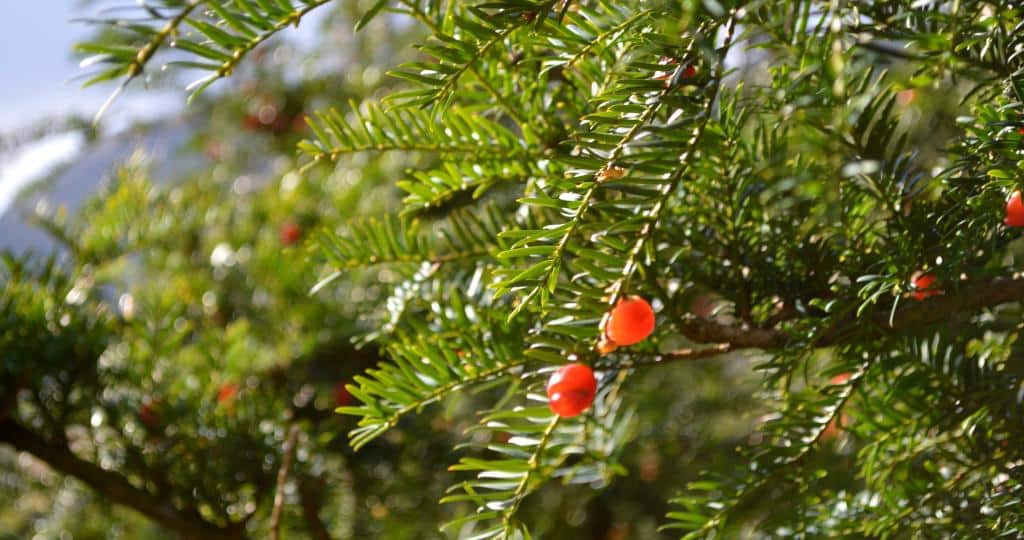
Poisonous yew berries
Take note, though, that yew is a poisonous plant.
Yew berries are absolutely not edible and all parts of the tree are toxic to some degree.
Prudent gardeners even wear gloves when pruning this tree.
When part of a hedge, think well about how high you want it to grow so that you can determine the planting distance of your yew accordingly! Keep a spacing of about 32 inches (80 cm) to 3 feet (1 meter) for the usual 6-foot (1.80 m) hedge.
Read also