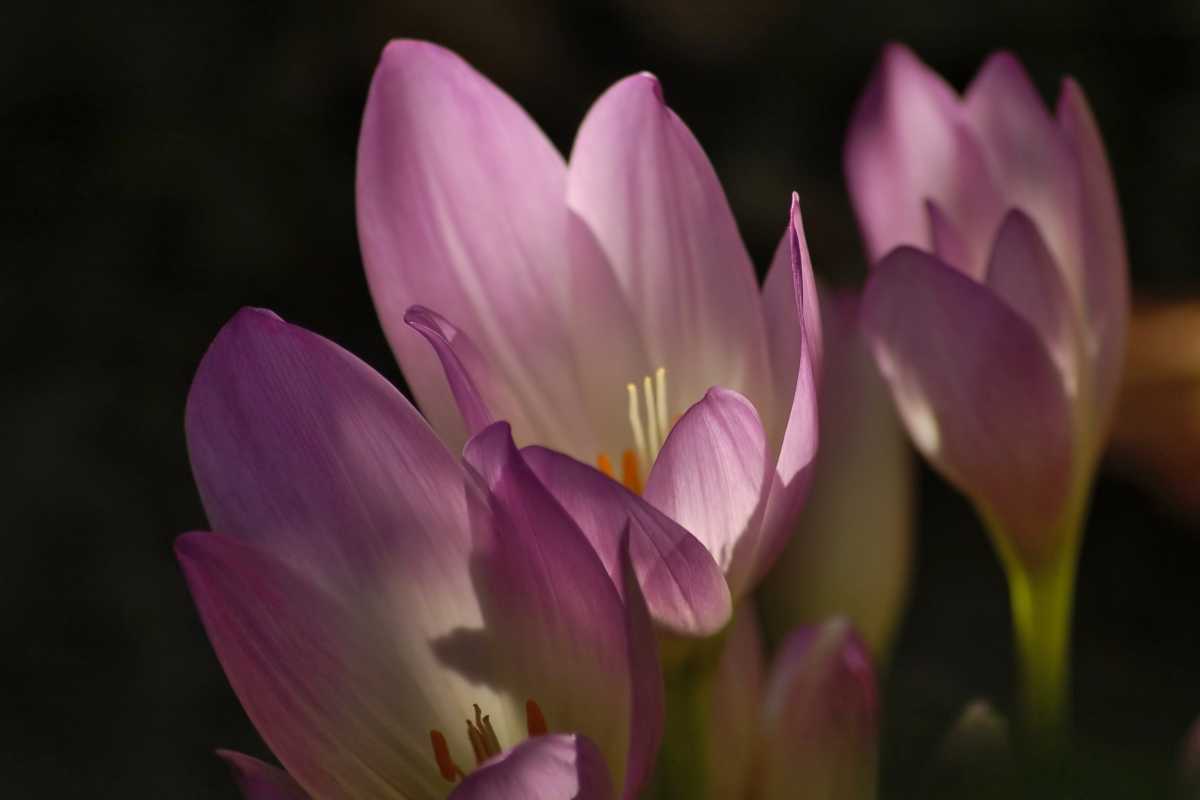
Flowers in white, blue-violet, lilac-pink or purple rise barely 3 to 6 inches from bare soil, from early autumn until the first frosts. Colchicum (Colchicum autumnale), the autumn crocus, makes fine ground cover at the foot of trees, but is seriously poisonous; choose a well-lit or partly shaded spot and it flowers year after year unattended.
| Name | Colchicum autumnale |
|---|---|
| Family | Liliaceae (lily family) |
| Type | bulb plant |
| Height | 3 to 6 inches (10 to 20 cm) |
| Exposure | full sun |
| Soil | ordinary |
| Flowering | early autumn to late autumn |
Easy to care for, it fancies sun or light shade.
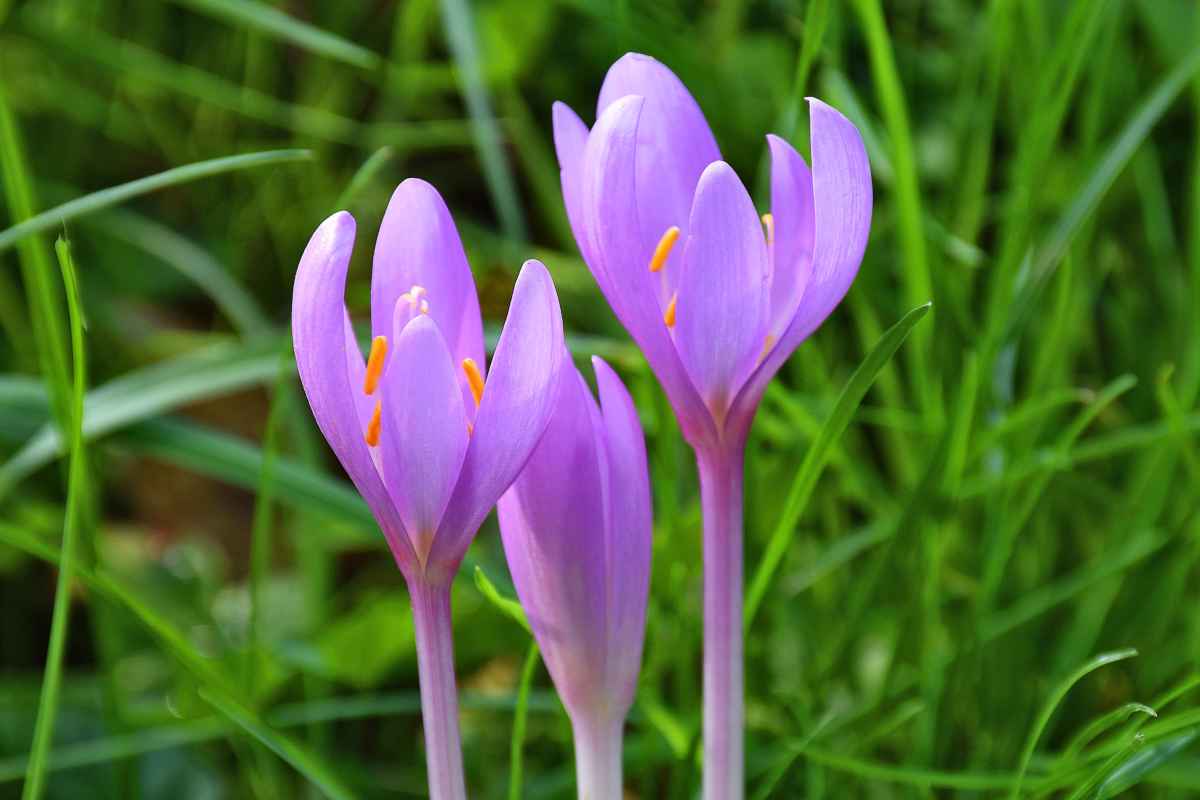
Colchicum is a perennial bulb that is easy to plant which will flower year after year.
Plant the bulbs from midsummer to early autumn more or less 4 to 6 inches (10 to 15 cm) deep, keeping the bulbs at equal intervals.
Colchicum is a type of plant that is perfect for ground cover.
Although crocus and colchicum look very similar, they do belong to different families.
Easy to care for and simple to cultivate, colchicum requires very little work and flowers abundantly in fall.
One of the great assets of colchicum is that no maintenance is needed at all, and it will blend into your garden right away.
After the blooming, wait for the leaves to have withered away completely before cutting, or even let them be on the spot for even better winter protection.
Colchicum is a plant that knows practically neither disease nor parasite.
The only problems that might arise are due to snails and slugs but damage is often minimal.
Beyond the plain autumn crocus, a handful of colchicums are sold every summer in bulb catalogues and garden centres. The table below sums up what sets them apart when you are picking a bag of corms.
| Variety | Flower colour | Flower form | Vigour band | Best use |
|---|---|---|---|---|
| ‘Waterlily’ | Lilac-pink | Fully double | Vigorous, large-flowered | Borders, close to paths |
| ‘Album’ | Pure white | Single, goblet-shaped | Vigorous, large-flowered | Shady borders, under trees |
| ‘Album’ | White | Single, slender | Compact | Edges, rock gardens |
| ‘The Giant’ | Mauve-pink, white throat | Single, very large | Vigorous, large-flowered | Bold clumps in borders |
| ‘Lilac Wonder’ | Deep lilac-pink | Single, goblet-shaped | Vigorous | Massed ground cover |
| ‘Alboplenum’ | White | Double | Compact | Front of border, containers |
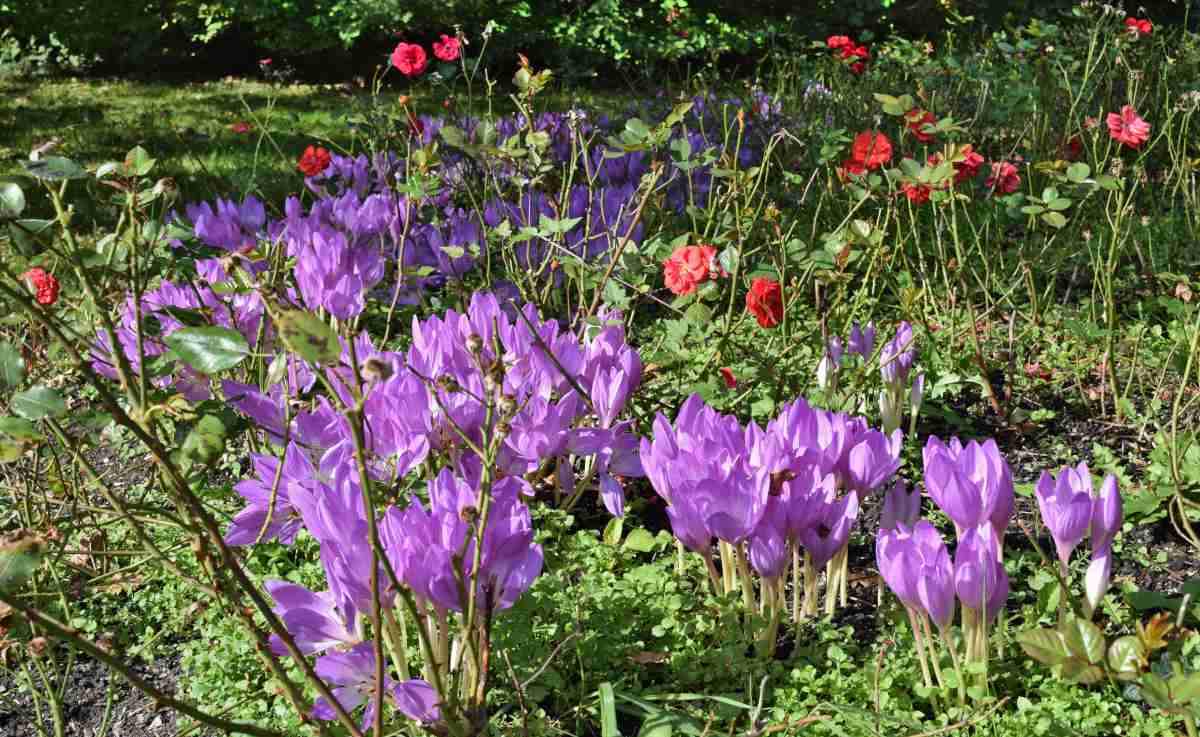
Colchicum, native to Turkey and Iran, numbers about a hundred species throughout the world. Particularly poisonous, it is also called dog-killer since its poison can be fatal to animals.
This bulbous plant is perfectly suited to edges and also is beautiful at the foot of trees that will benefit from the attention it shares.
This flower used to be very common earlier.
Usually, appearance of colchicum signals the end of summer, but such is the distraction offered by its white, blue-violet, lilac-pink or purple colors that we forget to be sad as winter approaches…
Indeed, colchicum sprouts up very fast and this often coincides with the arrival of fall.
Don’t do anything at all, colchicum grows back on its own year after year!