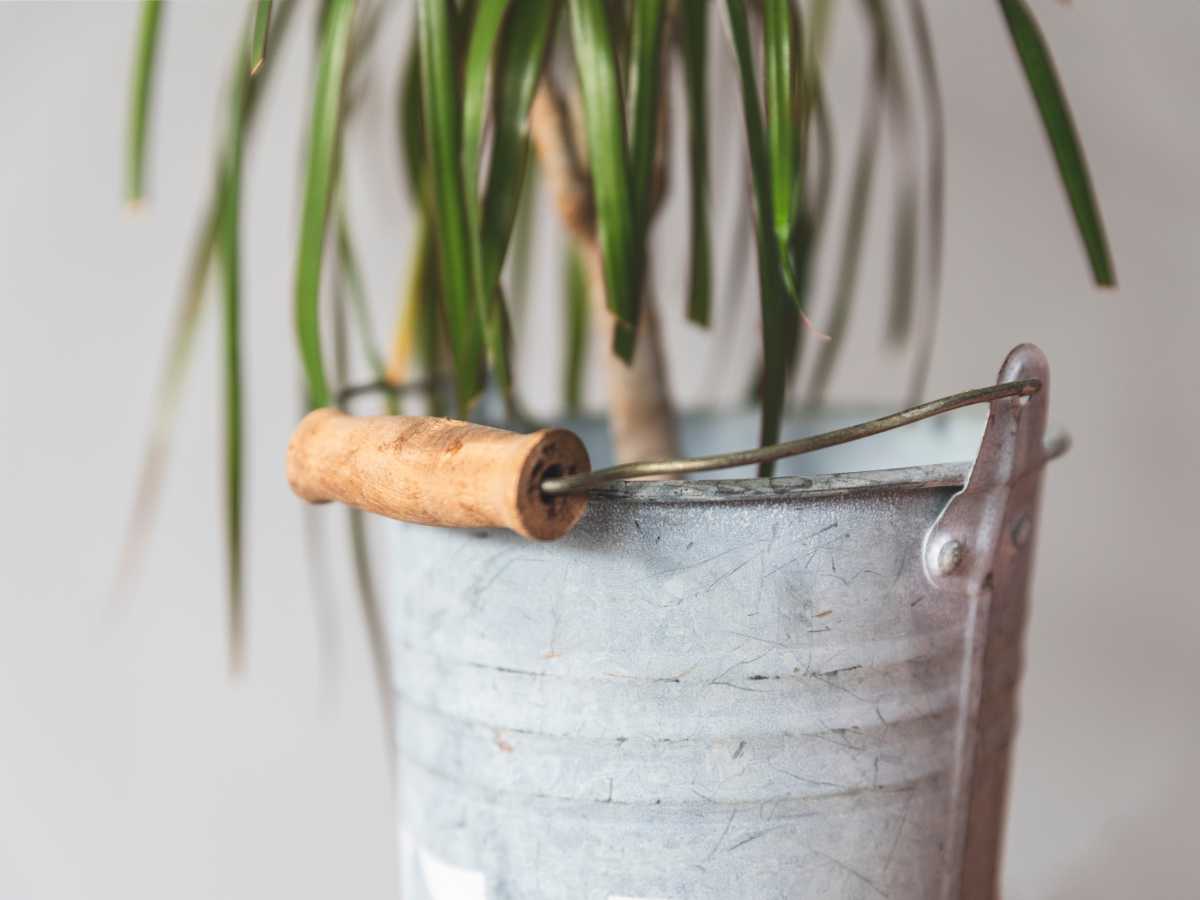
High air moisture keeps the lower leaves of a dragon plant (Dracaena marginata) on its stem; in drier air they drop away one by one from the bottom up. Watering is what decides whether it merely survives or thrives, so water only when the soil has turned completely dry.
Pay attention to light levels and season to figure out if you need to water often or not.
All year long, mist water on the leaves, preferably soft water.
As a general rule, try to increase humidity in the air around the plant.
Note: all varieties have similar water needs (bicolor, kiwi…)
Dragon plants in low light and cool weather grow slowly. As a result, they need less water. With full light and warmth, on the other hand, they’ll need a lot more watering.
There are 2 techniques to water a dragon plant:
Only water when soil has turned completely dry.
To check, stick your finger down to a depth of 2-3 inches (5-8 cm). It should come out dusty and dry. If there’s even just a little moisture left, don’t water yet.
A study for Dracaena marginata has shown that the best watering schedule for dracaena is every 5 to 7 days.
Here’s a short table to show how often and how much to water Dracaena marginata:
This is especially important if your plant is potted. Potted plants don’t get any water other than that which you give them.
Also, you can adjust this to the size of your potted plant. Usually, at first, the plant isn’t so big. That’s what the amounts above refer to. Later on, as it doubles in size, you can also double the amounts you give it (but not how often: that stays the same).
A good way to water this plant is the “dunk & drip-dry” method. It only works for pots. Do this once a week in summer and twice a month in winter.
Light and warmth set the pace: the very same plant can need a drink every day or only once a fortnight. Find the line that matches where your dracaena stands, then confirm with the finger test before you pour.
| Conditions | Light | How often | How much |
|---|---|---|---|
| Hot, midsummer | Full light | Daily or every other day | ½ glass |
| Hot, midsummer | Low light | Every week | 1 glass |
| Cool weather | Full light | Every week | 1 glass |
| Midwinter rest | Low light | Every fortnight | ½ glass |
Whatever the line you land on, only water once the soil has turned completely dry, and double the amounts (never the frequency) as the plant doubles in size.
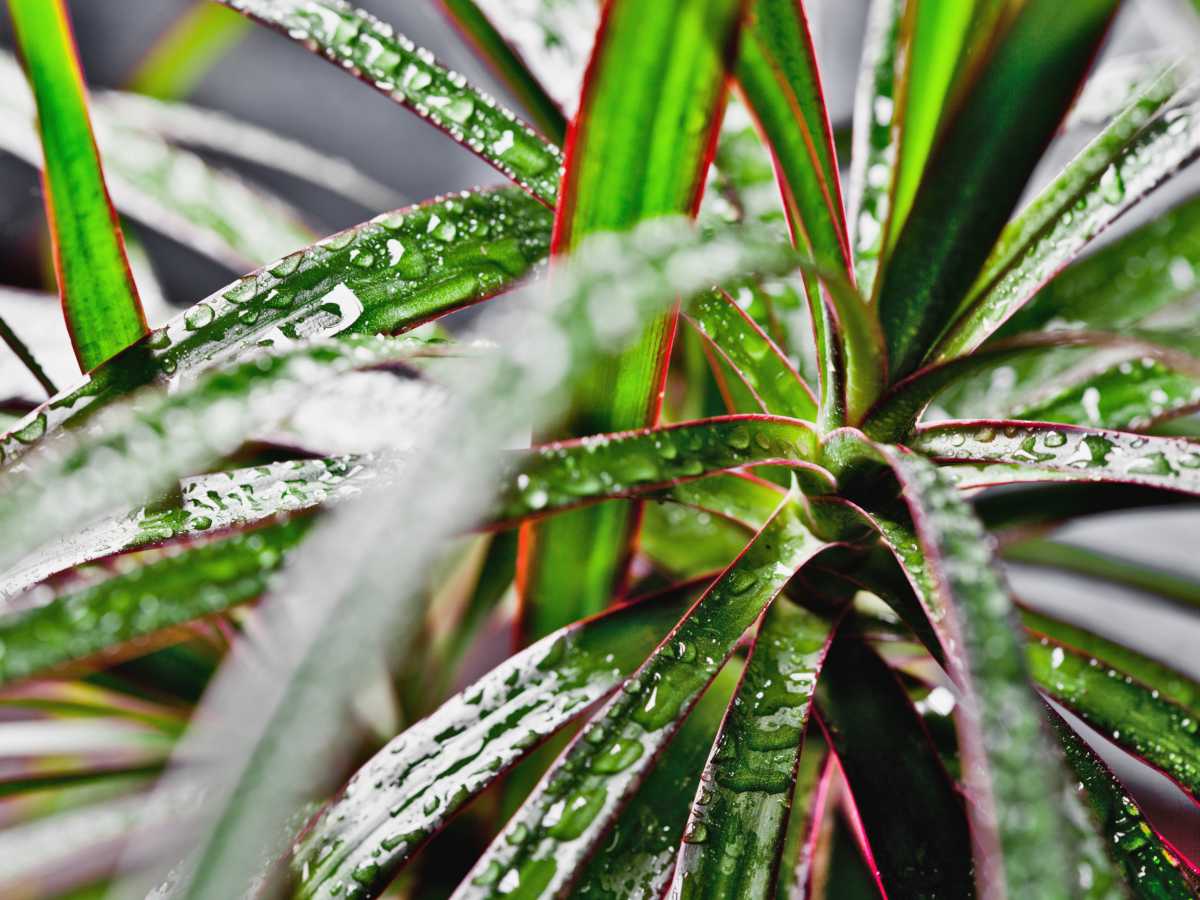
This is usually the time of the year when Dracaena marginata grows most.
Water regularly while letting the soil mix dry in the surface before watering again.
Watering must be regular but limited, in order to not suffocate the plant’s roots.
Every 3 to 7 days is largely sufficient.
More or less every two weeks during the growth phase (spring-summer-early fall), you can offer it liquid fertilizer, taking great care to moisten the soil mix beforehand.
Tip out any water left standing in the saucer soon after watering, as Dracaena marginata roots rot quickly when they sit wet.
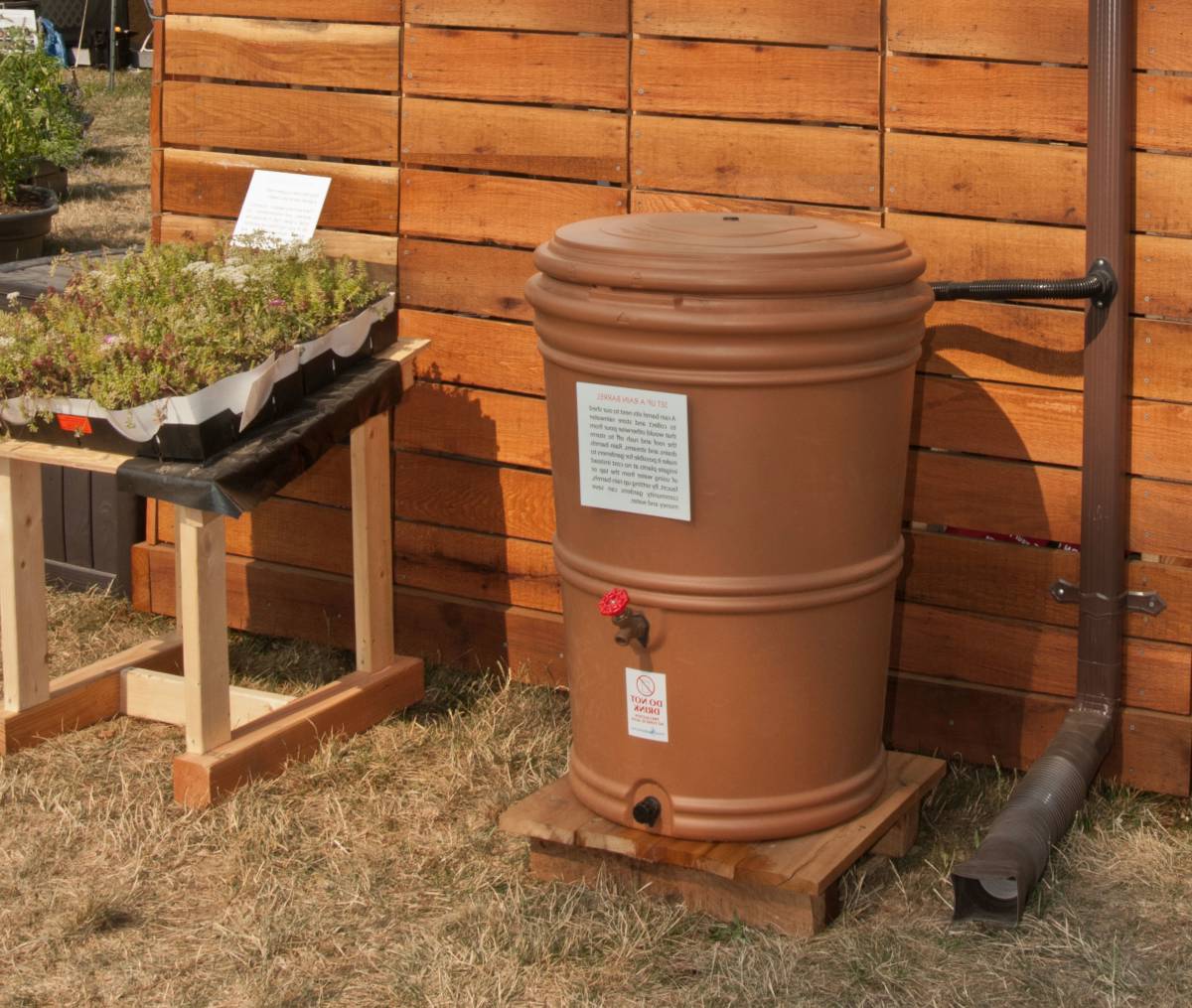
Brown, scorched leaf tips on a dragon tree often point to fluoride and salts in tap water, so switch to rainwater or filtered water if you see them.
Dilute liquid fertiliser to half the strength stated on the label, since this plant is easily burnt by excess mineral salts.
Every few feeds, flush the pot with plain water until it runs freely from the drainage holes to wash out fertiliser build-up.
A dracaena summering outdoors will usually dry out more quickly, since sun, wind and heat increase evaporation, so check the soil more often than indoors rather than watering on a fixed schedule.
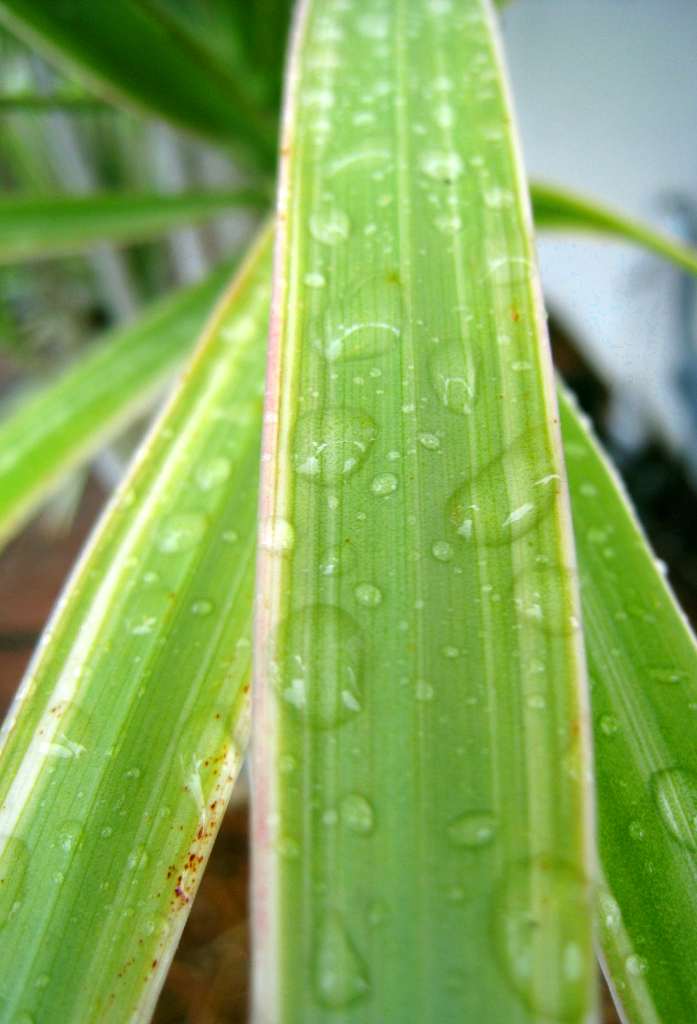
Winter triggers dormancy in plants of the Dracaena family. The same rules as above apply, except that it may take up to a month for the soil to dry from the previous watering. Water every 15 to 30 days, no need to water weekly when the plant is in this rest phase.
But this also depends on where your dracaena is placed: if it is in full sun, its needs will surely be higher.
There’s no limit to air moisture. The higher you can get it, the happier the plant. High air moisture helps the plant keep its lower leaves for longer. In drier air, it tends to lose leaves along the lower part of the stem.
Lastly, it’s important to clean the leaves of your plant if ever the environment is dusty. It’s actually as important as fertilizing and watering, believe it or not! For example, you can move it to your bathtub or shower and hose it down occasionally.
It helps to spread a layer of houseplant mulch on top of the soil. This will help retain soil moisture, reducing the need to water by a day or more.