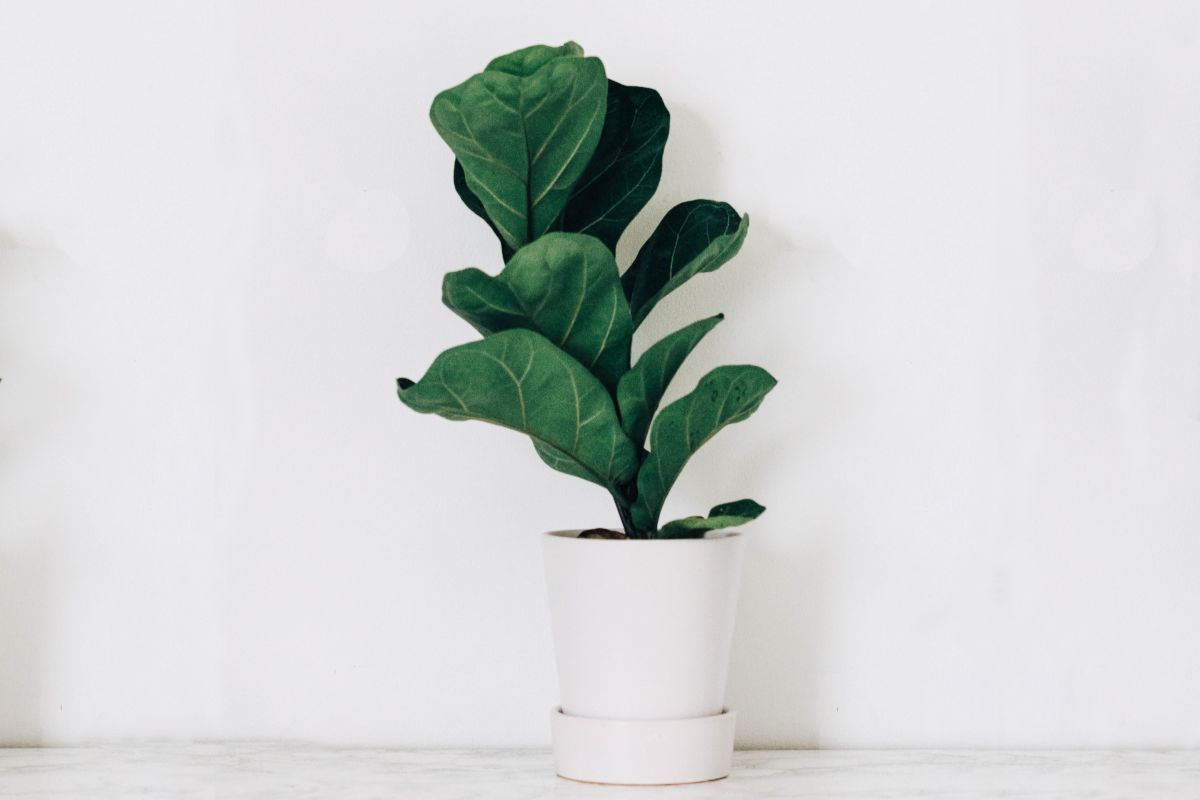
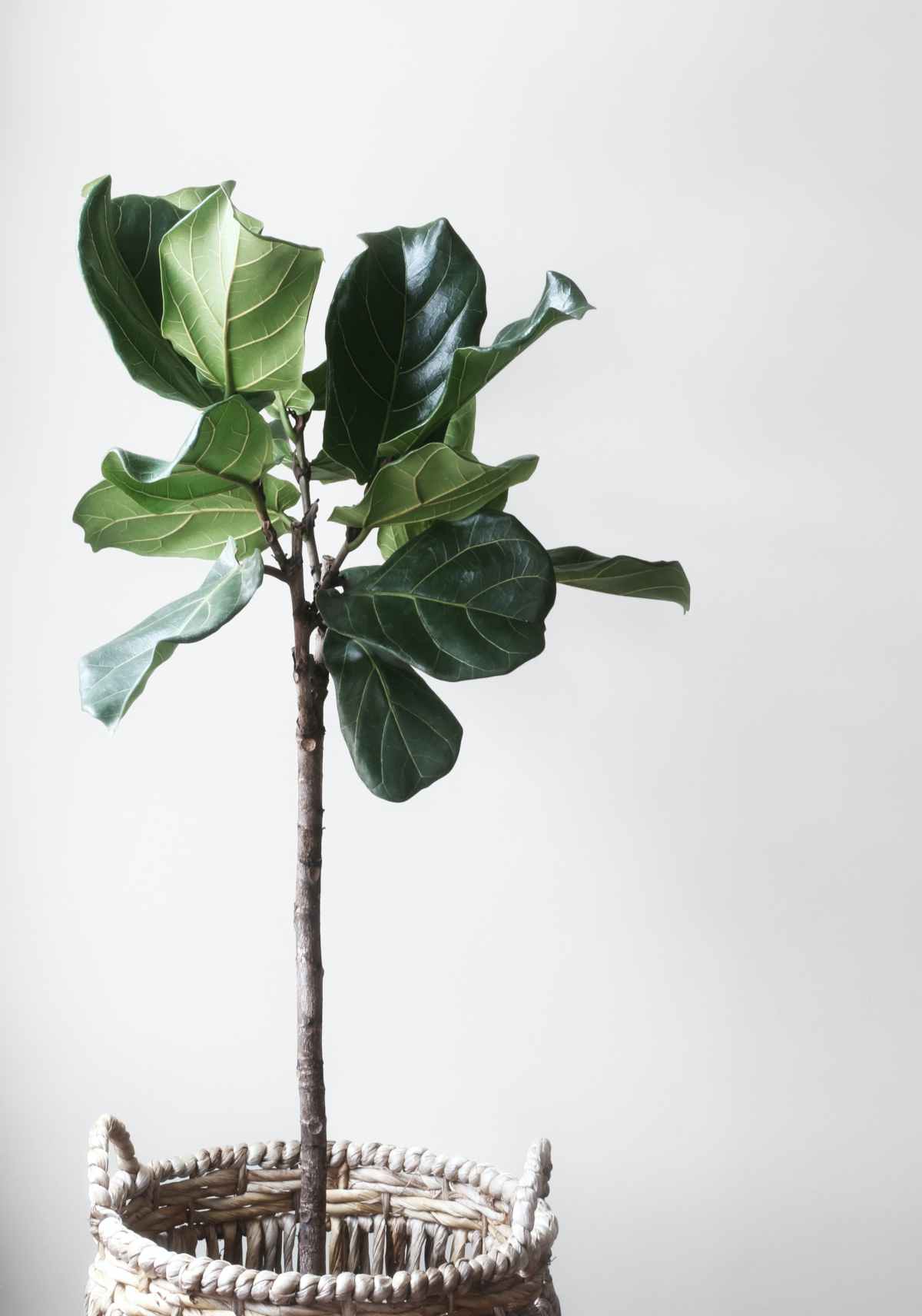
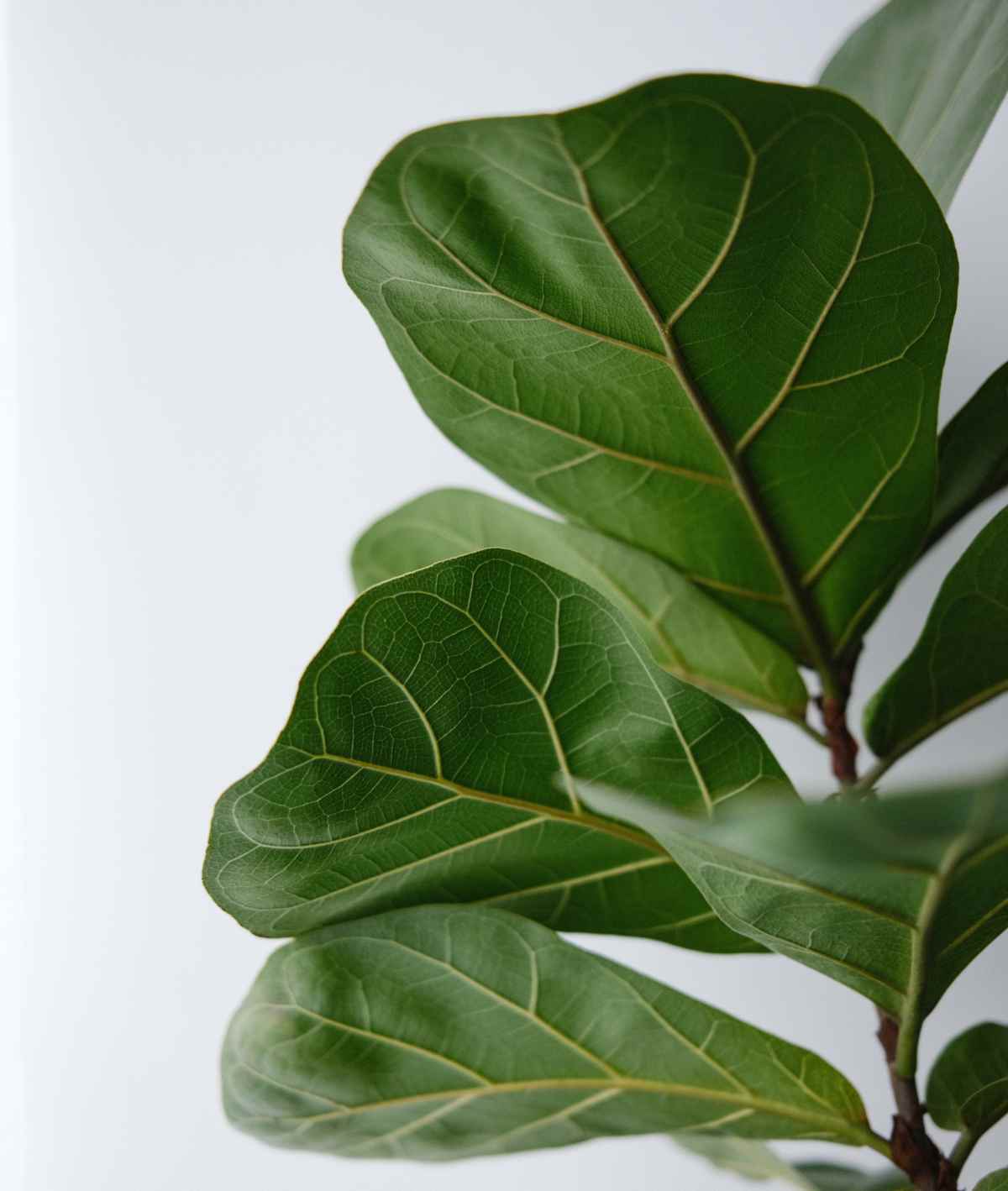
Thick, shiny green leaves on an upright stem that can reach 10 feet (3 metres) indoors: the fiddle-leaf fig (Ficus lyrata) is grown entirely for that evergreen foliage. Give it abundant indirect light, air that is never dry and a spot it is not moved from, and the leaves stay magnificent year in, year out.
Fiddle-leaf fig at a glance
Name
Ficus lyrata
Family
Moraceae
Type
indoor plant
Height
10 feet (3 meters) indoors
Soil type
soil mix
Exposure
abundant indirect light
Foliage
evergreen
The fiddle ficus is always a favorite houseplant. With proper care, its magnificent lush green leaves will catch the eye year in, year out!
Caring for Ficus lyrata
This tropical plant, like other Ficus, abhors dry air and must be provided with as much moisture as is possible to compensate this lack.
It must be set in a luminous room but cannot be exposed to sunlight.
It likes temperatures from 60 to 75°F (15 to 25°C).
Watering is needed when the soil is dry, but not abundantly and always with water at room temperature.
Moisture needs and watering
Misting and wet clay pebbles raise humidity around the leaves
Aside from regularly misting leaves, as shown here the fiddle leaf fig’s pot can be set on a 1 inch (3 cm) bed of clay pebbles.
These you can drench in water from time to time, so that evaporation can bring moisture up to the leaves.
Good light without being in direct sunlight is best. Avoid moving it too often because this plant needs time to adjust to its new setting.
What a fiddle-leaf fig actually needs
Almost everything that goes right or wrong with this ficus comes down to five things: light, warmth, water, air moisture and how often you disturb it. Here they are side by side.
What a fiddle-leaf fig actually needs
Need
What Ficus lyrata wants
How often
Light
A luminous room, but never direct sunlight
Constant; avoid moving the plant around
Temperature
60 to 75°F (15 to 25°C), out of draughts
All year round
Watering
Room-temperature water, never abundant, only once the soil is dry
At least once a week, spaced out in winter
Air moisture
Misted leaves and a 1 inch (3 cm) bed of clay pebbles under the pot
Regularly, above all in winter when the heating runs
Pruning
Light pruning only, to make it branch out
Once or twice a year, late summer and late winter
Get these five right and the foliage stays lush; most fiddle-leaf fig troubles trace back to one of them.
Watering Ficus lyrata
The Ficus lyrata tree is a tropical plant that needs water and high air moisture.
Water at least 1 time a week, but wait for the soil to be dry before watering again.
Oppositely, in winter, you may space the watering somewhat.
Feel free however to mist the leaves on a regular basis, this will increase leafage quality and keep the leaves from drying up, especially in winter when the heating runs at full blast.
Pruning and trimming Ficus lyrata
Light, regular pruning makes the plant branch out
Ficus lyrata copes with pruning very well.
Pruning fiddle-leaf fig on a regular basis will lead it to branch out more.
You can prune it once or twice a year, better at the end of summer and at the end of winter.
No need to cut the tree back severely, light pruning is enough.
This helps keep the foliage lush.
Ficus lyrata diseases
When it’s well cared for, F. lyrata is a pretty resistant houseplant, but there are a few mistakes that will lead directly to disease and to pest invasions.
Falling leaves
Leaves often fall after a change of pot or place
This may be connected to a change of pots or of place.
It may also lack light, in which case you must provide more light to it.
Ficus lyrata loses its leaves if its roots wallow in water.
It should quickly bounce back more vigorous than ever.
Dwarf ‘Bambino’ suits apartments; variegated forms show pale markings
Though most Ficus lyrata are simply sold as such – Fiddle leaf fig – some varieties stand out. They deserve the extra recognition that uniqueness offers!
The ‘Bambino’ fiddle leaf ficus is a dwarf variety. It grows smaller than the normal Ficus lyrata. Perfect for apartments!
The ‘Variegata’Ficus lyrata has beautiful light-colored markings on the leaves.
Smart tip about Ficus lyrata
It is a plant which which doesn’t like being moved around. It also doesn’t cope well with being in drafty spots of the house.
Images: adobestock: Pohkim; shutterstock: faak; Unsplash: Kara Eads, Kira Laktionov, Lauren Mancke
Written by Gaspard Lorthiois | Loves helping out, especially when it comes to growing things. Worked in herbal medicine, runs a farm, and dabbles in tech. Master's degree and engineer.