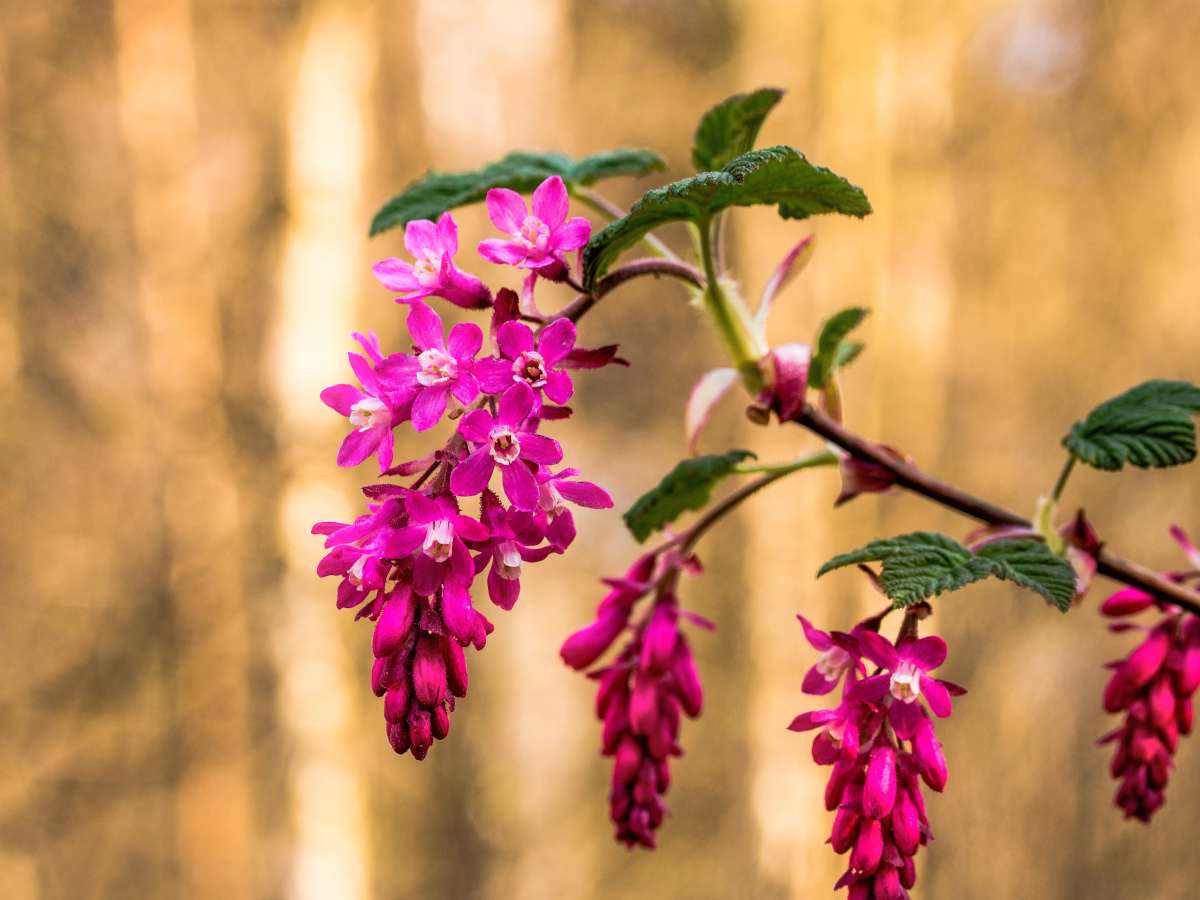
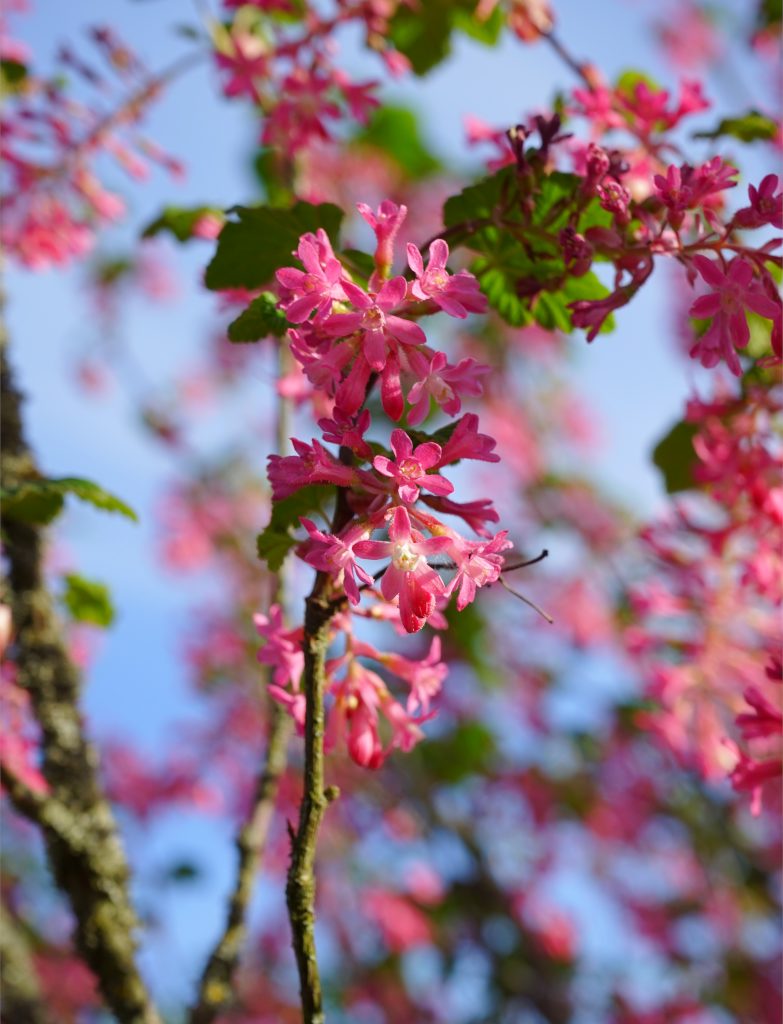
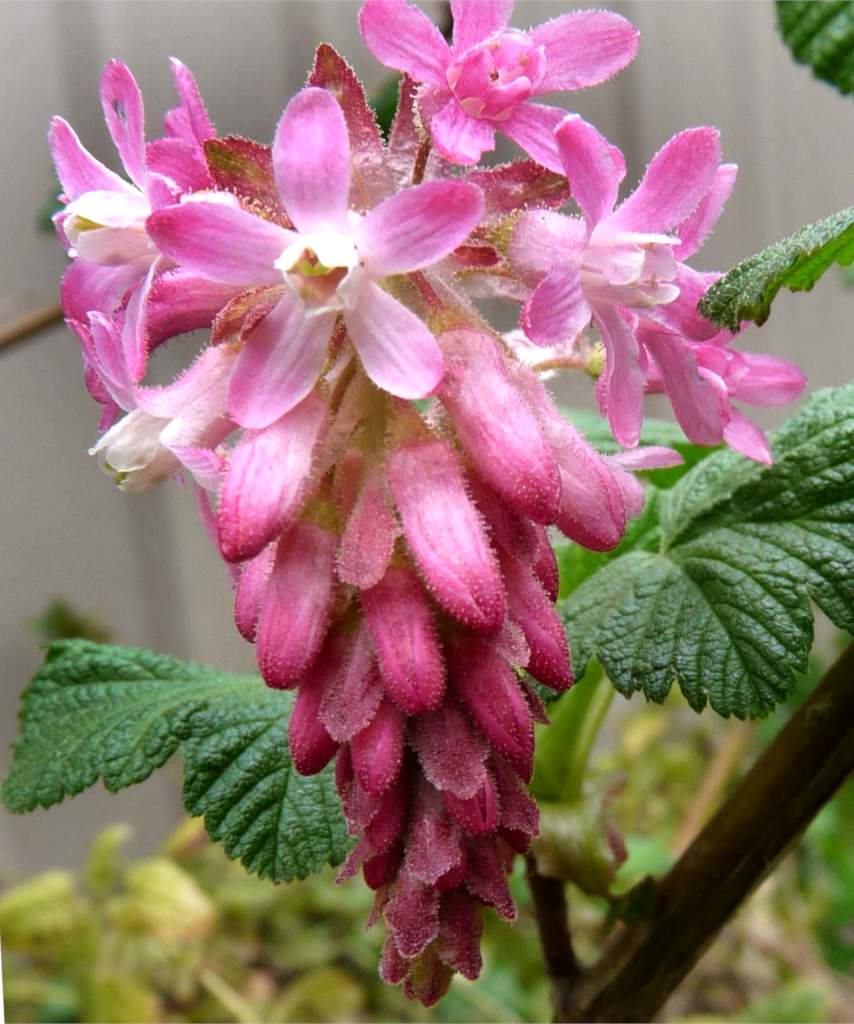
Red flowers hang in dense bunches along the branches from mid to late spring, and a line of flowering currant (Ribes sanguineum) turns into a true “wall of flowers”. Hardy down to 5°F (-15°C) and quick to grow, it asks only for full sun and a prune once the blooming is over to flower better each year.
Flowering currant at a glance
Name
Ribes sanguineum
Family
Grossulariaceae
Type
Shrub
Height
3 to 10 feet (1 to 3 m)
Exposure
Full sun
Soil
Ordinary
Foliage
Deciduous
Flowering
Mid→end spring
Easy to care for, planting and pruning will help you boost its growth and bear beautiful flowers.
Planting flowering currant
Favor planting in fall or in spring but avoid freezing temperatures or high temperatures.
Here is how to fight aphids off, those insects that invade leaves.
Powdery mildew takes hold where branches crowd, so thin the centre of the shrub to let air move through.
Red puckered blisters on the upper side of the leaves are the sign of currant blister aphid, which disfigures foliage but rarely threatens an established flowering currant.
Which flowering currant to choose
Three named varieties stand out, and the choice comes down to flower colour and how the shrub fills out. Here is what separates them.
Which flowering currant to choose
Variety
Flower colour
What sets it apart
‘King Edward VII’
Bright red
Flowers later than the others
‘Koja’
Red
Dense vegetation, good for a solid hedge
‘White icicle’
White
Big bunches of bloom
All three are grown the same way, in full sun and ordinary soil.
Flowering currant Ribes sanguineum ‘King Edward VII’ stays more compact than the plain species, with deeper red flowers, making it a safer pick for a small garden or a large terrace pot.
Some shrubs have foliage that gives off a pungent, blackcurrant-like smell when brushed against, so check the scent of a particular variety before planting it along a narrow path.
Learn more about flowering currant
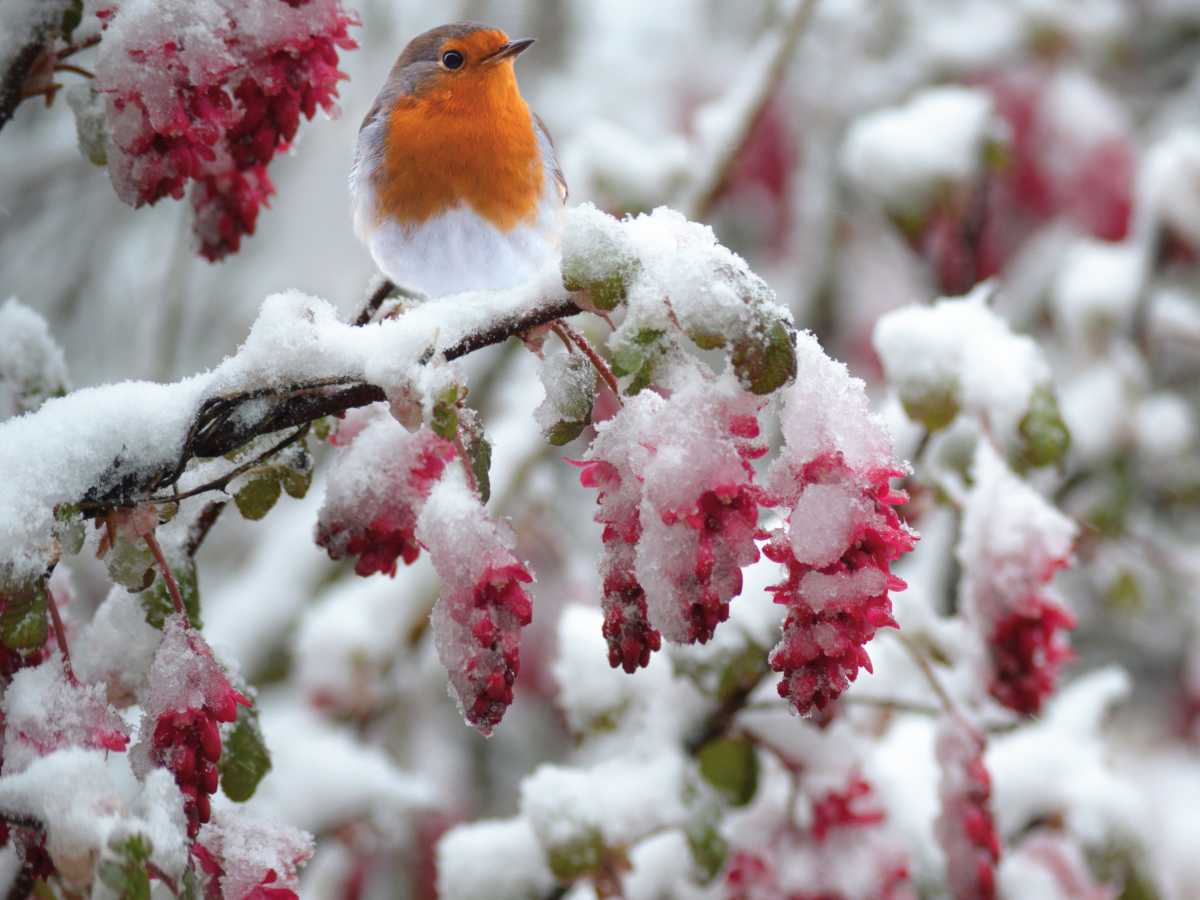
Deciduous, and hardy down to 5°F (-15°C)
Hardy to the cold and freezing, it can cope with temperatures dropping down to 5°F (-15°C).
This shrub has the advantage of flowering abundantly in bunches, and this creates a true “wall of flowers” when planted as a hedge.
But it is also liked just as much when standing isolated in the garden, in shrub beds and even in pots or garden boxes on a terrace or balcony.
It is hardy and grows fast, which makes it an easy shrub to grow that will reward you with quick results.
Remarkable flowering currant varieties
Ribes sanguineum ‘King Edward VII’ – late flowers that are bright red.
Ribes sanguineum ‘Koja’ – dense vegetation and nice red flowers.
A white-flowered variety also stands out:
Ribes sanguineum ‘White icicle’ – big bunches of white flowers.
If it grows too large or to renew its vigor, proceed to prune drastically every 4 to 5 years!
Images: Pixabay: Beverly Buckley, Hans Braxmeier, Myriam Zilles, Frauke Riether
Written by Gaspard Lorthiois | Loves helping out, especially when it comes to growing things. Worked in herbal medicine, runs a farm, and dabbles in tech. Master's degree and engineer.