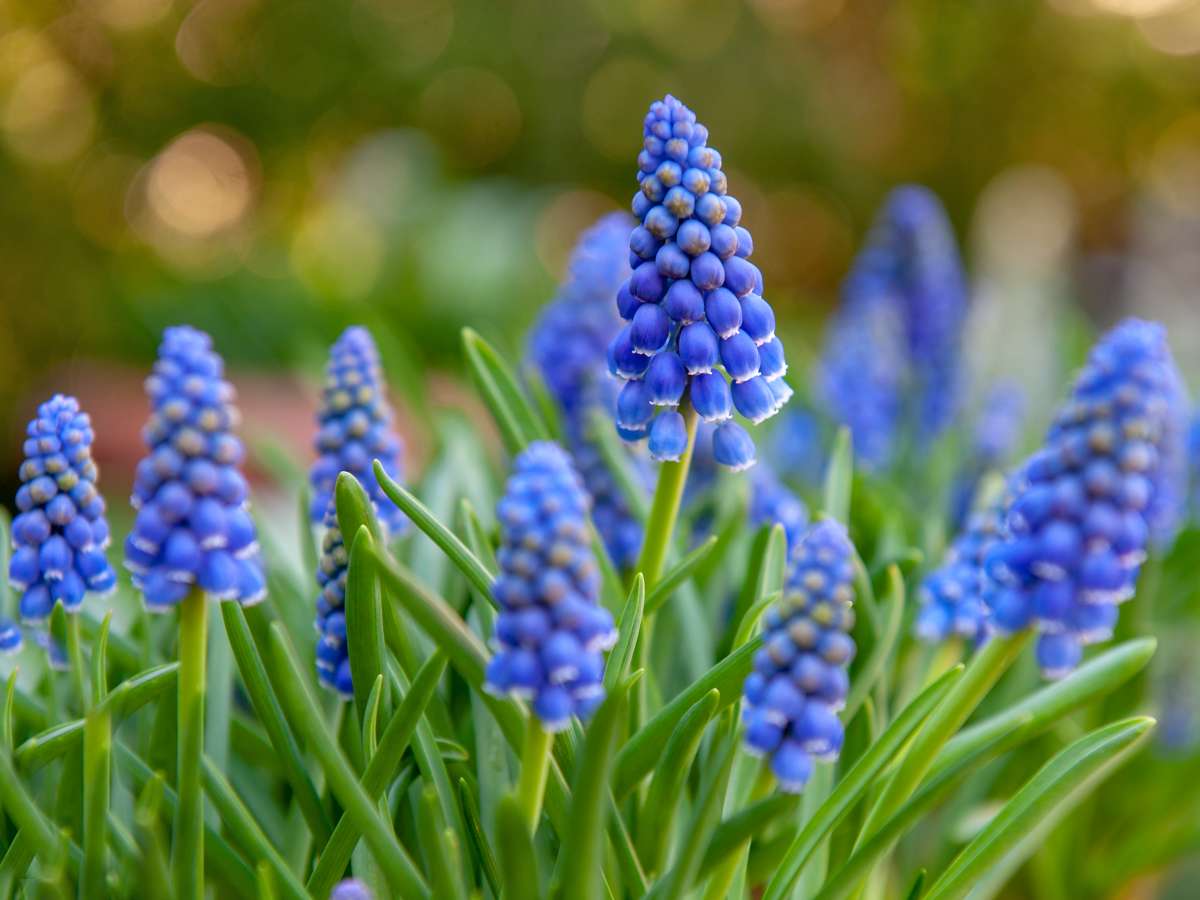
Barely six to eight inches tall, grape hyacinth (Muscari armeniacum in its commonest form) opens clustered spots of colour among the earliest flowers of spring. Plant dozens of bulbs in the same place, in full sun and soil that drains freely, and they will form a magnificent coloured carpet.
| Name | Muscari, or grape hyacinth |
|---|---|
| Family | Asparagaceae |
| Type | spring bulb |
| Height | 6 to 8 inches (15 to 20 cm) |
| Exposure | full sun |
| Soil | ordinary |
| Flowering | early spring |
Caring for grape hyacinth from planting to blooming is easy and its ornamental effect is guaranteed.
→ Also: growing common hyacinth
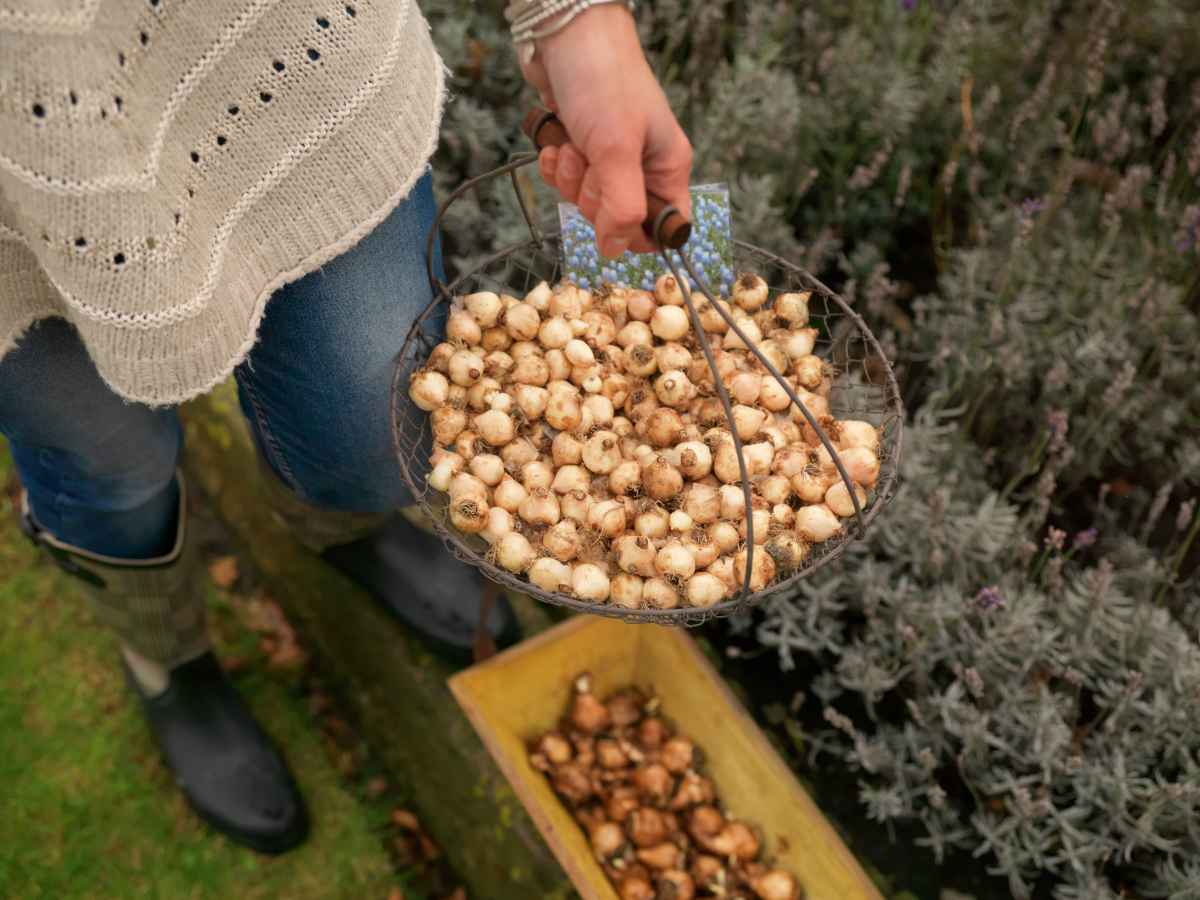
Get the planting of your Muscari bulbs right because the blooming depends on how well it’s done.
These bulbs must be planted in fall.
Plant them in large groups to form clustered spots of color.
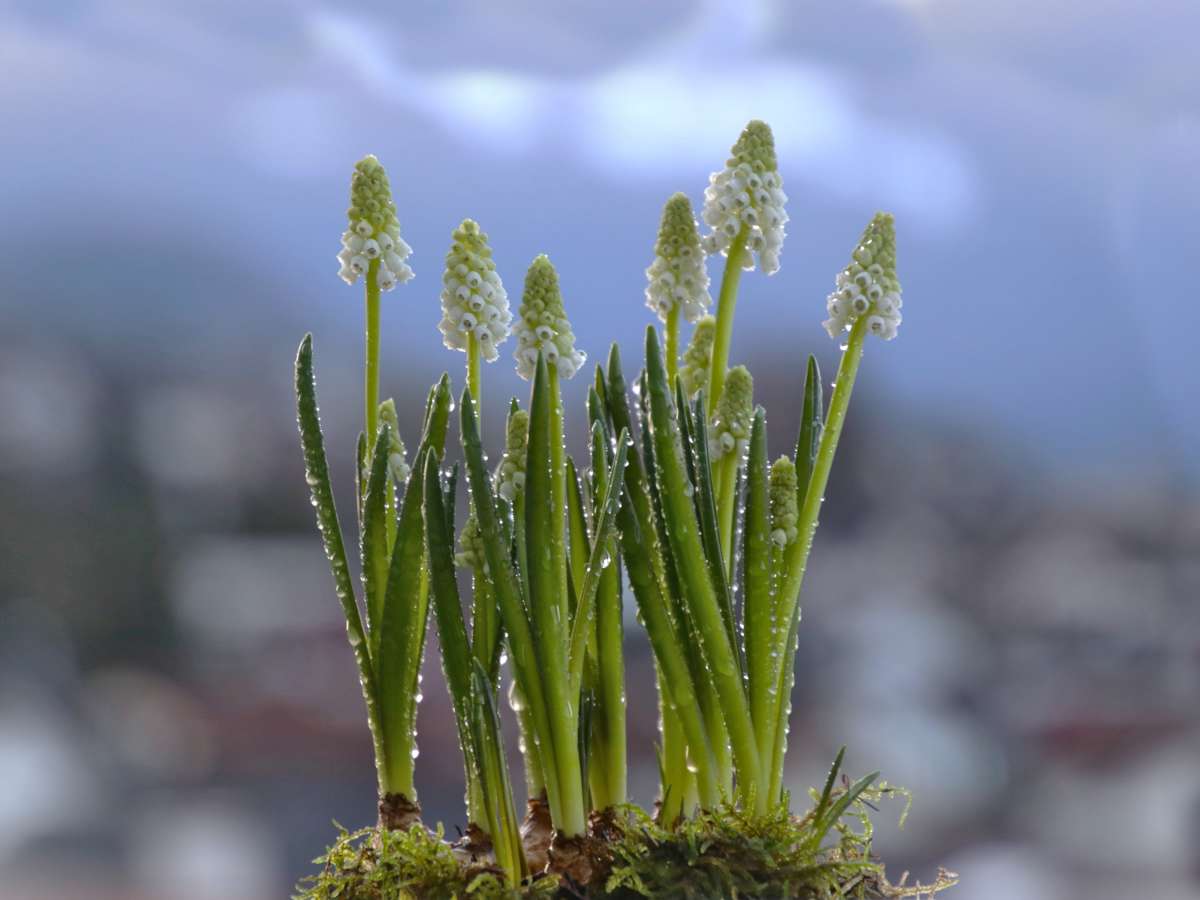
It’s perfectly possible to grow grape hyacinth in a pot.
Simply follow the same steps described above, but use regular flower plant soil mix instead of garden soil.
After the blooming wilts away, keep the grape hyacinths in the pot until the leafage also turn yellow and dries out completely.
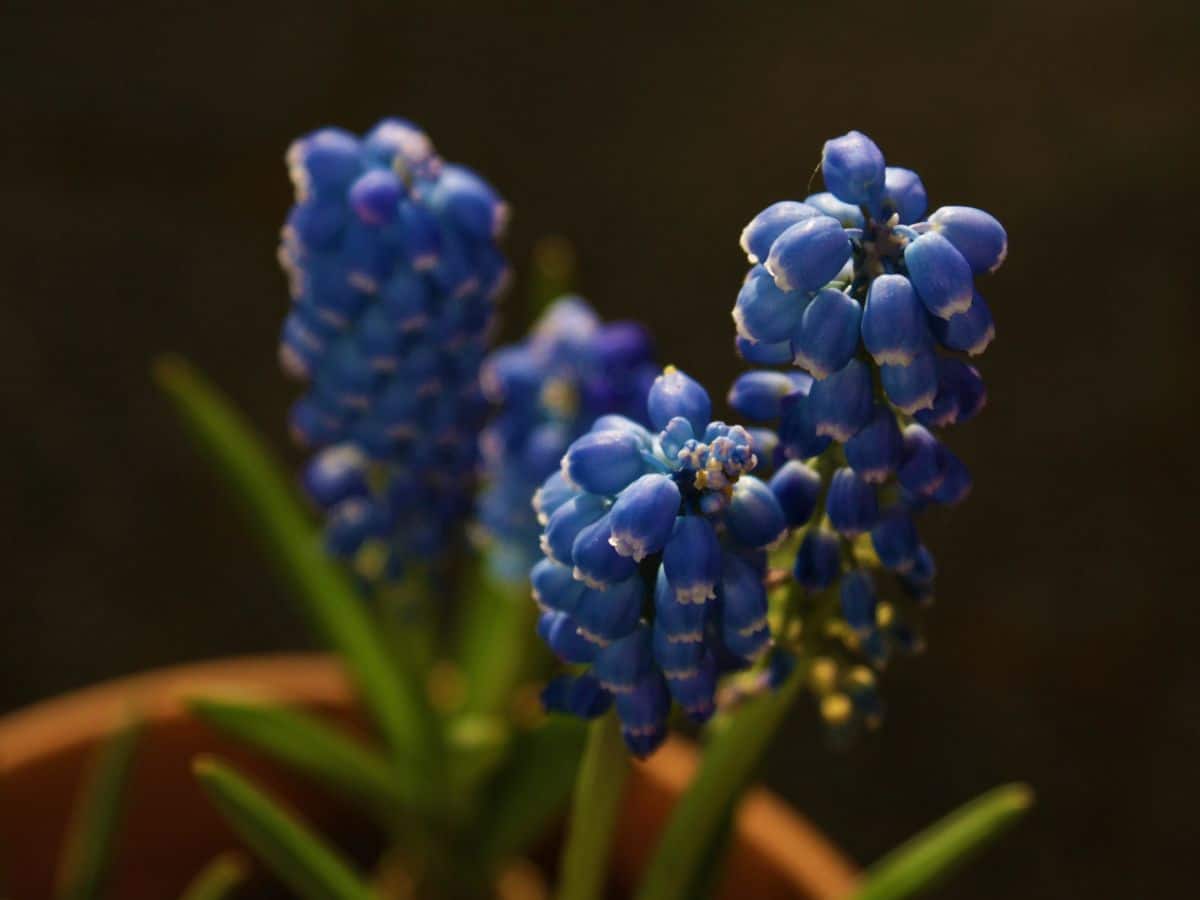
Grape hyacinths are bulb flowers that don’t require any specific care. Typical plant-and-forget!
For grape hyacinths grown in pots, remember to water as soon as the surface soil is dry.
The following best practices will help you have beautiful sustained blooming over the years.
It’s important to water during the phase that leads to blooming: from sprouting to the moment flowers wilt.
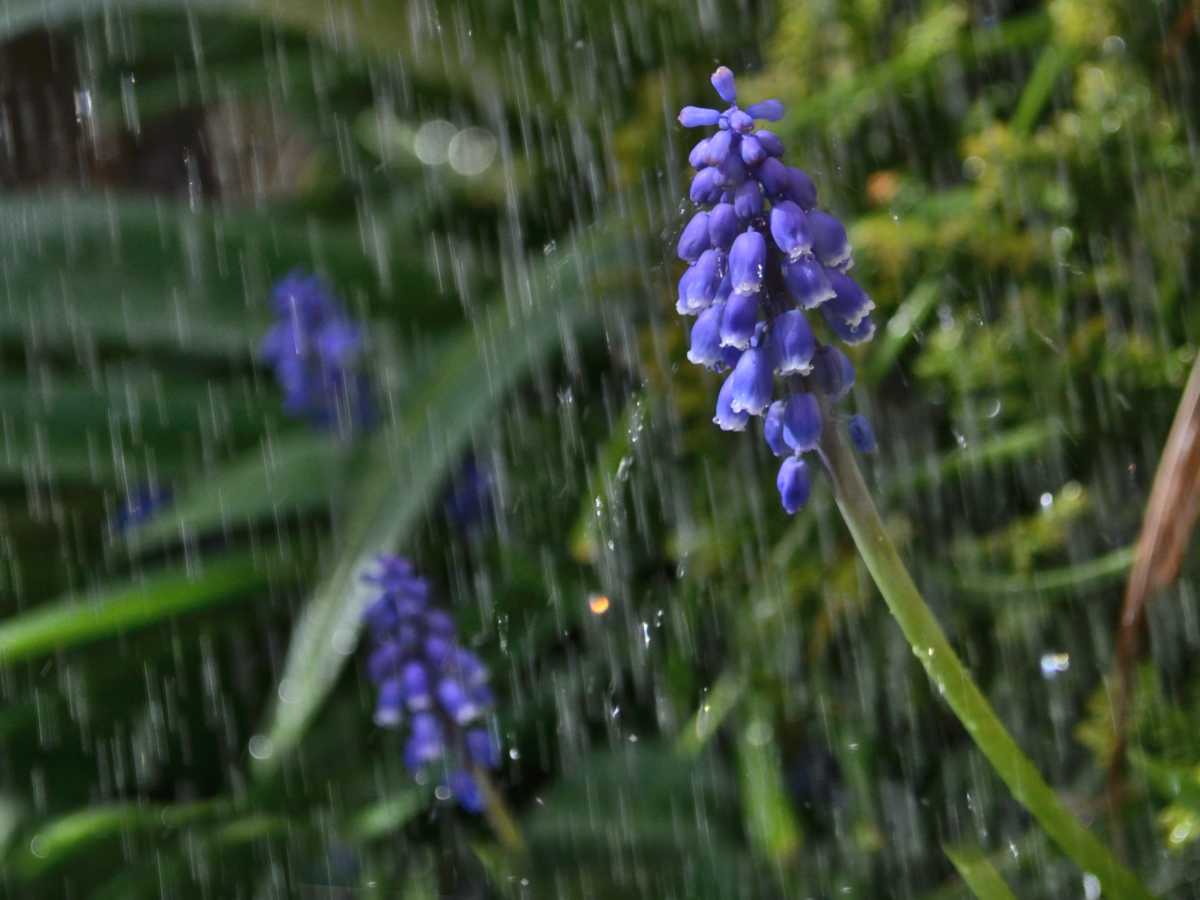
Once flowers have dropped or are forming seeds, you don’t need to water as much. Too much water at this stage will quickly lead to bulb rot.
In any case, make sure the soil drains well: it shouldn’t stay soggy. If it does, consider raising your grape hyacinths up a bit (6 inches or 15 cm is fine) so excess water drains to the side.
How much water a grape hyacinth needs depends both on where it grows and on how far along the flowering cycle it is. The table below sets the two side by side.
| Stage | In the ground | In pots |
|---|---|---|
| From sprouting until the flowers wilt | Every 3-4 days if there is no rain, in moderate amounts | Twice as often, every other day |
| Once flowers have dropped or are forming seeds | Every 10 days or so | Every 5 days |
| After the leaves turn yellow | Cut leaves back only once they have yellowed | Keep the bulbs in the pot until the leafage dries out completely |
Whichever the case, soil that stays soggy will rot the bulbs, so drainage matters more than quantity.
Beyond the familiar cobalt blue of Muscari armeniacum, bulb catalogues offer whites, pinks, yellows, bicolours and double forms. The table below compares the varieties most often found on the shelf.
| Variety | Flower colour | Flower form or feature | Best use |
|---|---|---|---|
| ‘White Magic’ | White | Neat, compact spike | Rockeries, mixed pots |
| ‘Christmas Pearl’ | Violet-purple | Among the earliest to open | Pots, early displays |
| ‘Ocean Magic’ | Blue with pale tip | Two-tone spike | Borders, rockeries |
| ‘Golden Fragrance’ | Yellow, purple buds | Strongly scented | Raised beds, pots, sheltered sun |
| ‘Mount Hood’ | Blue, white-capped | Snow-capped effect | Pots, gravel beds |
| ‘Album’ | Pure white | Rounded bells, tidy habit | Naturalising, woodland edge |
| ‘Valerie Finnis’ | Pale powder blue | Soft, subtly two-toned spike | Pots, edging, pastel schemes |
| ‘Fantasy Creation’ | Blue ageing to green | Double, shaggy heads | Pots, curiosity planting |
| ‘Plumosum’ | Violet-purple | Feathery tassel plumes | Gravel gardens, cut flowers |
This little plant is special for its cute small bell-shaped flowers. It is perfect for flower beds, along edges, or in rocky ground.
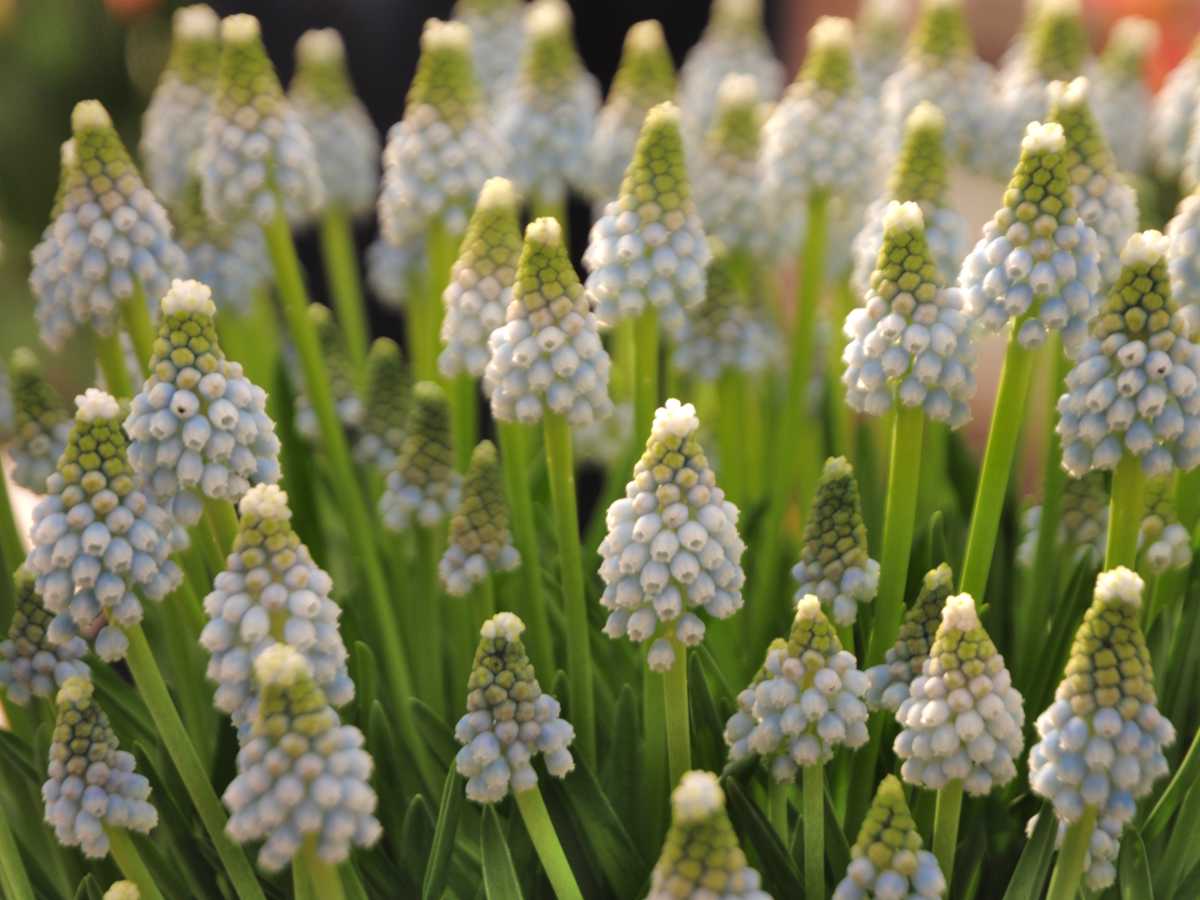
The species that is most common in gardens is Muscari armeniacum or Armenian Muscari. It is also often called the Mediterranean muscari. Other flowers bear the name “muscari” because their blooming is so similar: Liriope muscari is a good example of this.
There are other amazing grape hyacinth varieties, such as:
Depending on the variety, some grape hyacinths can grow anywhere from 8 to 24 inches (20 to 60 cm), but most grow to an average height.
Grape hyacinths are often available in flower shops for indoor blooming in winter, but these are usually forced. This forcing makes them bloom earlier, but usually weakens them to the point of not being able to survive, even if planted outdoors.
In a garden every year these small flowers will joyfully compete with your narcissus as to who will bear the first flowers of spring!
No need to water, grape hyacinths don’t need it unless they’re indoors where it doesn’t rain!
However, in pots, water as soon as the surface of the soil dries out.