
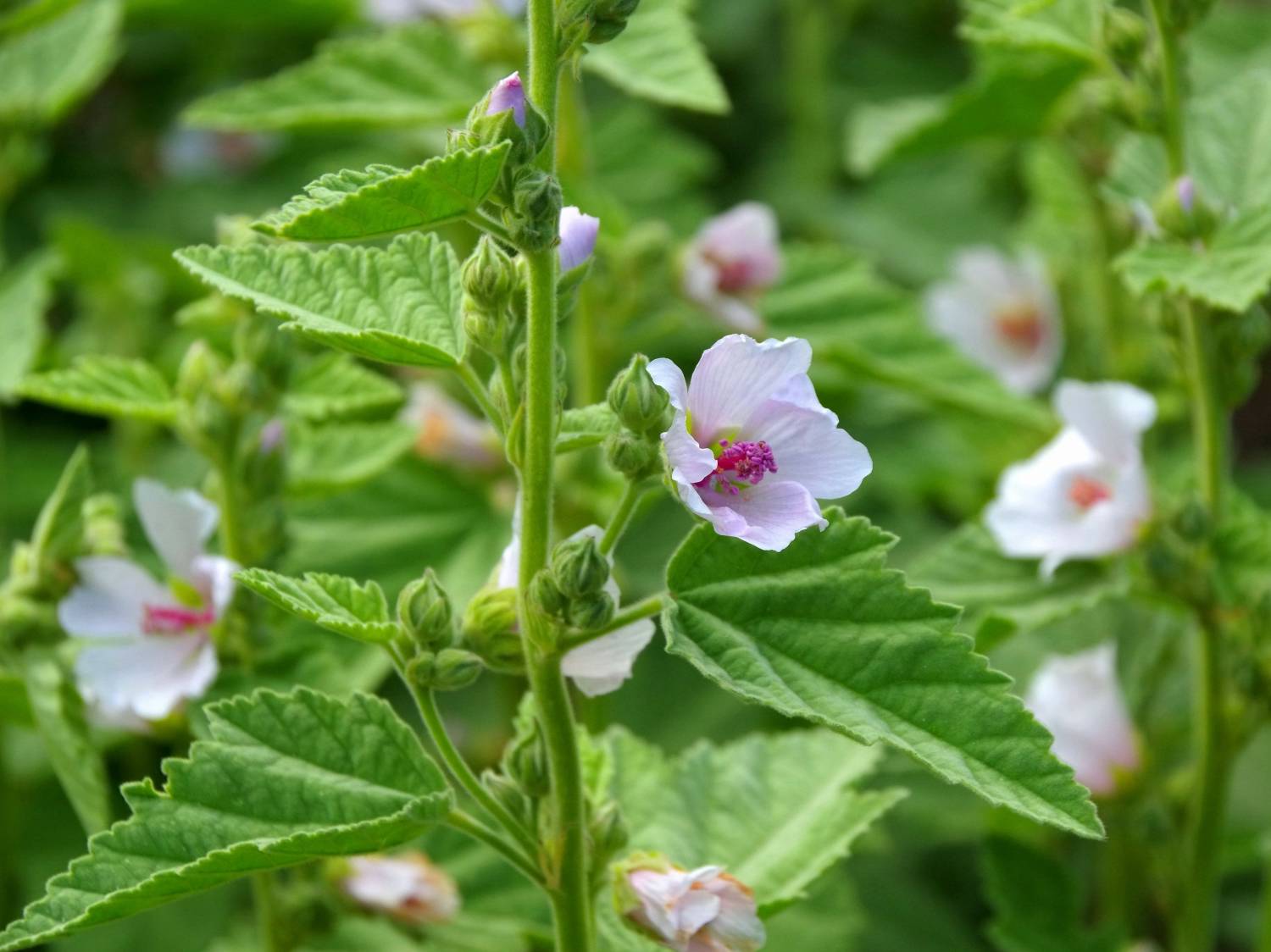
Stems 3 to 5 feet tall, flowers cute enough to scatter over a salad, and roots so rich in mucilage they turn up in cough syrup: marshmallow (Althaea officinalis) earns its place as herb and ornamental alike. Give it full sun and moist, rich soil — even salty ground will do.
| Name | Althaea officinalis |
|---|---|
| Family | Malvaceae (mallow family) |
| Type | Herbs and spices, perennial |
| Height | 3 to 5 feet (1 to 1.5 m) |
| Exposure | Full sun |
| Soil | Rich enough |
| Flowering | Early summer to early autumn |
| Harvest | Midsummer to early autumn |
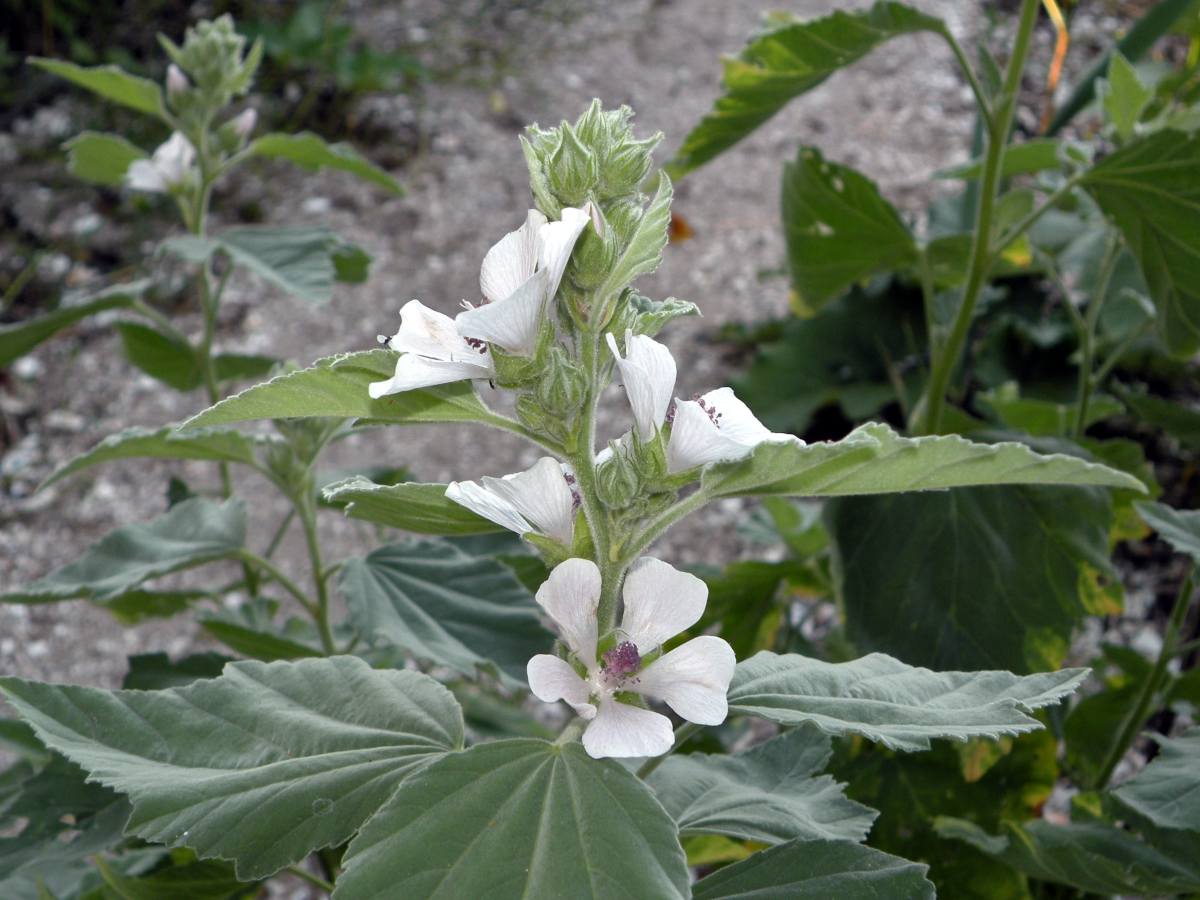
Marshmallow requires sun, ideally soft sunlight and moist, rich soil. It can grow in salty soil, too.
Proceed to sow directly in the plot starting in May-June or at the latest during the month of July.
Growing marshmallow in pots is never really successful, we strongly advise that you spend your efforts for something less ungrateful…
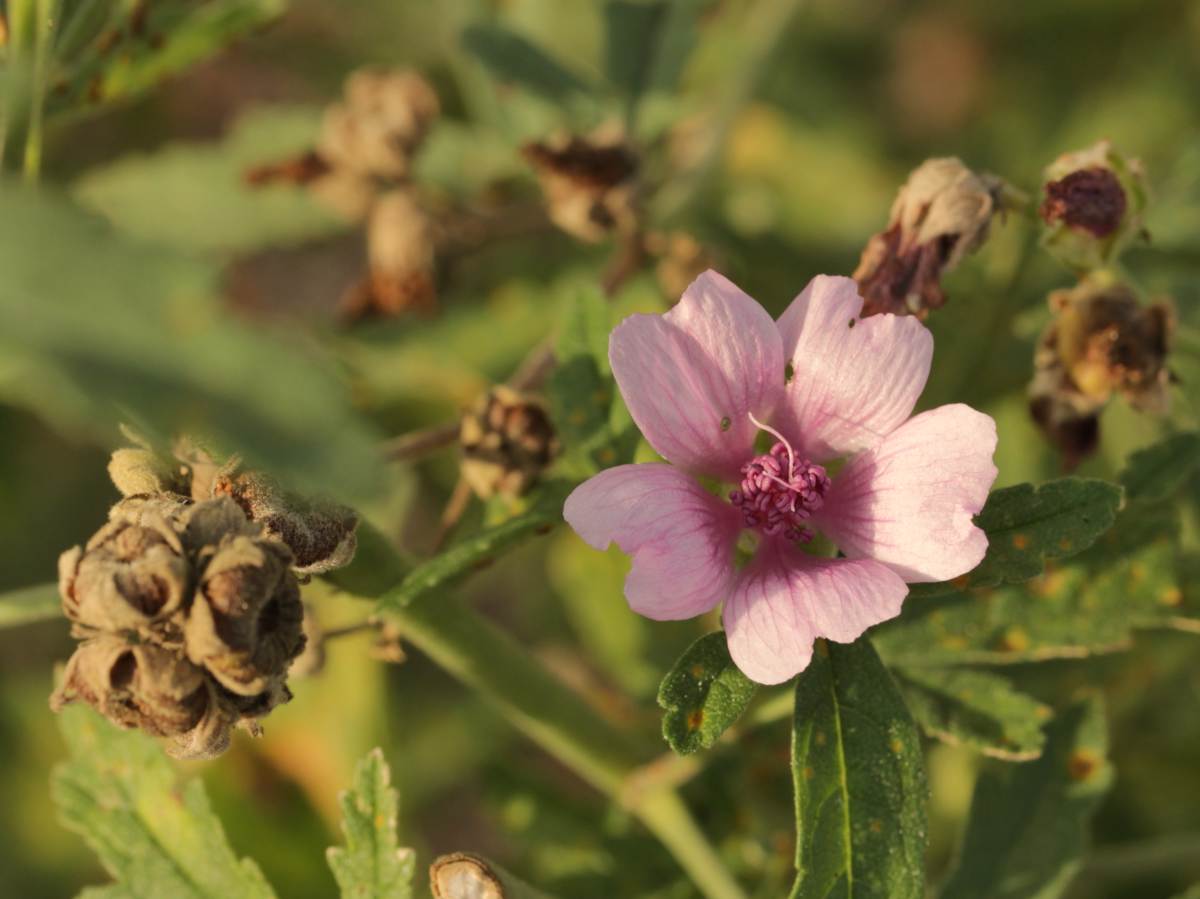
All parts of the plant (roots, leaves and flowers) can be collected to be eaten.
Wait for the summer to gather them.
Watch out for small bugs!
Although marshmallow is left alone by most critters, it is however highly vulnerable to rust. Also, avoid planting your marshmallow near hollyhock because rust attacks would do double the damage.
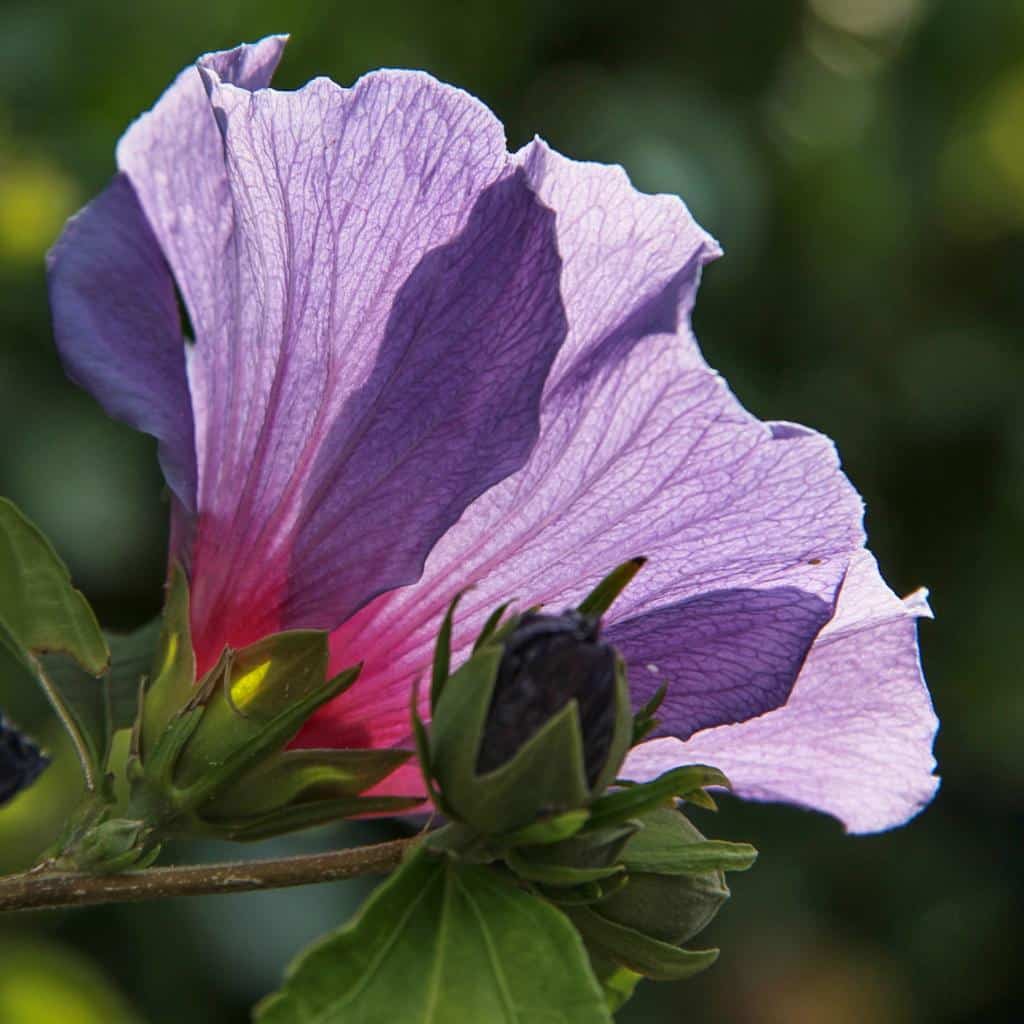
Marshmallow itself is grown as the single medicinal species, but its relatives in the mallow family give the same tall, open-faced flowers in far more colours. Keep hollyhocks at a distance from the marshmallow patch, since rust spreads readily between them.
| Variety | Height | Flower colour | Why grow it |
|---|---|---|---|
| ‘Alba’ | 2 to 3 ft | Pure white | Long season, thrives on poor soil |
| Spring Celebrities Series | 2 to 3 ft | White, pink, lemon, carmine | Short enough for pots and front borders |
| ‘Chater’s Double’ Group | 6 to 8 ft | Mixed, fully double | Cottage-garden spires, peony-like blooms |
| Halo Series | 5 to 6 ft | Single, dark contrasting eye | Open single flowers, very good for bees |
| ‘Nigra’ | 6 to 8 ft | Near-black maroon, single | Dramatic colour against pale walls |
| ‘Zebrina’ | 3 to 4 ft | Pale pink with deep purple veins | Flowers within months from a spring sowing |
| ‘Barnsley’ | 6 ft shrub | White with a red eye, ageing pink | Shrubby structure, flowers all summer |
The only known species is the one harvested for medicinal purposes. However, a cousin species deserves to be mentioned: hollyhock (Alcea rosea) is also from the mallow family and is grown as an ornamental plant.
Hollyhock has the same medicinal uses as marshmallow. However, its root doesn’t contain as much mucilage. Refreshing drinks can be colored with the purple flowers of hollyhock and its leaves can be eaten like other cooked greens.
Both a very beautiful ornamental plant and herb used for medicine and cooking, marshmallow is one of the ingredients in the traditional sweets that bear its name.
This is a very melliferous plant.
With high levels of mucilage, it boasts relaxing and moisturizing properties and thus is included in certain medicines like cough syrup.
The flowers are edible and can be added to your mixed salads and desserts!
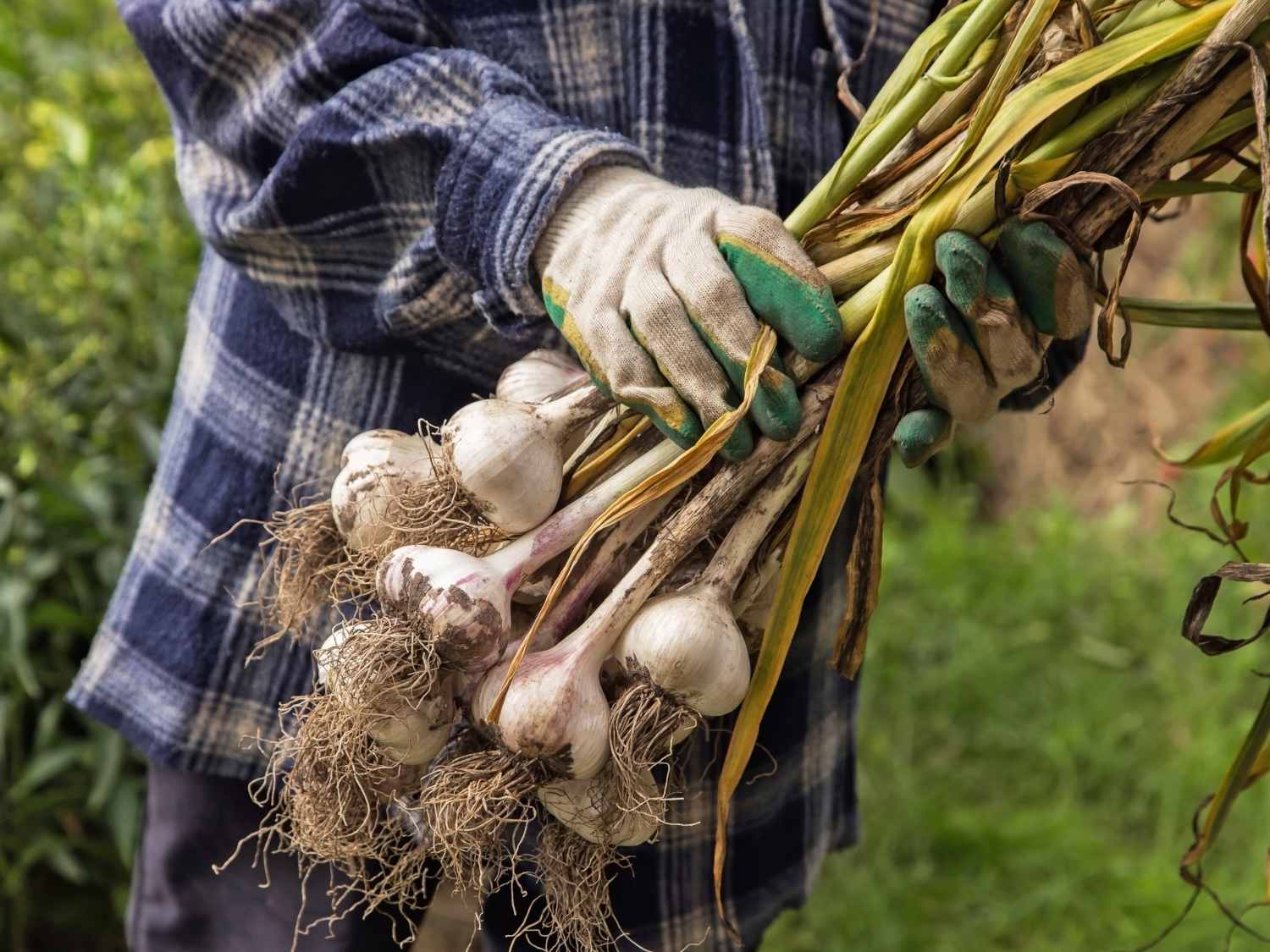
How would one go about finding a buyer for these plants? I’d like to grow them on my farm.
Hello Jessica! That’s a very good question! Where do you live? Reaching out to potential customers can be as simple as posting your products on social media or bringing a basketful to the farmer’s market. Do you already have customers for other products? If so, simply ask your favorite customers what they think about it.
Or perhaps you mean to find a “seller” in your quest for seeds or such? I might be able to help if you tell me where you hail from!