
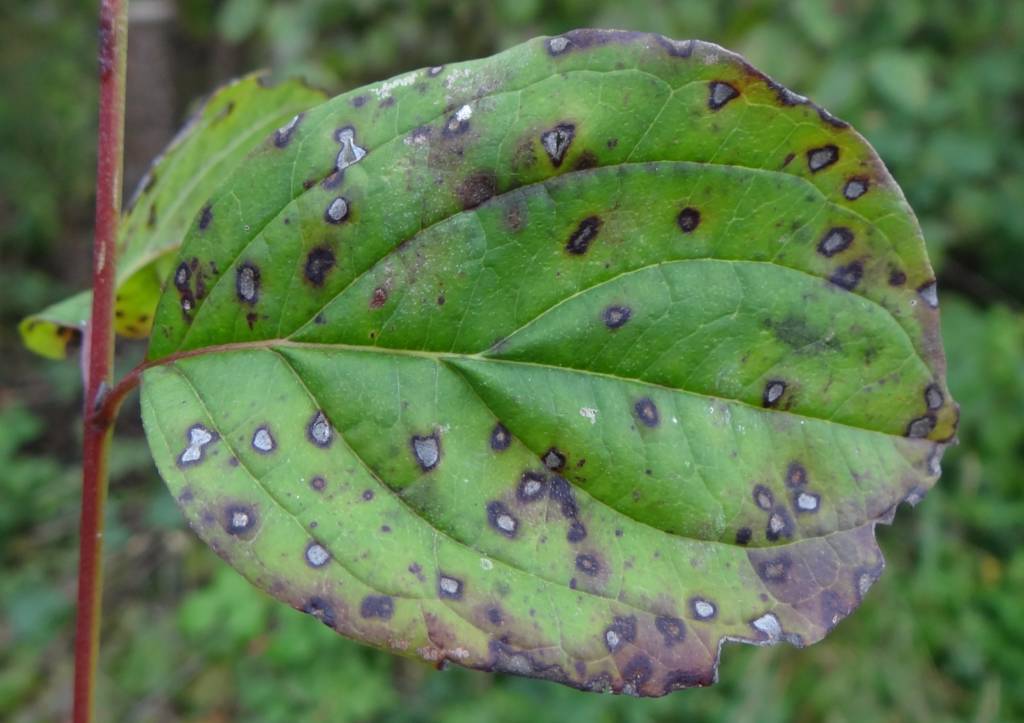
Brown leaf spots speckled at the centre with tiny black pycnidia are the signature of septoria leaf spot, a fungal group running to more than five hundred described species. Each of those species is tied to its own host plants, so working out which fungus you are dealing with tells you exactly what else in the garden is at risk.
This list shows most common plants which are affected by the Septoria fungus. When they exist, common names as well as scientific names for the disease are included. They’re also called “Septoria leaf spot“, too.
It’s a complement to our main Septoria leaf spot page. We describe there exactly how you can save your harvest and flowers from this rampaging fungal leaf spot. Information for correct septoria identification is included, too.
Over 500 species of Septoria have been described. Experts estimate that over a thousand may exist in all. Most of them must still be discovered and described!
Here are a few different types of Septoria and the plants they infect. Together, they’re called “host plants for Septoria“.
For any given septoria fungus, however, contamination will usually only occur from plants that can host that same species exactly.
Septoria on your tomatoes will not spread to nearby lettuce or beet.
To confirm Septoria rather than another leaf spot, look for the tiny black pycnidia speckling the centre of each spot, easiest to see with a hand lens.
Several Septoria species have been reclassified into the genus Sphaerulina, so garden literature may name the same fungus two different ways.
Click here for shortcuts to the tables on this page:
Rake up and bin fallen spotted leaves, because septoria overwinters on that debris.
Celery and celeriac leaf spot, Septoria apiicola, is carried on the seed, so sow bought treated seed rather than saving your own from a spotted crop.
Septoria spores on tomato are splashed upward from soil debris, so a mulch and watering at the base keep the lowest leaves clean for longer.
Before hunting through the host lists, it helps to know how the fungus travels, because that is what decides the cure. The same leaf spot is fought quite differently on a tomato, on celery and on a heap of fallen leaves.
| Crop or source | Septoria species | How it reaches the leaves | What to do |
|---|---|---|---|
| Tomato and other Solanaceae | Septoria lycopersici | Splashed upward from soil debris | Mulch the soil and water at the base only |
| Celery and celeriac | Septoria apiicola | Carried on the seed | Sow bought treated seed, never seed saved from a spotted crop |
| Parsley and coriander | Septoria petroselini | Seedborne | Buy fresh certified seed each time |
| Fallen leaves of any host plant | Any Septoria species | Overwinters on the old spotted leaves | Rake the leaves up and bin them |
| Weeds around the crop | Any Septoria species | Spores survive on undecomposed plant debris | Lift host weeds with their roots before they seed, and keep them out of a cool heap |
Match the weed clearing to the crop you are protecting, since the fungus moves between close relatives.
| Plant | Scientific name | Common name |
| tomato eggplant Physalis bell & chili pepper |
Septoria lycopersici | tomato black spot tomato septoria tomato leaf spot eggplant leaf spot |
| potato | Septoria lycopersici var. malagutii |
annular leaf spot |
| celery celeriac |
Septoria apiicola | late blight |
| squash melon cucumber pumpkin butternut red kuri watermelon other Cucurbitaceae |
Septoria cucurbitacearum |
leaf spot |
| lettuce | Septoria lactucae |
lettuce leaf spot |
| strawberry | Septoria fragariae Septoria aciculosa |
leaf spot, hard rot |
| red beet | Septoria betae | beet leaf spot |
| pea | Septoria pisi | |
| soybean | Septoria glycines | brown spot |
| wheat | Septoria tritici Septoria nodorum |
leaf blotch |
Back to top of page Back to the main Septoria article
| Plant | Scientific name | Common name |
| Pear tree | Septoria piricola also written Septoria pyricola |
White spot |
| Pecan tree | Septoria caryae | |
| Apple tree | Septoria sp. | White spot |
| Most vulnerable: Lemon tree Orange tree (Valencia) Grapefruit tree Navel oranges Least vulnerable: Buddha’s Hand Finger lime Calamondin Kumquat |
Septoria citri | Septoria spot |
| Hazelnut | Septoria ostryae | Hazelnut Septoria |
| Blackberry and raspberry |
Septoria rubi renamed to Sphaerulina westendorpii |
Blackberry leaf spot |
| Kiwi (Actinidia) |
Septoria actinidiae | kiwi leaf spot |
| Chestnut tree | Septoria castaneicola | chestnut leaf spot |
| Cherry tree | Septoria sp. | cherry leaf spot |
| blueberry, cranberry, and bilberry and others of the Vaccinum family |
Septoria albopunctata | Blueberry septoria |
Back to top of page Back to the main Septoria article
| Plant | Scientific name | Common name |
| Cyclamen | Septoria cyclaminis | cyclamen leaf spot |
| Phlox | Septoria divaricata Septoria phlogis |
phlox leaf spot |
| Lavender | Septoria lavandulae | lavender leaf spot |
| Rudbeckia | Septoria rudbeckiae | Rudbeckia leaf spot |
| Hydrangea | Septoria hydrangeae | Hydrangea leaf spot |
| Passion flower | Septoria passiflorae | passiflower leaf spot |
| Bellflower (Campanula) | Septoria campanulae | bellflower leaf spot |
| Carnation (Dianthus) | Septoria dianthi | carnation leaf spot |
| Helianthus (sunflower) |
Septoria helianthi | Helianthus leaf spot |
| Asteraceae (Asters) including Chrysanthemum Oxeye daisy Marigold |
Septoria leucanthemi Septoria coelomycetous Septoria chrysanthemella Septoria chrysanthemi Septoria obesa Septoria adanensis Septoria socia |
Aster leaf spot |
| Impatiens (including Sunpatiens) |
Septoria sp. | Impatiens leaf spot |
| Hebe (Veronica) |
Septoria veronicae | Veronica leaf spot |
| Gerbera & possibly Garvinea |
Septoria gerberae | Gerbera leaf spot |
| Flax | Septoria linicola | Flax leaf blotch |
| Dead-nettle | Septoria lamii | Dead-nettle leaf spot |
| Mallows | Septoria malvicola | Septoria leaf spot |
| Clematis | Septoria clematidis | Clematis leaf spot |
| Violet | Septoria violae and Septoria violae-palustris | Violet leaf spot |
Back to top of page Back to the main Septoria article
| Plant | Scientific name | Common name |
| barberry | Septoria berberidis |
barberry leaf septoria |
| Azalea including Azalea japonica |
Septoria azaleae Septoria azalea-indicae |
Azalea leaf spot |
| Magnolia | Septoria sp. | Magnolia septoria spot |
| Rhododendron including R. minus |
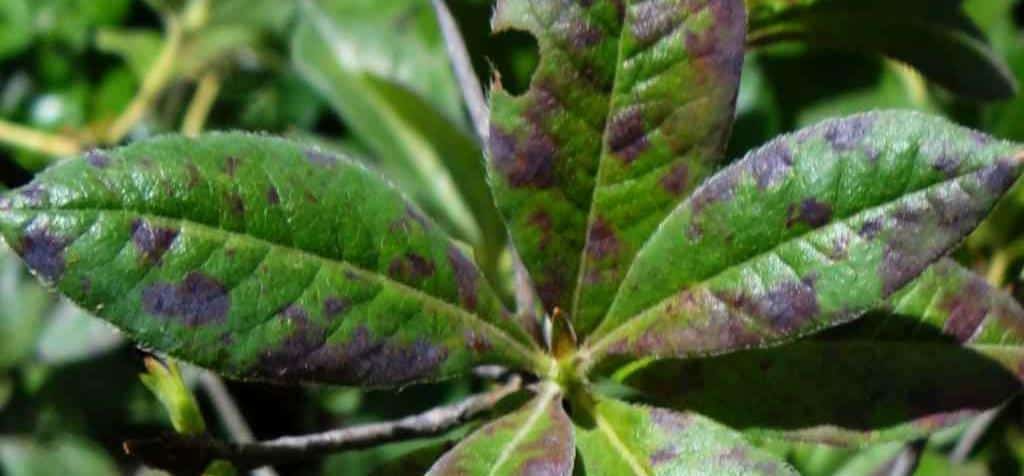
Septoria rhododendri Septoria albopunctata Septoria azaleae Septoria azaleae-indicae Septoria oleandrina (=S. nerii) Septoria solitaris |
Rhododendron leaf spot |
| poplar, willow |
Septoria populicola Septoria musiva (renamed to Sphaerulina musiva) |
poplar blight |
| cherry laurel | Septoria laurocerasi | cherry laurel septoria |
| birch | Septoria betulae | birch leaf septoria |
| dogwood | Septoria cornicola | dogwood septoria |
| Lantana camara | Septoria lantanifolii | Lantana leaf blotch |
| gorse | Septoria slaptoniensis | gorse leaf spot septoria |
| oak | Septoria quercicola |
oak leaf septoria |
| silverberry Russian olive |
Septoria elaeagni | Elaeagnus septoria |
| plane tree | Septoria platanifolia | plane leaf septoria |
| hophornbeam | Septoria sp. |
hophornbeam leaf septoria |
| ash | Septoria sp. |
ash leaf septoria |
| oleander | Septoria oleandrina Septoria nerii |
oleander leaf septoria |
| holly (note: yaupon is resistant) |
Septoria ilicifolia | holly leaf septoria |
| hawthorn | Septoria oxycanthae |
hawthorn leaf septoria |
Back to top of page Back to the main Septoria article
| Plant | Scientific name | Common name |
| lemon balm | Septoria melissae | lemon balm leaf spot |
| parsley coriander |
Septoria petroselini | parsley blight |
| verbena | Septoria verbenae | Verbena leaf spot |
| Allium tuberosum (garlic chives) |
Septoria allii | Septoria leaf spot |
| Stevia | Septoria stevia | Stevia leaf spot |
| hops | Septoria humuli | hops Septoria |
| mint | Septoria menthae | mint leaf spot |
| Sichuan pepper | Septoria pachyspopra | Sichuan leaf spot |
| Mertensia | Septoria poseyi | Mertensia leaf spot |
Back to top of page Back to the main Septoria article
Septoria petroselini is seedborne on parsley, so buy fresh certified seed rather than saving your own from plants that showed leaf spotting.
Find the most common Septoria host weeds in the main article here.
Target the weeds that belong to the same family as the crop you are protecting.
Lift host weeds with their roots before they set seed, and keep the leaves out of a cool compost heap, since spores survive on undecomposed debris.
.jpg)