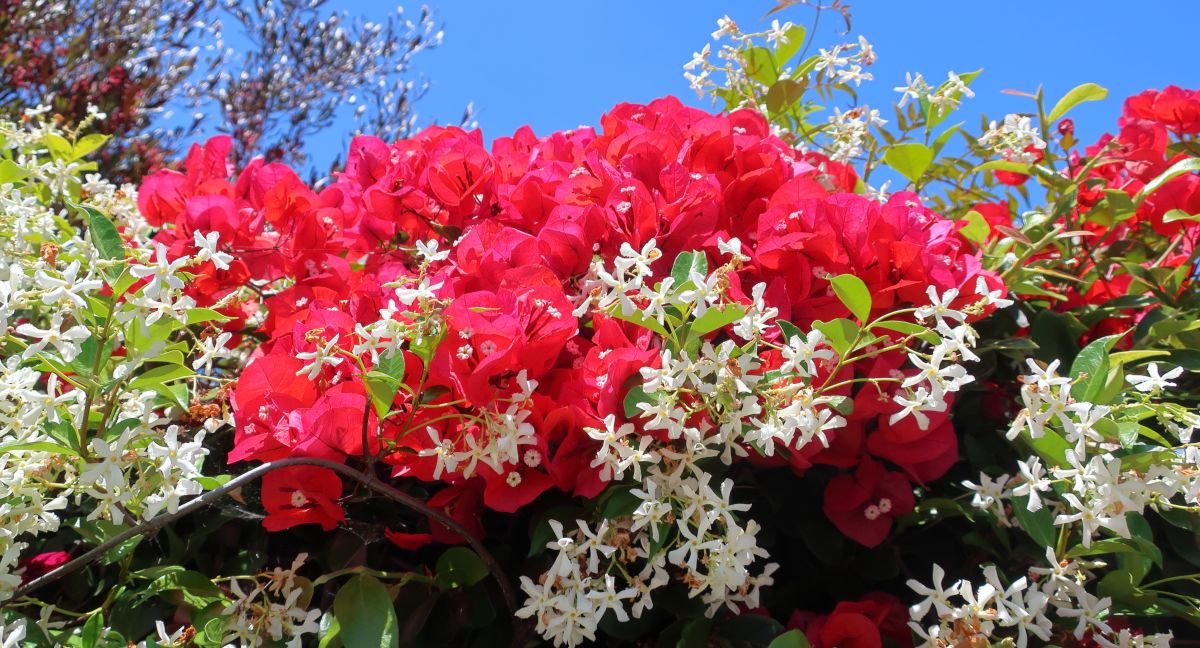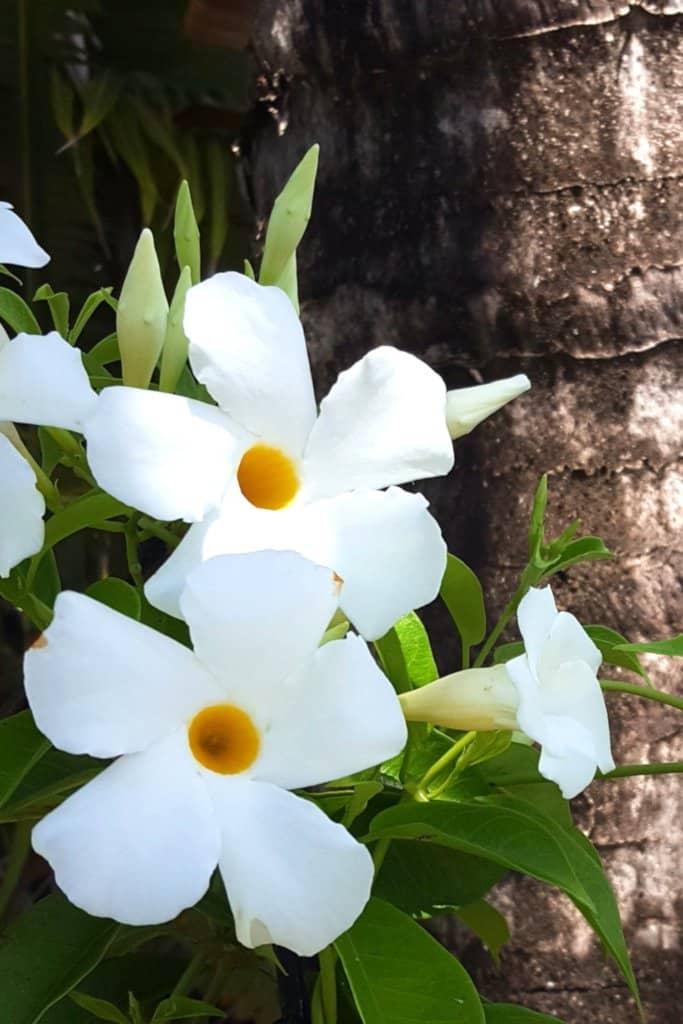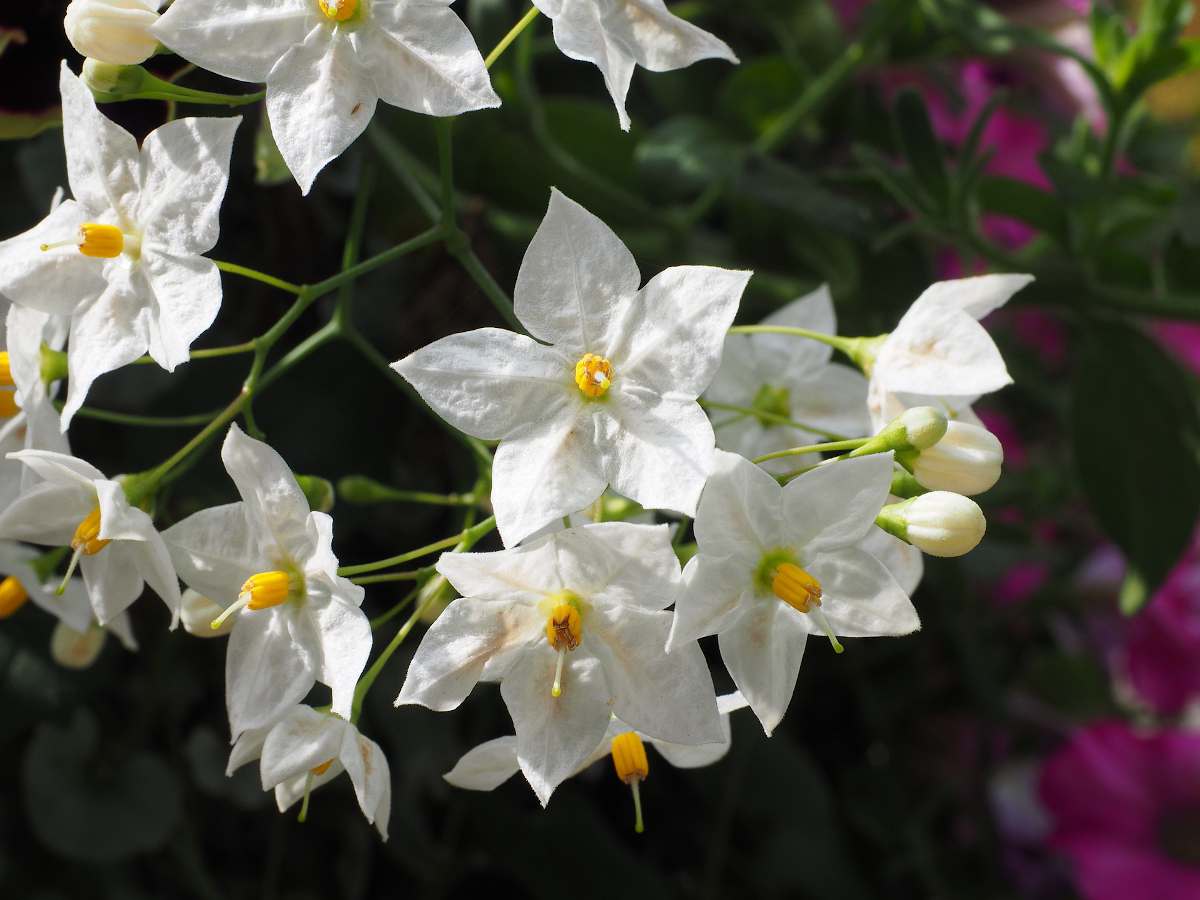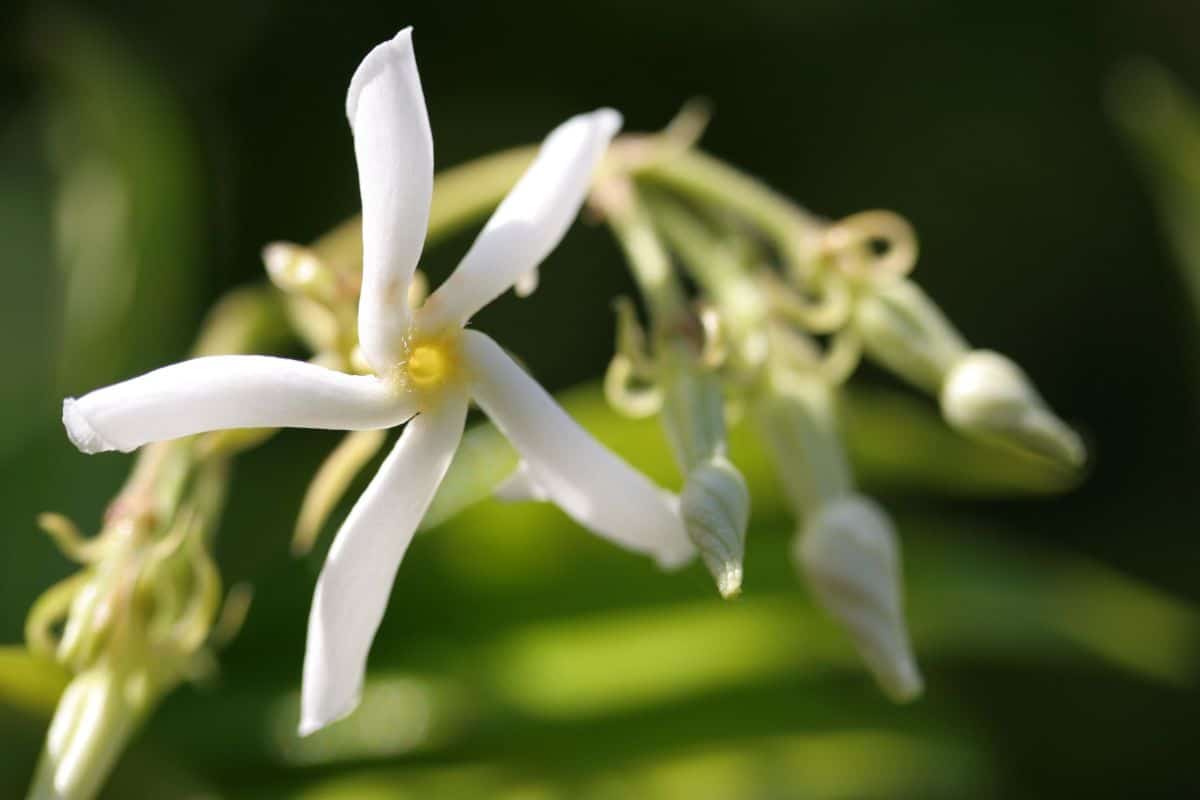
Evergreen the year round, star jasmine (Trachelospermum jasminoides) opens smooth, jasmine-scented flowers from early summer to mid-autumn and climbs 12 to 15 feet over walls, arbours and pergolas. Growth feels slow while the roots form: give it full sun, well-drained soil and steady water through that first year, and it then covers its support vigorously.
| Name | Trachelospermum jasminoides |
|---|---|
| Family | Apocynaceae |
| Type | Climbing vine |
| Height | 12/15 feet (4 to 5 meters) |
| Exposure | Full sun |
| Soil | Well-drained |
| Leafage | Evergreen |
| Blooming | early summer to mid-autumn |
Planting, care and pruning for Trachelospermum jasminoides will increase the blooming if you follow these best practices.
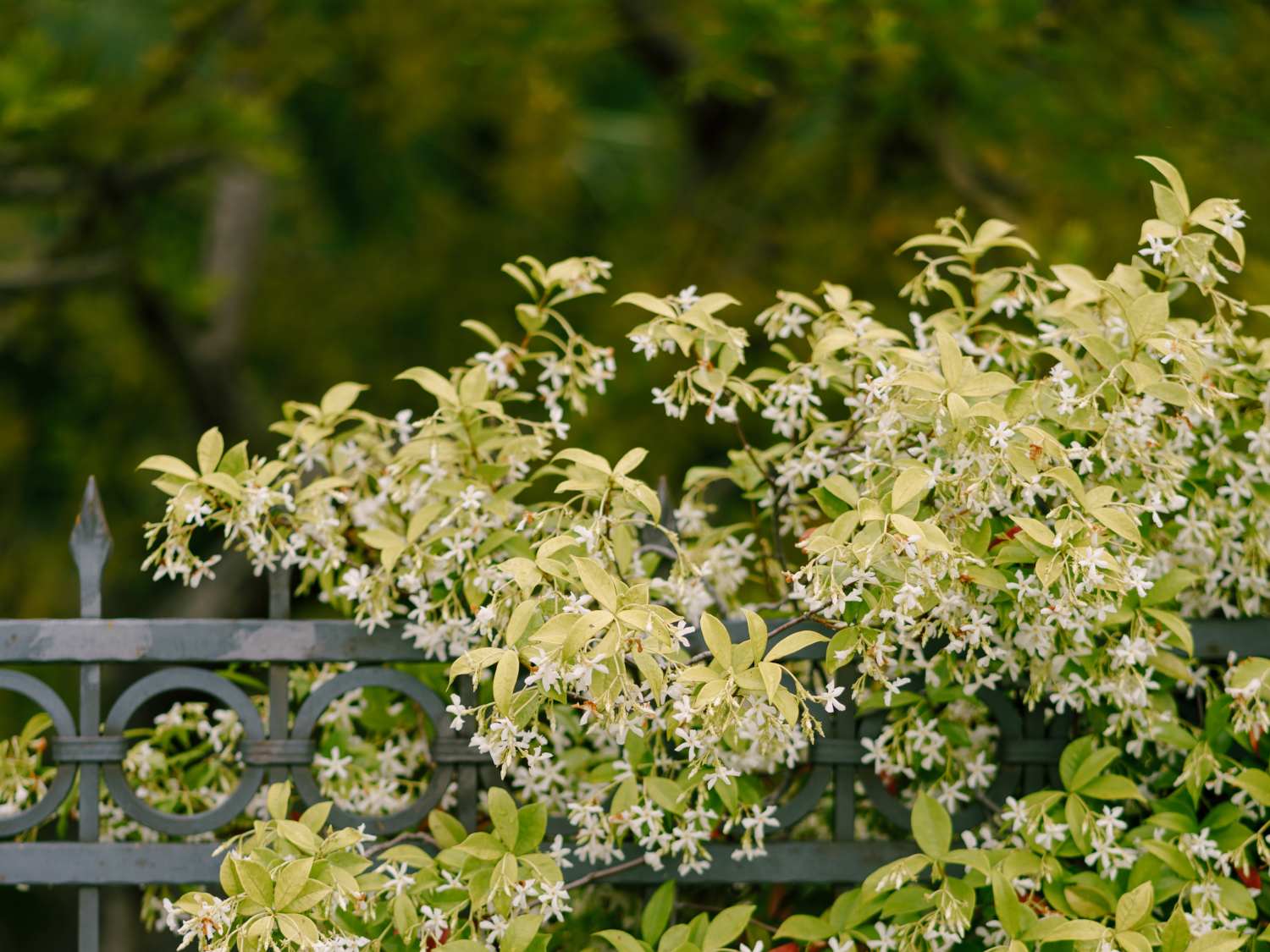
Planting Trachelospermum jasminoides is equally successful in fall as it is in spring.
Make the most of its smooth jasmine-like fragrance by setting it up near places where you like to rest, or a window so that you may benefit with all your senses, not only the eyes!
Preparing Trachelospermum jasminoides cuttings is quite easy. Spring is the time to do this. From one plant, you can get many more.
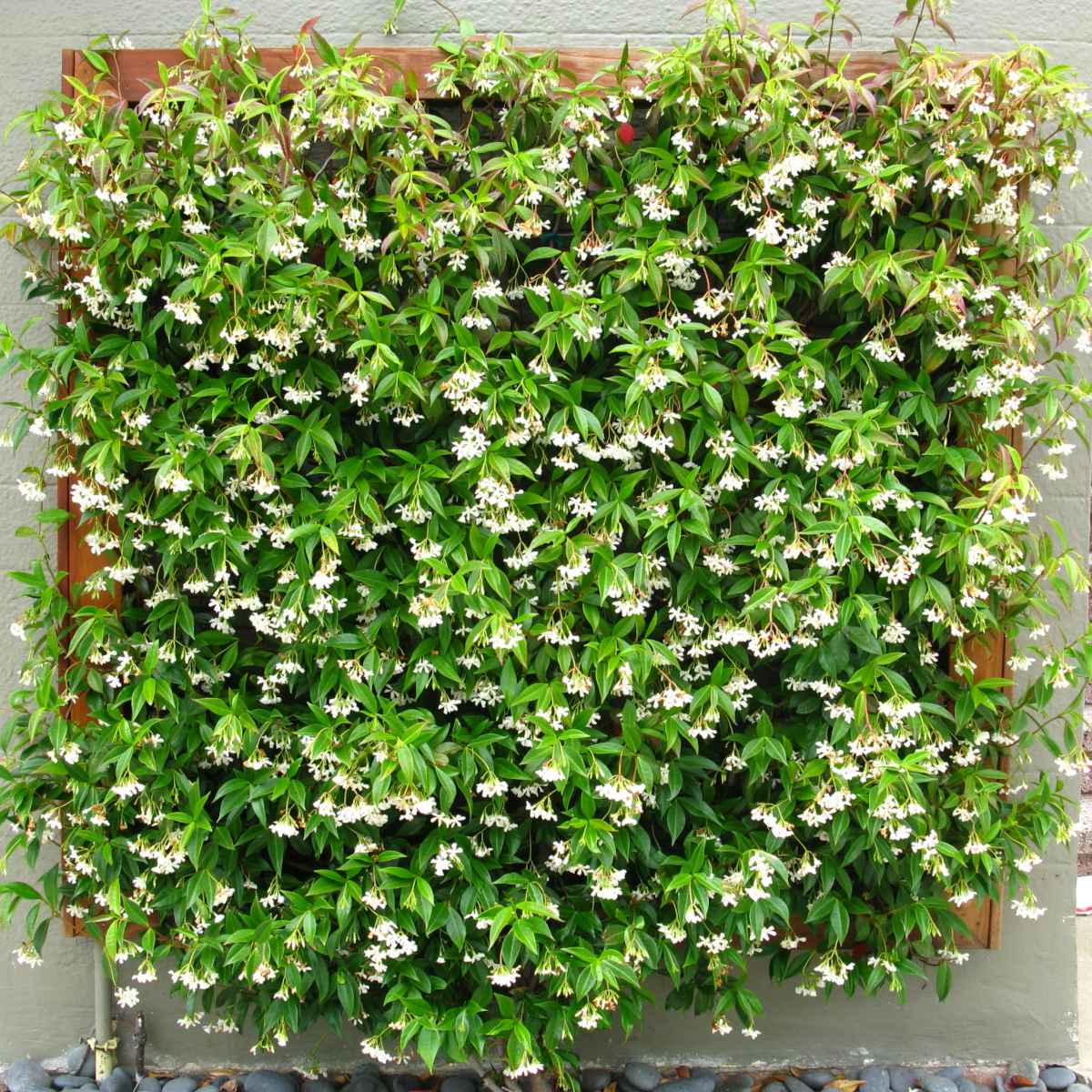
It feels rather slow at first because Trachelospermum jasminoides first needs to develop its root system. Proper rooting is necessary to have an accelerated growth later on.
Indeed, once it is comfortably settled in, Trachelospermum jasminoides grows very vigorously. It will quickly cover arbors, pergolas or climb up walls for an extremely ornamental result.
To speed growth up even more, you can add fertilizer to the water as you water during the first year.
It is perfectly possible to grow Trachelospermum jasminoides in pots and it even makes lots of sense for those who wish to benefit from its fragrance on a terrace or balcony. A lattice is perfect for creating a visual barrier between sections of the garden, or to hide out neighbors. Place your T. jasminoides at the base of it and you’ll have an evergreen flower-filled view-breaker.
The same plant behaves very differently depending on what you ask of it. Here is what each use involves, from a pergola cover to a pruning-free ground cover.
| Use | Setting and support | Main care point |
|---|---|---|
| Arbour, pergola or wall | Tether it while young, then let it run | Water regularly over the first year |
| Screen between garden sections | Planted at the base of a lattice | It won’t attach itself at the start |
| Pot on a terrace or balcony | Flower plant soil mix, drainage hole, mulched base | Feed often, as pot soil runs out of nutrients fast |
| Ground cover | Grown flat, with no support at all | Copes well with extended periods of drought |
Whichever use you choose, the first year of watering and settling in decides how vigorous the plant becomes.
Rather straightforward, Trachelospermum jasminoides care can even be left to a minimum once the plant is correctly settled in.
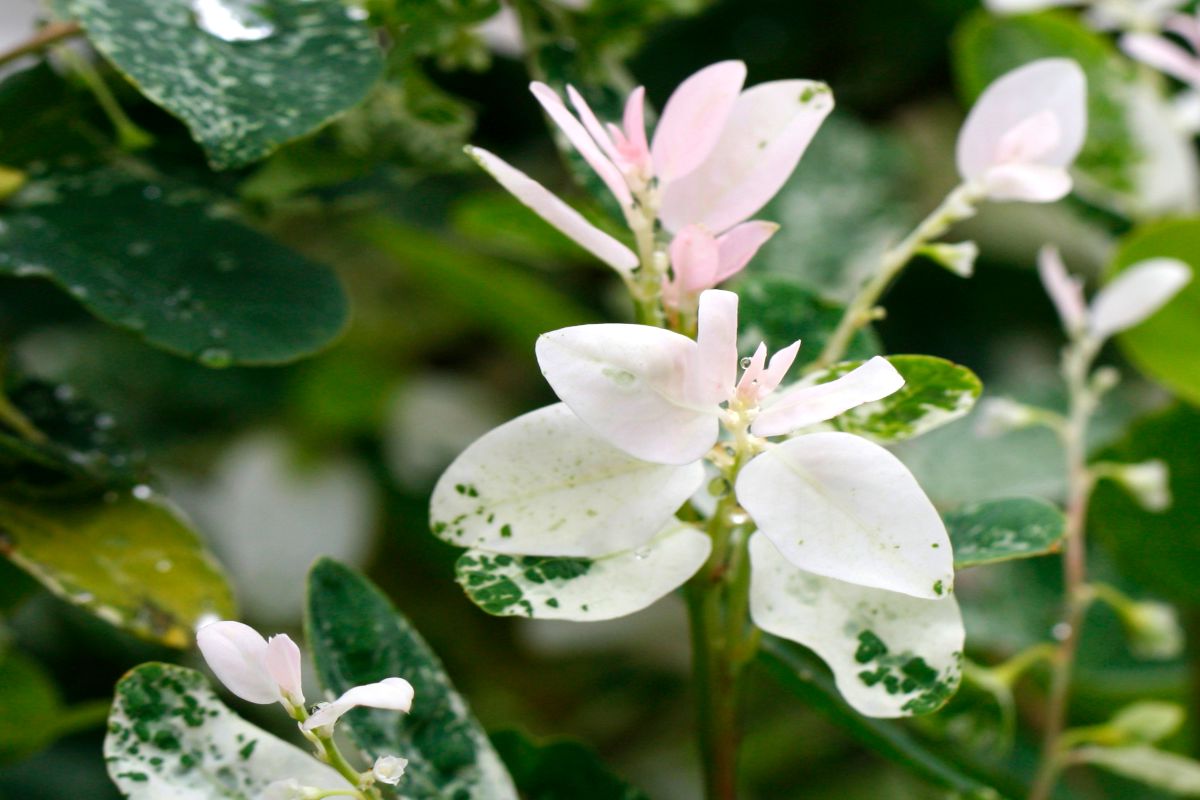
Trachelospermum jasminoides is a plant that doesn’t ask for much care, especially when it’s been planted for a few years already.
Trachelospermum jasminoides is particularly hardy: it resists temperatures down to 14°F (-10°C), and even down to 5°F (-15°C) if only for a short while.
Other names for this plant are star jasmine and Indian jasmine, but they’re actually all the same plant.
Read also:
If you’re hoping for this vine to climb up a surface, help it out at the beginning because it isn’t quite good at attaching itself at the start.