Home » Health » Nectarine: how to use the fruit, and what tradition credits it with
Nectarine: how to use the fruit, and what tradition credits it with
·
0
Nectarine is a smooth-skinned peach: same tree, same family, no fuzz. It arrives sweet, juicy and almost 90% water at the height of summer, and it is one of the easiest fruits to work with — eaten over the sink, stewed into compote, tossed through a salad or mashed into a face mask. Here is what it holds, what herbal tradition makes of it, and how to use it tonight.
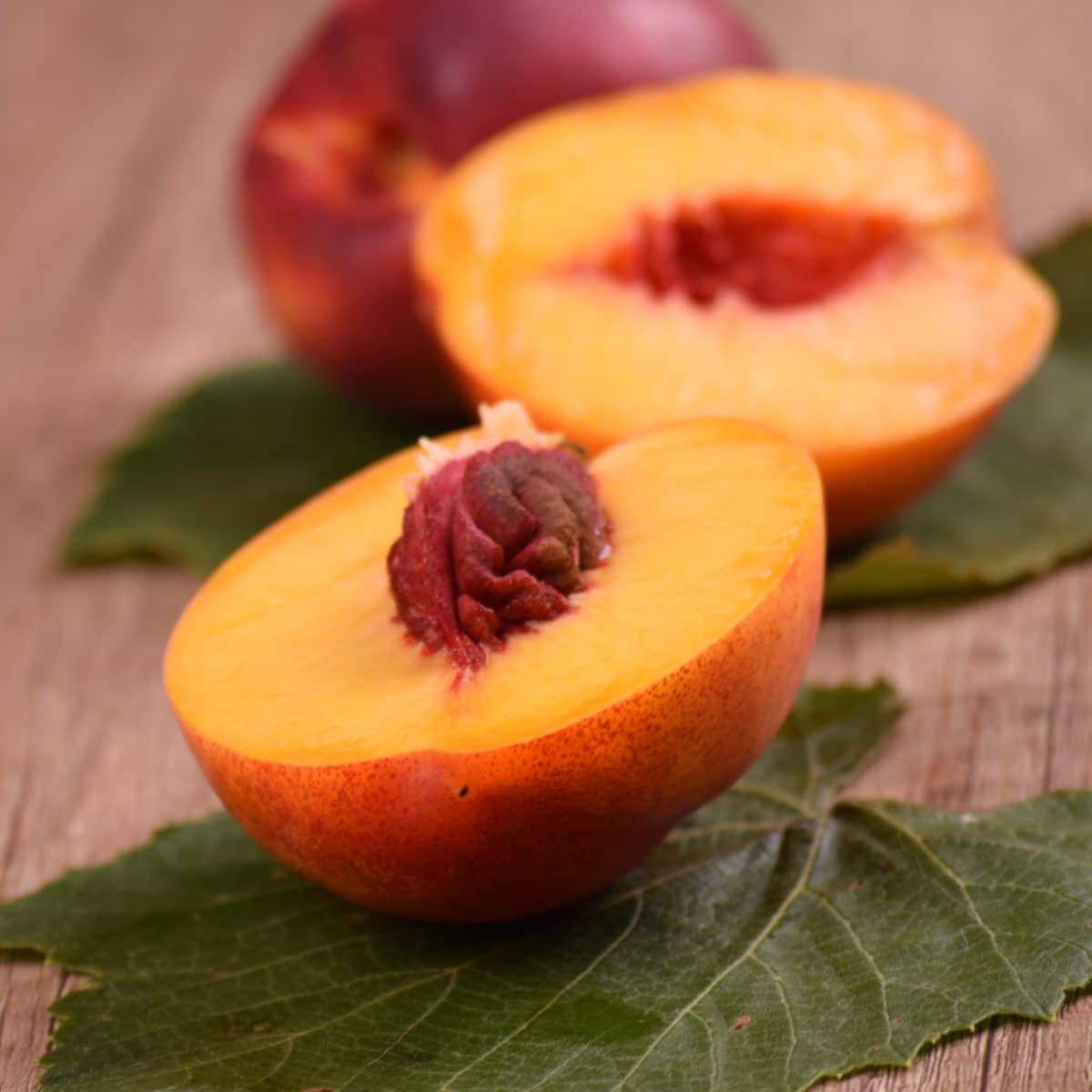
Smooth shiny skin and a stone that lifts free: that’s a nectarine
Nectarine at a glance
Item
Detail
Botanical name
Prunus persica var. nucipersica
Family
Rosaceae
Part used
Ripe fruit (flesh and skin); leaves in traditional external preparations
Very sweet, perfumed, slightly acid at the skin, melting when fully ripe
Origin
Thought to be native to China; known around the Mediterranean since Greek and Roman times
A little history
Like the peach, the nectarine is believed to have come from China, and tradition credits Alexander the Great with bringing it westward.
The smooth-skinned form appears in French and Old English records in the XVIth century, described as a mutation of the peach.
France remains a major producer, especially in the Languedoc-Roussillon, PACA and Rhône-Alpes regions.
The tree itself likes full sun and shelter from strong wind, and takes cold down to around 5°F (-15°C), sometimes -4°F (-20°C).
What it is credited with
Refreshment and water intake. With 88% water, it is traditionally eaten in hot weather as a way of drinking without a glass — a habit of Mediterranean summer kitchens.
A diuretic reputation. Naturopathy classes juicy summer fruits, nectarine among them, as “draining” foods, and includes them in the light spring and summer diets it recommends for a feeling of lightness.
Comfortable transit. Because the fruit carries fibre, herbalists and naturopaths traditionally suggest ripe nectarines, skin on, to people whose digestion feels sluggish.
Antioxidant intake. Nectarine contains vitamin C and carotenoid pigments. Vitamin C is known to neutralise free radicals, and naturopathy values fruits of this kind as part of what it calls an “anti-ageing” plate.
Proto-vitamin A. Beta-carotene gives the yellow flesh its colour. Traditional dietary advice has long linked carotene-rich fruits with eyes, teeth and growing bones.
Tiredness and “run-down” spells. Nectarine supplies iron, calcium and magnesium, and folk dietary practice put iron-bearing fruits on the table of anyone feeling worn out.
Soothing the skin. Poultices of nectarine leaf were traditionally laid on minor burns and sunburn in country herbalism.
Skin and tanning. Naturopathy credits carotene-rich fruit, eaten in the weeks before summer sun, with helping the skin cope better with light; the mashed fruit itself has a long cosmetic reputation as a tonic, brightening mask.
How to use it
Eaten fresh — the simplest form
Rinse well and eat with the skin on: most of the fibre and a good part of the pigment sit just under the surface.
One to three fruits a day is the everyday amount naturopathy works with, spread through the day rather than all at once.
Best at room temperature. Straight from the fridge, the perfume disappears completely.
For a sluggish digestion, tradition favours one ripe fruit on an empty stomach in the morning, over a week or two, rather than a large quantity in one sitting.
Compote and coulis
Stone and quarter four or five nectarines, add two tablespoons of water, cook covered over low heat for 10 to 15 minutes.
No sugar needed on ripe fruit. A split vanilla pod or a pinch of cinnamon is enough.
Blend and sieve for a coulis; keep it three days in the fridge in a sealed jar.
Gentler on the stomach than raw fruit, which is why cooked fruit is the form usually suggested for sensitive digestions.
Cold preparations
Smoothie: two nectarines, a small glass of milk or plant drink, a few ice cubes. Blend 30 seconds and drink at once.
Ice cream and sorbet: freeze nectarine cubes, then blend them alone or with a spoon of cottage cheese.
Fruit salad: pairs naturally with apricot, strawberry and blackberry.
With cottage cheese: quartered nectarine, cottage cheese, a trickle of honey. A classic summer breakfast.
Baking and savoury
Pies, muffins, cakes and crumbles all take nectarine quarters, skin on, cut side up.
Sweet-and-sour: cube a nectarine, colour it in a frying pan with a dab of butter for 3 or 4 minutes, and serve alongside rice, poultry or fish. A few almonds add crunch.
Toss raw quarters through a green or grain salad, with a sharp vinaigrette to balance the sugar.
Nectarine-and-apple lollipops: cubes threaded onto sticks, for children’s plates.
The traditional face mask
Mash one nectarine and one peach together to a pulp.
Stir in one or two tablespoons of cottage cheese.
Spread on clean skin, leave 10 to 15 minutes, rinse with clear water.
Use it once a week at most, and never on broken, sunburnt or irritated skin.
The leaf poultice
A country preparation: fresh leaves crushed, wrapped in a clean cloth and laid on the skin, applied cool.
Outer use only, on intact skin, and for a short time.
Any burn that blisters, spreads or fails to settle is a matter for a healthcare professional, not a poultice.
Forms of use compared
Form
Preparation
Traditionally used for
Fresh fruit
Rinsed, skin on, at room temperature
Refreshment, fibre intake, everyday vitamin C and carotene
Compote
Quarters simmered 10–15 minutes with a little water
A gentler option when raw fruit feels heavy
Smoothie or sorbet
Blended fresh or frozen, drunk straight away
Hot-weather hydration and a summer “draining” diet
Fruit mask
Mashed pulp with cottage cheese, 10–15 minutes
Cosmetic tradition: toning, brightening the complexion
Leaf poultice
Crushed fresh leaves in a cloth, applied cool
Folk herbalism: soothing minor burns and sun-reddened skin
Frequently Asked Questions
The one thing to remember: buy nectarines ripe, because they never ripen further after picking — then eat them fresh with the skin on, at room temperature.
What is the difference between a nectarine and a peach?
They come from the same tree species, Prunus persica, in the Rosaceae family. The nectarine is the smooth, shiny-skinned form; a single mutation removes the peach’s velvet. Flesh can be yellow or white in both, and the flavour is very close, with nectarine often a touch firmer.
Should I eat the skin?
Yes, if you rinse it well or buy organic. A good part of the fibre and the coloured pigments sit just beneath the surface, and naturopathy values the whole fruit rather than the peeled flesh. Peel it if raw skin irritates your mouth or your digestion.
How many nectarines a day?
One to three fruits a day is the everyday amount naturopathy works with, spread through the day rather than eaten all at once. Larger quantities can cause wind, cramping or loose stools because of the fibre and sugars. Build up slowly if you are not used to much fruit.
Can I eat nectarines while pregnant?
Nectarine is not contra-indicated for pregnant women; it is simply a fruit and belongs in a normal diet. Wash it carefully before eating. Leaf preparations and any concentrated form are a different matter — ask your midwife or doctor first.
What are nectarine leaves used for?
In country herbalism, crushed fresh leaves were wrapped in a clean cloth and laid cool on minor burns and sun-reddened skin. It is an external use only, on intact skin, and for a short time. Blistered, spreading or stubborn burns need a healthcare professional.
This information is provided for general interest and reflects the traditional use of plants. It is not a substitute for medical advice. If you are on medication, pregnant, or in any doubt, ask a healthcare professional.
Written by Gaspard Lorthiois | Loves helping out, especially when it comes to growing things. Worked in herbal medicine, runs a farm, and dabbles in tech. Master's degree and engineer.